RIYADH: Director General of World Intellectual Property Organization (WIPO) Francis Gurry pledged to cooperate with the Kingdom to help achieve NTP goals.
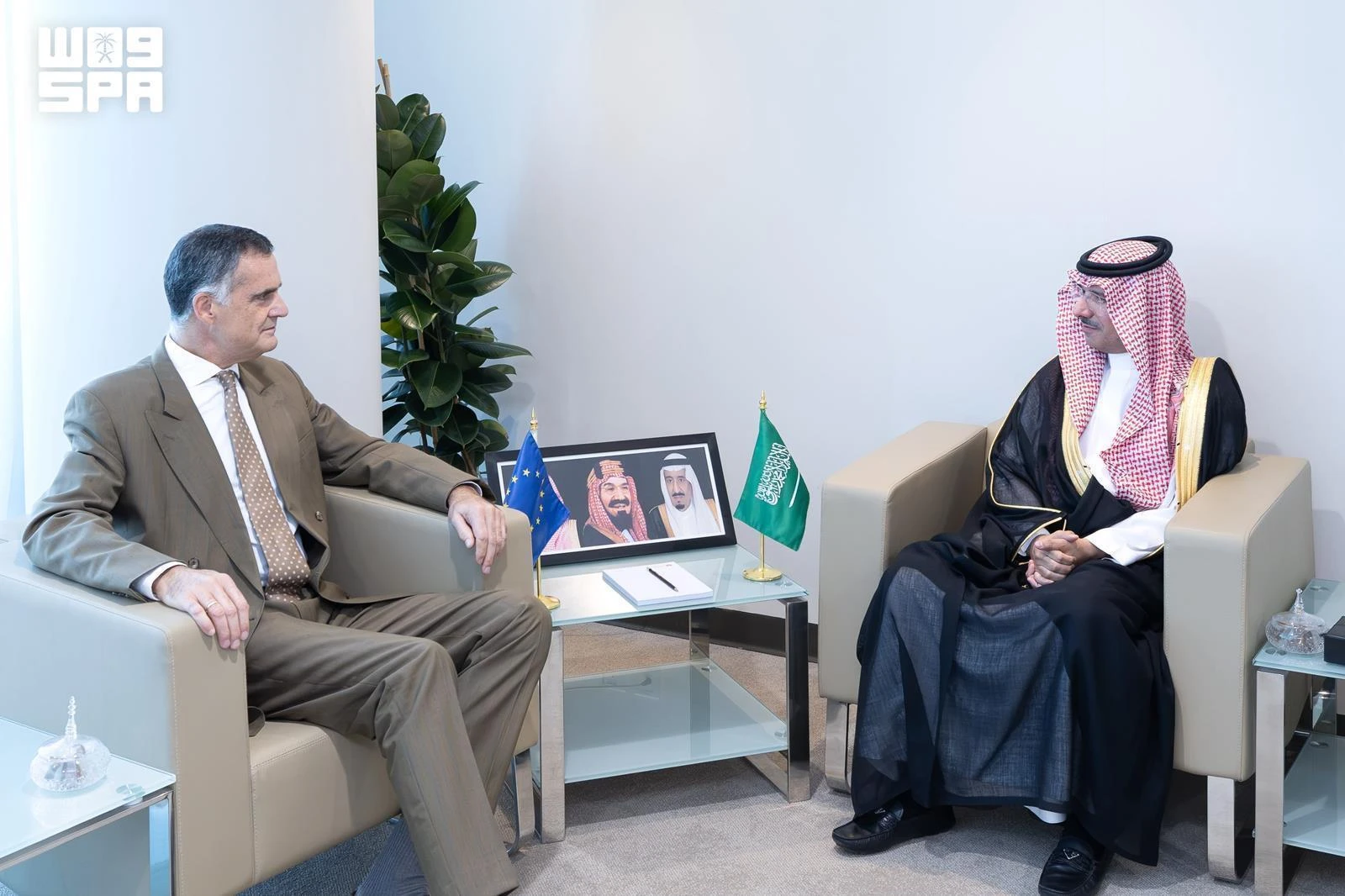
Gurry, who met with Minister of Commerce and Investment Majid Al-Qassabi in Riyadh on Wednesday, was speaking at the national symposium on global health, innovation, and trade issues in Riyadh on Tuesday.
The director general said the symposium is an opportunity to consolidate cooperation between the King Abdul Aziz City for Science and Technology and the World Intellectual Property Organization, which could provide opportunities within the Kingdom and the countries in the region to benefit from the bilateral cooperation.
Through investment innovation, he said the cooperation would achieve development and support the successful progress of the Kingdom’s Vision 2030.
KACST President Prince Turki bin Saud bin Mohammed Al-Saud explained that to maximize local content within the National Transformation Program 2020, emanating from the Kingdom’s Vision 2030, the city hopes to raise its contribution to the economic growth in the Kingdom. He pointed out that this seminar aims to explore opportunities for technology transfer in the pharmaceutical industry and find ways to take advantage of patents through licensing to encourage the development of national industries in the medical field in the Kingdom.
During the meeting between Al-Qassabi and Gurry, the two sides discussed a number of issues, notably intellectual property rights, international protection of geographical indications for goods and services, and the support of small- and medium-sized enterprises in the light of Vision 2030.
The WIPO is one of the United Nations self-financing agencies which has a membership of 189 member states. Its mission is to play a leading role in the establishment of a balanced and effective international intellectual property system that encourages innovation and creativity for the benefit of everyone to develop international norms and standards on intellectual property.
The organization aims to provide universal services in the field of intellectual property, to facilitate the use of it and to promote international cooperation for intellectual property.
Saudi Arabia joined the organization in May 1982.
Early this year, Saudi Arabia was ranked 49th among 129 countries for innovation and topped GCC and Arab countries.
In its annual index announced in Geneva, WIPO said the Kingdom ranked 42nd in innovation among high-income countries (49 countries in total), secomd in the Arab world, and fifth among West Asian and Middle Eastern countries.
The index, which is based on more than 80 indicators, reveals that weak points in Saudi indicators are poor teaching of innovation in elementary and middle schools; poor spending on research and innovation, calculated as a percentage of GDP; and low salaries in research and innovation institutions. Additional factors include low foreign direct investment in terms of percentage of GDP; high-tech exports minus re-exports in terms of percentage of total trade; the innovation efficiency rate; as well as types of laws and regulations related to innovation, ease of starting a business and participation of women with advanced degrees.
Strong points of the Kingdom include the number of science and engineering graduates as a percentage; the access to government services online (18th globally); production of electricity calculated as kilowatt per hour (13th globally); total capital devoted to training in terms of GDP (22nd globally); total value of shares traded as a percentage of GDP (9th globally); and the size of the domestic market of $1 billion calculated in terms of purchasing power per capital (14th globally).
Gurry, who met with Minister of Commerce and Investment Majid Al-Qassabi in Riyadh on Wednesday, was speaking at the national symposium on global health, innovation, and trade issues in Riyadh on Tuesday.
The director general said the symposium is an opportunity to consolidate cooperation between the King Abdul Aziz City for Science and Technology and the World Intellectual Property Organization, which could provide opportunities within the Kingdom and the countries in the region to benefit from the bilateral cooperation.
Through investment innovation, he said the cooperation would achieve development and support the successful progress of the Kingdom’s Vision 2030.
KACST President Prince Turki bin Saud bin Mohammed Al-Saud explained that to maximize local content within the National Transformation Program 2020, emanating from the Kingdom’s Vision 2030, the city hopes to raise its contribution to the economic growth in the Kingdom. He pointed out that this seminar aims to explore opportunities for technology transfer in the pharmaceutical industry and find ways to take advantage of patents through licensing to encourage the development of national industries in the medical field in the Kingdom.
During the meeting between Al-Qassabi and Gurry, the two sides discussed a number of issues, notably intellectual property rights, international protection of geographical indications for goods and services, and the support of small- and medium-sized enterprises in the light of Vision 2030.
The WIPO is one of the United Nations self-financing agencies which has a membership of 189 member states. Its mission is to play a leading role in the establishment of a balanced and effective international intellectual property system that encourages innovation and creativity for the benefit of everyone to develop international norms and standards on intellectual property.
The organization aims to provide universal services in the field of intellectual property, to facilitate the use of it and to promote international cooperation for intellectual property.
Saudi Arabia joined the organization in May 1982.
Early this year, Saudi Arabia was ranked 49th among 129 countries for innovation and topped GCC and Arab countries.
In its annual index announced in Geneva, WIPO said the Kingdom ranked 42nd in innovation among high-income countries (49 countries in total), secomd in the Arab world, and fifth among West Asian and Middle Eastern countries.
The index, which is based on more than 80 indicators, reveals that weak points in Saudi indicators are poor teaching of innovation in elementary and middle schools; poor spending on research and innovation, calculated as a percentage of GDP; and low salaries in research and innovation institutions. Additional factors include low foreign direct investment in terms of percentage of GDP; high-tech exports minus re-exports in terms of percentage of total trade; the innovation efficiency rate; as well as types of laws and regulations related to innovation, ease of starting a business and participation of women with advanced degrees.
Strong points of the Kingdom include the number of science and engineering graduates as a percentage; the access to government services online (18th globally); production of electricity calculated as kilowatt per hour (13th globally); total capital devoted to training in terms of GDP (22nd globally); total value of shares traded as a percentage of GDP (9th globally); and the size of the domestic market of $1 billion calculated in terms of purchasing power per capital (14th globally).