INCHEON: Olympic champion Sun Yang powered to victory in his signature 1,500-meter freestyle event, asserting his primacy over South Korean rival Park Tae-hwan and capping Chinese domination in the Asian Games pool on Friday.
Sun apologized for calling Japan’s national anthem “ugly” Friday, averting a fresh row at the Games after Qatar’s women’s basketball team pulled out in a dispute over their hijabs.
The Olympic champion called his comment, made to Chinese journalists in Incheon, a misunderstanding after he starred on the final night in the pool alongside teammate Ye Shiwen.
“About the anthem, I’m sorry that some media reported that,” Olympic champion Sun told reporters after defending his 1,500 meters freestyle title.
Earlier, Sun led from the get-go and finished five seconds ahead of silver medalist Kohei Yamamoto but 18 seconds behind his world record time. China’s Wang Kecheng was third, while Park came fourth, 22.4 seconds off Sun’s pace.
Sun’s third gold of the games was one less than Japan’s Kosuke Higano, who shocked Sun in the 200 freestyle on opening night last Saturday.
“There were both achievements and disappointments, namely losing the 200. But I’m going to train hard for next year’s world championships and see even better results,” Sun said.
World records kept falling in weightlifting, with China’s Zhou Lulu setting a new women’s 75-kilogram mark in the clean and jerk of 192 kilos.
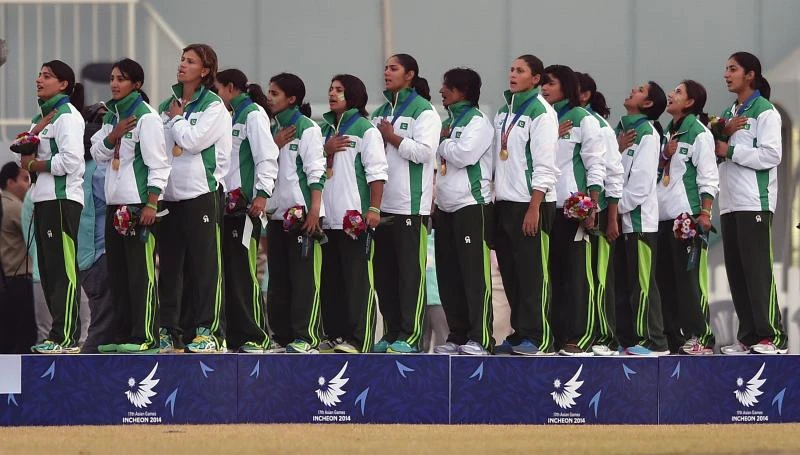
Pakistan beat Bangladesh in the women’s cricket final, South Korea struck gold twice in equestrian, and Japan won the triathlon mixed final.
The pool competition was billed as the Sun vs. Park show, but became a showcase for the enduring political and sporting rivalry between China and Japan. Chinese men took 22 golds to Japan’s 12, Kazakhstan claimed three, and Singapore it’s first men’s swimming gold in 32 years.
Disputes over history and ownership of Japanese-controlled islands in the East China Sea have helped fire the rivalry, with Chinese fans booing Japanese swimmers, and China’s social media lighting up with anti-Japanese commentary. For all that, there seemed to be no apparent animosity between swimmers from the two nations.
Though strong in the heats, Japanese swimmers again failed to come through in the finals, and were repeatedly relegated to second and third place. Losing their Asian Games title to China in the men’s 4x100 medley relay lent an especially bitter ending to the evening, a sentiment made clear in post-race remarks from swimmer Yasuhiro Koseki.
“It was extremely disappointing to lose in that event,” Koseki said.
The Japanese were beaten by a mere 0.33 seconds by China to end the evening, with South Korea — anchored by Park — coming third.
Park, who was presented with a cake by Sun to mark his 25th birthday on Saturday, said he wouldn’t let the lack of Asiad success hold him back.
“I trained really hard, but it’s a shame I didn’t achieve greats results in the Asian Games,” he said. “However, I believe this was a great opportunity and a great experience for the future.” He ended the meet with one silver and five bronzes.
Asian Games 100 butterfly champion Chen Xinyi set the tone for the last night of swimming with a win in the women’s 50 freestyle, followed by Japan’s Miki Uchida, who topped the heats.
Japan squandered another chance in the men’s 50 breaststroke when Koseki was second to Kazakhstan’s Dmitry Balandin, who collected his third gold of the games.
With a total of five medals, Kazakhstan had by far its best showing ever in a swimming meet.
“I’m too tired to smile, but I’m really happy,” Balandin said.
Saturday marks the beginning of the athletics program, where China’s Zhang Peimeng will renew his quest to become the first Asian-born man to break 10 seconds in the 100 against a field including Asian record-holder Samuel Francis of Qatar.
Olympic triple jump champion Olga Rypakova of Kazakhstan and high jumper Mutaz Essa Barshim of Qatar will also seek to defend their titles as a prelude to next year’s world championships.
Sun caps China dominance in pool, sorry for ‘ugly’ anthem jibe