The hot days of summer are over and fall is here, it’s a wonderful season to escape for a while and experience any location in the world. The busy tourist-filled streets have since returned to their home countries and show ways for those searching for some serenity away from all things touristy. One of those likely places would have to be Tokyo, Japan. With its busy streets filled mostly with locals, you can still find locations where peace and quiet are an understatement. A city so large, so active, very much populated and pricey, it is still considered one of the top visited cities in the world. Japan is a country with so much history and is yet the most modernized, it is a mixture of everything old and everything new, a once in a lifetime experience. What better way to experience this class of times in one place than in the fall season.
Tokyo offers a seemingly unlimited choice of shopping, entertainment, culture and dining to its visitors. Touring the city can be divided into districts and more precisely areas. There’s Koishikawa in the northern part of Tokyo, Shibuya in the west, Tokyo Skytree in the west and Odaiba in the south. Contrary to common perception, Tokyo offers a number of attractive green spaces in the city center and within relatively short train rides at its outskirts. The size of the city can confuse many but with proper guidance and preparation, it can be very easy.
First thing’s first, using the subway is the top favored transportation in Tokyo, it is quick and always on time. With the city’s population at 35 million and rising, cars and taxis can be a waste of time. It is best to divide the trip into two parts; the first would be to experience the hustle and bustle of the city and the second would be to find the peacefulness and serenity Tokyo has to offer while enjoying the fall foliage. Start your trip with a visit to Tokyo’s famous Tsukiji seafood marker in the wee hours of the early morning to witness fish mongers pass around tons of different kinds of shellfish, large tuna fish and squid and selling them. The best part of the morning would be to view the precision in cutting up tuna and serve the freshest tuna sushi one could have.
After the chaotic yet very organized scene at the seafood market, next comes a lesson in history at the Edo-Tokyo Museum. A country with so much history and stories full of samurai, battlefields won by the good, wise kings and people who have a great appreciation and respect for their ancestors, one must take a step back and understand how modern day Japan came to be. Tokyo was once called Edo, thus the name. There are large scale model representations of the original characters known through history and many more exhibitions to visit inside. After the visit, if feeling hungry, as a tourist, one must buy ramen (pronounced la-men in Japanese) from a vending machine; it is believed that it is never a disappointing experience. After a quick bite, head to Ueno Park, a part of Keneiji, one of the city’s largest and wealthiest temples in the Edo Period. The park is a large one with hundreds of trees and over 1,000 cherry blossom trees as well that change colors into the most beautiful orange golden hues in the fall and bloom in the brightest whites and pale pinks in the spring. Around sundown it is best to visit the Rainbow Bridge and the Odaiba island. The view from the adjoining park is beautiful overlooking the bay area as the bridge colors change into rainbow colors, thus the name. After a stroll on the waterfront, Shibuya is best to visit next. Shibuya is a crowded area with lots of stores and buildings with shops up to the 10th floor, decorated in bright lights and large neon billboards resembling New York City’s Times Square. The highlight of the area might be the Shibuya crossing. Every few minutes a large number of people cross the area effortlessly and in ease, a function well known amongst Japanese etiquette. The rest of the night can be spent in one of the many restaurants or cafes of the area.
The Imperial Palace (Kokyo), the former site of Edo Castle holds a large public park area surrounded with moats and stone walls still existing from the Edo Period, it’s the current residence of Japan’s Imperial Family. In the place of the former buildings of the secondary circle, a nice Japanese style garden has been created named Ninomaru. After the visit to the palace grounds, Showa Kinen Park or Memorial Park is located in the heart of the capital and is a popular spot to enjoy a picnic. The park is known for its abundance of ginkgo trees that turn into a bright yellow gold under the fall sun, an ideal location for an afternoon starting from late October into November. After the picnic, Inokashira Park is one location known to be iconic amongst residents of Tokyo. As fall sets in, the maple and zelkova trees scattered throughout the evergreens hold a dazzling spatter of greens, yellows and reds. The best viewing time would be sunset, amplifying the orchestra of color to create a sight expected to be seen in an untouched countryside forest. From the central pond, paved and dirt paths stretch all throughout the park making it an enjoyable stopover.
To end the day, you can make a visit to the 27th Tokyo International Film Festival (starting ofrom Oct.23 to 31). This year’s festival will focus on animation, it will open with the world premiere of Walt Disney’s Animation Studios’ Big Hero 6 Film. The event includes open air screenings, seminars and symposiums as well as appearances by stars throughout the city. In mid-November, Shichi-Go-San festival, Japanese girls can dress like grownups in their tiny kimono, usually a kimono that was in the family for generations, a traditional Obi (belt) and high soled wooden sandals. Their hair is done in the traditional Japanese way decorated with flowers and holding traditional Japanese wooden umbrellas with fabric painted in bright colors displaying certain landscapes or flowers.
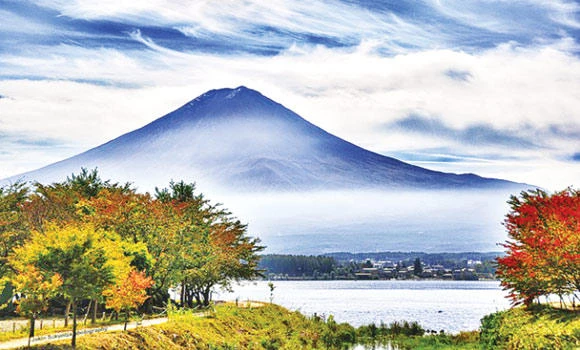
A two-day trip to the Fuji Five lake region is around 2.5 hours outside of Tokyo City. Lake Kawaguchi offers one of the most iconic koyo viewing spots in Japan. With Mt Fuji as a backdrop, trees give off a hue of crimson and gold which reflect in the calm waters of the lake. The best views of Mt Fuji can be enjoyed from the lake’s northern shores, while the best photographic locations would be the “Koyo Tunnel” as it is covered with maple trees. Kawaguchi is also a good base for climbing Mt Fuji (open in July and August). The region also is home to Fujigoko also known as a lake resort area where many visitors can enjoy hiking, camping and fishing with plenty of hot springs in the area. The day trip is not complete without visiting Kawaguchi Music Forest, a theme park devoted to music instruments such as music boxes and mechanical organs with a nice view of the mountain from their gardens. The other lakes are less developed than Lake Kawaguchi and are not easy to access by public transportation.
Tokyo is a location that is very significant for visitors; one cannot get enough of it. To enjoy the full potential that Tokyo has to offer is to visit it numerous times. Fall is surely one of the most enjoyable seasons of the year by many, the Japanese have immense appreciation of nature, especially since Japanese tradition is involved with nature in most of their day to day rituals. They celebrate the changing of seasons and hold festivals specifically in the fall and spring, most significant would be “hanami” which is translated into flower viewing. Japan was once closed itself and secluded itself from the world for 300 years, it is now more welcoming to foreign visitors who will surely appreciate its beauty in nature.
—
Email: [email protected]
‘Fall’ in love with Tokyo