- The ceasefire has temporarily brought quiet to Kherson, allowing residents to venture out despite lingering fears of future violence
- Some residents are contemplating leaving Kherson, believing that the city no longer has a future amid ongoing hostilities
KHERSON, Ukraine: A planned six-day ceasefire brokered by US first lady Melania Trump and tied to a humanitarian aid mission in a Russian-occupied town has brought rare quiet to the Ukrainian-held city of Kherson across the water.
Four years ago, crowds filled the central square of this southern port city, draped in Ukrainian flags and hugging the troops who had ended months of Russian occupation. Many thought the hardest part was behind them. Instead, the war took a new form.
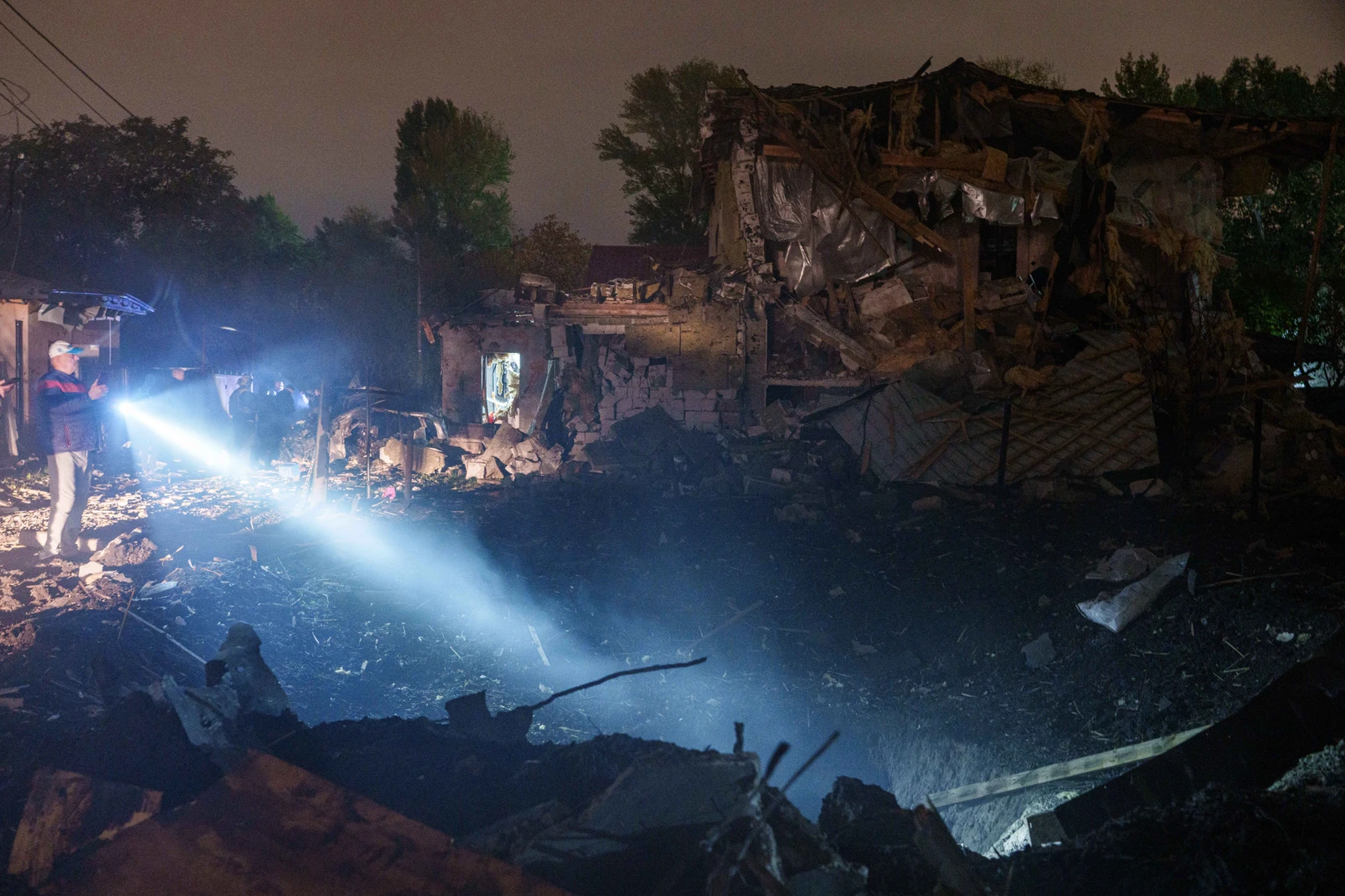
Kherson sits directly across the Dnipro River from the Russian-occupied part of the region. From the other bank, Moscow forces have kept up regular attacks with everything from guided aerial bombs to explosive-laden first-person-view drones that prowl the skies, turning the city into a front line.
Melania Trump, who previously hasn’t been publicly involved in ceasefire negotiations, brokered the localized ceasefire between Russia and Ukraine around Oleshky, a Russian-occupied city that she said is “on the brink of disaster.” It spread to the other side of the river within the Kherson region, which is only partially under Russian control.
A local pause in fighting started at 3 a.m. Tuesday to allow medicine, food and water to be taken to Oleshky before evacuation corridors are opened later in the week. The situation in Oleshky is desperate, with food and medical supplies running perilously low for the up to 2,000 people still there, as drones and land mines restrict movement.
So on Wednesday, after a full day of quiet, more people than usual were out on the streets in Kherson, enjoying the short glimpse of peaceful life, though many said the calm still felt unsettling. Some stocked up on groceries. Others sawed firewood to prepare for a hard winter. Others simply strolled, taking advantage of the silence.
Hanna Llianna, 61, came to the city center for the first time in nearly two years to have a coffee and take a walk. Still, she avoids the neighborhoods closer to the river, where she once ran a small grocery store, because she is afraid to see what the war has done to them.
“It will be very hard if what we had comes back,” she said. “You lift your spirits like this now, and when it returns, it will be very hard.”
Dangerous areas of the city fill with people
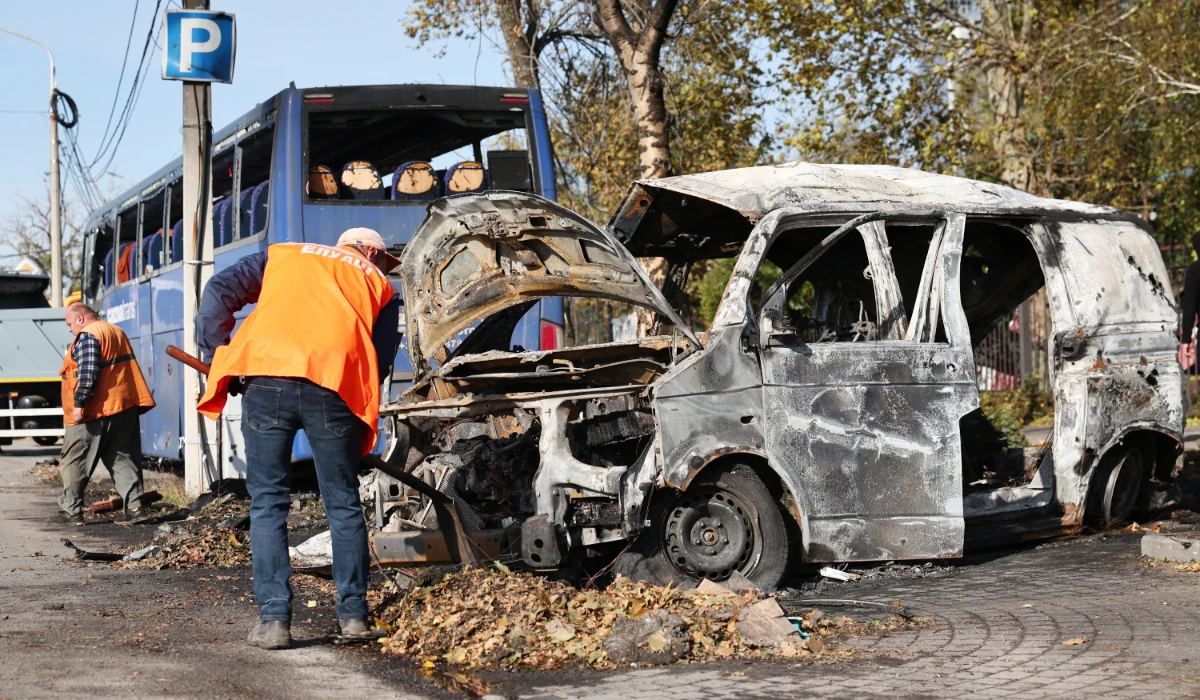
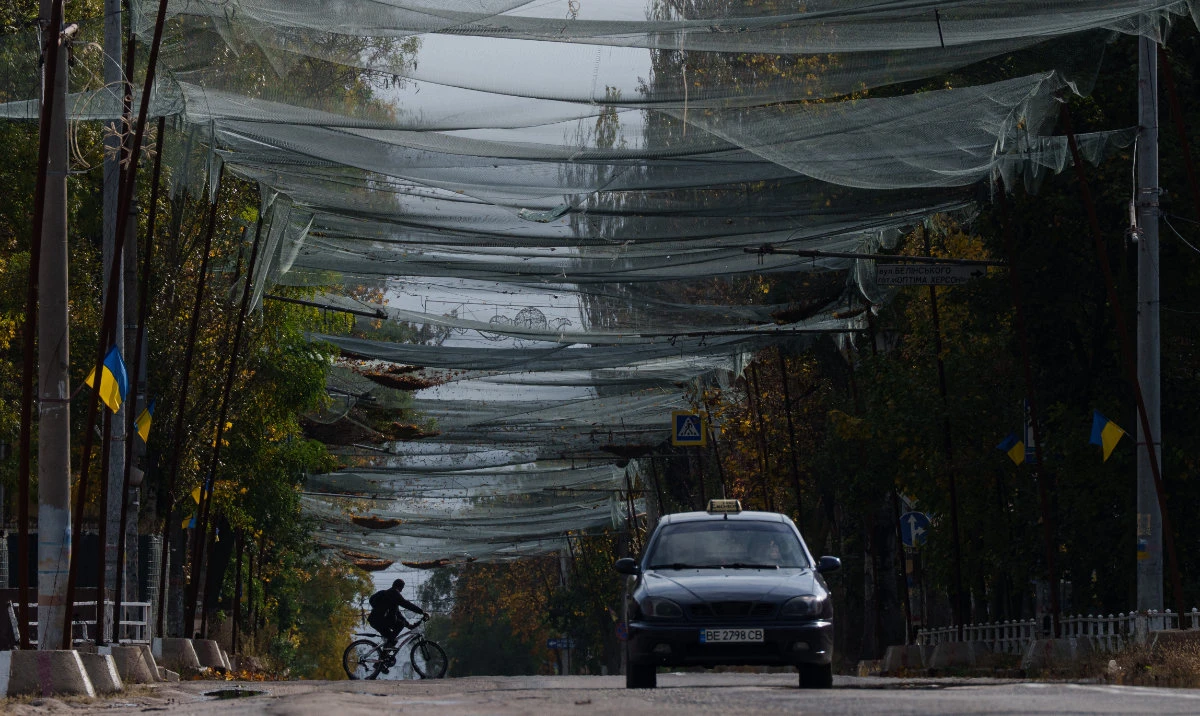
Municipal workers used the lull to repair and extend the netting that shields streets from drones. Kherson bears deep scars of war, with plywood covering windows and shattered glass everywhere. Billboards show faded ads, and many shops and offices have been shut for years.
Farther from the center, whole blocks have every window blown out, with only signs recalling what the buildings once were, such as a university or a hospital.
Normally empty because they lie in the dangerous zone, these areas were now dotted with people checking on their property and collecting belongings.
One of them was Anton Shakhunov, who drove to a heavily damaged building where he once rented an apartment. He was its last holdout but had to leave this spring after an attack drone hit the roof and set it aflame.
He moved, but his thoughts stayed in the once fancy apartment he had rented as a sign of success after his business took off a few years before Russia’s full-scale invasion, which eventually took it away.
Now he wanders the fifth-floor apartment, where the windows are gone, doors have been ripped from their frames, and only large furniture covered in dirt suggests anyone lived there.
“Here is the Russian world in all its beauty,” he repeated several times. “So many memories are tied to this apartment.”
It felt strange to drive there without fearing for himself or his car, he said.
“I’d like it to stay this way as long as possible, but thanks for at least a week.”
Russian drones remain the defining fear
“It’s quiet now, the drones aren’t flying, so people have started moving around. The scariest thing now is the drones,” said Oleksii Kroshchenko. “Guided bombs aren’t much fun either,” his wife, Liudmyla Shevchenko, quickly cut in, adding how drones have emptied the streets.
Kherson was among the first places where Russian forces began using short-range FPV drones against civilians. The drones carry livestreaming cameras that let operators see and choose their targets in real time. In last year’s report, the United Nations’ Independent International Commission of Inquiry on Ukraine said the attacks have repeatedly killed and wounded civilians, destroyed homes and forced thousands to flee, concluding they amount to the crimes against humanity of murder and forcible transfer.
The quiet finally let Shevchenko tidy her garden and replant flowers, including tulips. “I put things in order, because before you couldn’t. You go out, and it’s flying,” she said of the drones. “You barely step outside, and you hide.”
On Tuesday she pruned the grapevines, frequently mistaking the whistle of the strong wind for the sound of a drone.
“I hope I’ll need to buy saplings and plant new trees,” she said, hoping a happier period lies ahead for the city.
Yet even the silence takes getting used to. It is broken only by distant blasts that the military attributes to demining.
Residents don’t trust Russia
Another deadly danger remains: mines that Russian forces scatter remotely. A military press officer was killed by one Tuesday, and residents walked carefully because fallen leaves now cover much of the ground and can hide explosives.
Many also fear Russia will use the pause to stockpile drones and bring more forces closer.
“It will end, and they will terrorize us,” said Oleksandra Kostenko, who lived through the occupation and has left the city only once since, briefly. “That’s what we’re afraid of.”
Many residents who remain say they cannot afford to start over elsewhere. But Yuliia Orlova said that she and her husband have begun considering leaving, convinced the city that was once the region’s main artery no longer has a future.
Orlova took advantage of the quiet to visit her mother Tuesday in a riverside district usually too heavily shelled to reach. Still, she worried Russia would use the ceasefire to regroup.
“Perhaps they are observing it this week, but that will only allow them to bring in more ammunition,” Orlova said. “God willing, it will help the people there (in Oleshky) to get out. I think that is the most important thing.”