- Garment workers in Bangladesh are protesting for higher wages
- The protests have persisted for four days despite government intervention
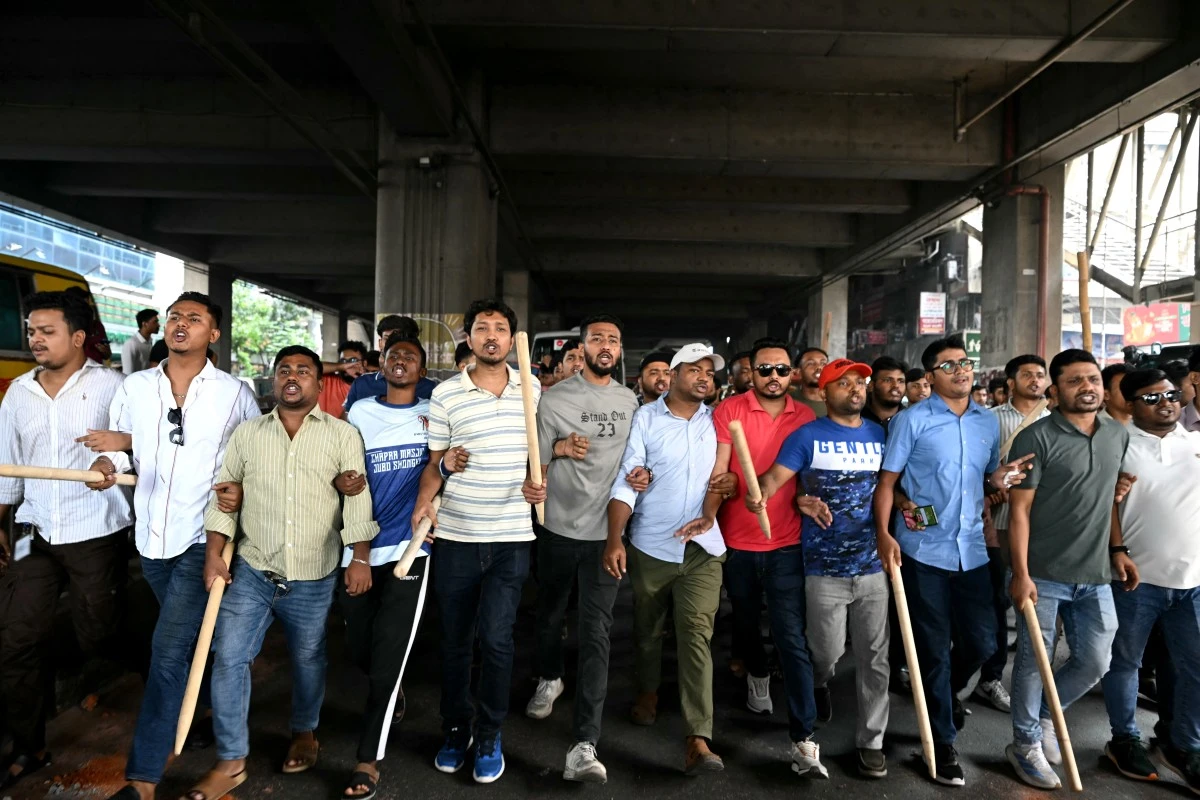
DHAKA: Paramilitary forces were deployed in industrial suburbs around the Bangladesh capital as protests by garment sector workers demanding a wage hike stretched into their fourth day on Tuesday, defying calls to return to factories.
Protesters are still on the streets despite the government’s announcement of a board to review the minimum wage in the vital garment industry, which employs millions of people and generates the bulk of Bangladesh’s export earnings.
The South Asian nation of 170 million people is the world’s second-biggest garment exporter behind China, producing clothes for major international brands.
Police have filed cases against thousands of unidentified protesters for torching police vehicles and damaging property, with 58 officers injured since protests began, police spokesperson Kamarum Munira said.
Workers said scores of protesters have also been injured, with demonstrators seen hurling bricks at police who in turn used batons and fired tear gas to disperse the crowds.
“Some factories are closed and workers have taken to the streets,” Home Minister Salahuddin Ahmed said on Tuesday.
“Some miscreants are trying to incite violence and make the situation more complicated.”
The paramilitary Border Guard Bangladesh force said it had deployed forces in Gazipur and Narayanganj, key industrial suburbs around Dhaka, and were using drones to monitor the unrest.
The garment industry generates around four-fifths of Bangladesh’s export earnings, worth up to $38 billion, and employs more than four million people.
Workers say the rising cost of food, housing, transport and health care has eroded their purchasing power in a country with eight percent inflation.
They are demanding a minimum monthly wage of 30,000 taka ($245) — a 140 percent increase from the current 12,500 taka.
Industry representatives said on Monday workers from at least 670 factories had walked out.
‘Fair wages’
Protesters in Gazipur blocked the Dhaka-Tangail highway and set fire to roadside debris, but were later cleared by police.
In Mirpur in Dhaka’s northeast, a few hundred workers wielding sticks left their workplaces to join the protest, clashing with security forces.
“The law enforcement agencies used force against unarmed workers. What options did the workers have except taking to the streets?” said Begum, a garment worker in Gazipur who gave only one name.
She said she feared that the protest would not subside unless the wage board announced a salary increase.
“We pay the same prices for commodities like milk, fish and chicken as government officials do. The government readily announced a pay rise for them. Why didn’t they form the wage board beforehand? Why did they wait until we took to the streets?” she said.
Bangladesh produces clothes for companies that range from Fruit of the Loom to Levi Strauss and VF Corp., whose brands include Vans, Timberland and The North Face.
Ahmed, the home minister, has claimed without providing evidence that supporters of former leader Sheikh Hasina, who was toppled in a 2024 revolution after weeks of street protests, were behind the unrest.
“A quarter linked to the past is trying to exploit the situation for political gain,” he said.
Dhaka Metropolitan Police said in a statement on Tuesday they had arrested 33 people linked to Hasina’s now-banned Awami League over their alleged involvement in the unrest over the past 24 hours.
Babul Akhter, a workers’ representative on the wage board, has urged workers to call off the strikes.
“Please go back to your factories,” he said after a meeting with other labor leaders on Monday night. “We will fight for fair wages. We will urge you to join the movement if needed.”