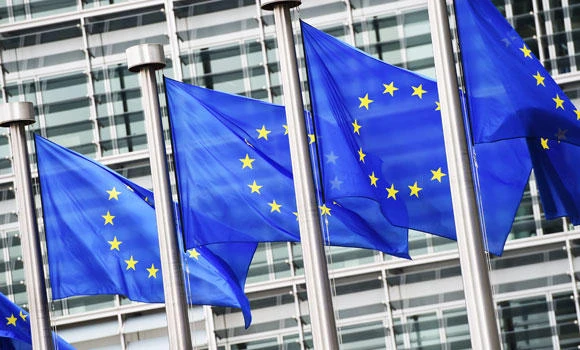
BRUSSELS: The European Union has decided to slap new economic sanctions on Russia over what it sees as Moscow’s meddling in eastern Ukraine, diplomats said Thursday.
The sanctions will further curb access to European capital markets for Russian banks and firms — specifically targeting the country’s vital oil industry — limit exports of certain high-technology goods and target more officials with travel bans and asset freezes, diplomats told The Associated Press in Brussels.
The sanctions will take effect Friday following their publication in the EU’s official journal but will be reversible if the situation in eastern Ukraine improves, four diplomats said independently. They spoke on condition of anonymity pending the official announcement.
Russia’s stock market and its currency tumbled on the news. Russia’s benchmark MICEX, which was rising Thursday morning, declined 0.7 percent after the report. The Russian ruble fell to an all-time low of 37.51 rubles against the US dollar.
A summit of EU leaders almost two weeks ago called for the new sanctions, but then twice postponed to assess the impact of a cease-fire in eastern Ukraine. The United States previously said it was also considering new sanctions once the EU moves forward, and could take that step later Thursday.
The cease-fire between the Russian-backed separatists and the Ukrainian military took effect Friday but has been riddled by violations.
In the most recent incident, two volleys of Grad rocket fire rang out Thursday in the rebel-held eastern city of Donetsk. The Donetsk city council confirmed multiple explosions in the morning but reported no casualties.
Meanwhile, a spokesman for Ukraine’s National Security and Defense Council, Col. Andriy Lysenko, told journalists that a large swath near the Sea of Azov had come under full rebel control. While the changes likely happened before the cease-fire, it was an unusual admission by Ukraine of the scale of a rebel offensive on the coast that Kiev says was backed by Russian arms and soldiers. Russia denies the charge.
Ukrainian President Petro Poroshenko has sought to portray the cease-fire deal — reached as the rebels waged a major offensive that pushed back the Ukrainian troops — as a victory rather than a defeat, saying Wednesday about 70 percent of the Russian troops in eastern Ukraine had since withdrawn.
EU slaps new economic sanctions on Russia