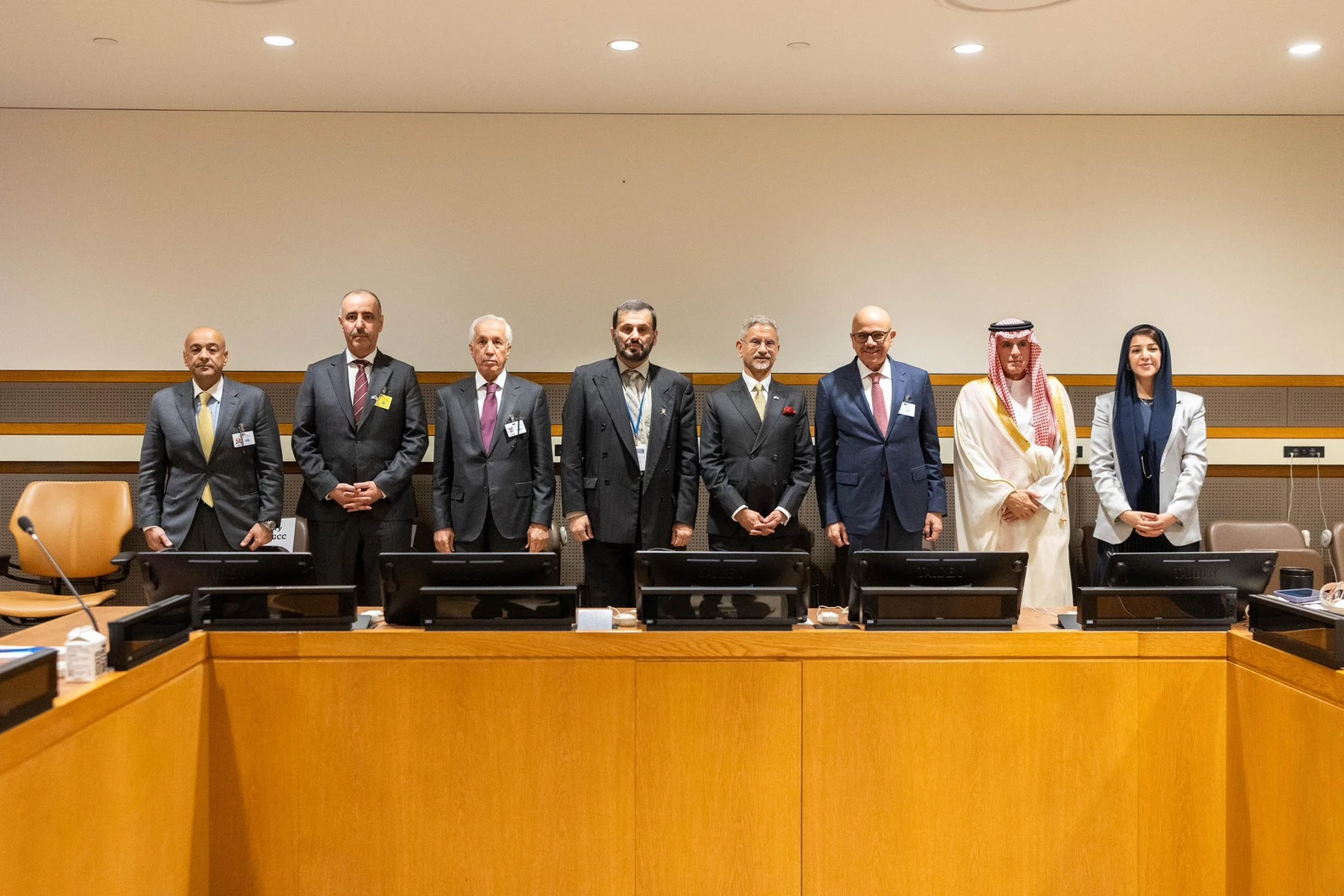
- India’s trade with the GCC was worth more than $178 billion in the 2025-26 fiscal year
- Trade pact likely to benefit agriculture, pharma and service industries, says expert
NEW DELHI: India and the Gulf Cooperation Council will be able to unlock their full bilateral trade potential through the India-GCC Free Trade Agreement, the Indian Ministry of External Affairs said on Saturday.
The GCC and India relaunched negotiations for a free trade agreement in February and have signed the terms of reference for the talks, two decades after a first attempt stalled.
On Friday, the trade pact was part of discussions between External Affairs Minister S. Jaishankar and Gulf officials, including Saudi Minister of State for Foreign Affairs Adel Al-Jubeir and GCC Secretary General Jasem Mohamed Albudaiwi as they met on the sidelines of the UN General Assembly in New York.
“They noted that the FTA is expected to unlock the full potential of trade between India and the GCC upon signing and would be a force multiplier for global good, while facilitating the expansion and diversification of exports and strengthening economic integration between the two sides,” India’s external affairs ministry said in a statement.
GCC-India bilateral trade was worth more than $178 billion in the 2025-26 fiscal year, with the Gulf region also home to about 10 million Indian diaspora.
“Commencing Free Trade Agreement negotiations between the GCC and India marks a pivotal milestone toward broadening economic and investment horizons,” said a statement from the GCC Secretariat.
During the meeting, Albudaiwi also “emphasized the imperative of deepening collaboration” across various areas, including energy, technology, innovation and digital transformation.
India already has a Comprehensive Economic Partnership Agreement with two GCC members, Oman and the UAE, signed last year and in 2022, respectively.
A free trade agreement with the GCC is likely to benefit Delhi, providing “better market access for Indian exports, deeper integration with supply chains, and greater opportunities for Indian services and skilled professionals,” Vanshika Saraf, a research analyst at the Takshashila Institution, told Arab News.
With the GCC comprising six member countries, the “scale itself makes the agreement consequential,” she added, highlighting how the pact will help create greater consistency in customs procedures, rules of origin and regulatory standards.
While India’s machinery, textiles, gems and jewelry industries traditionally benefit from an FTA, Saraf said other sectors might “see greater advantages” when it comes to the Gulf region, such as agriculture and processed foods, pharmaceuticals and medical devices, as well as service.
“The GCC is one of India’s largest trading partner blocs. Even at the individual-country level, the UAE ranks third, and Saudi Arabia ranks fifth among India’s global trading partners,” Saraf said.
“So, the decision to formally launch negotiations for an India–GCC FTA earlier this year gives India an opportunity to put a large part of this economic relationship on an institutional footing.”