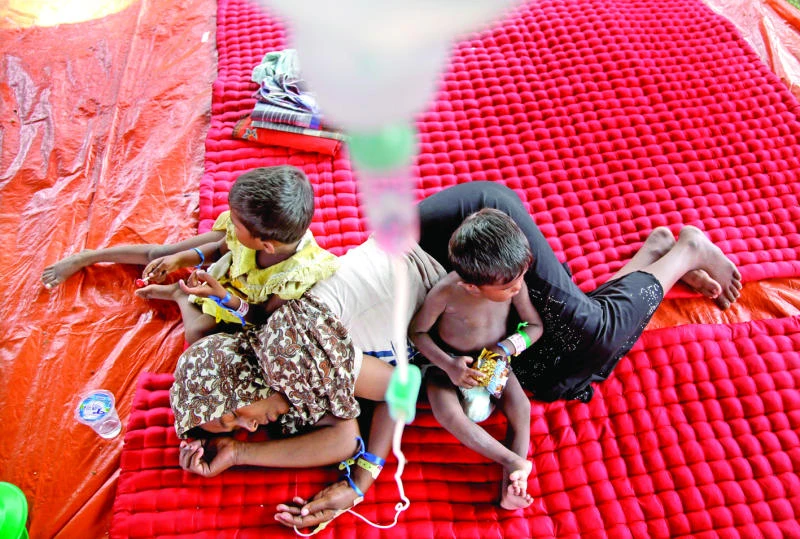
YANGON: A group of migrants recently rescued by Myanmar will be deported to Bangladesh, officials confirmed Saturday, as the United Nations chief called on regional nations to prioritize saving the lives of those still stranded at sea.
Southeast Asia is currently battling an exodus of boat people fleeing persecution and poverty, with up to 2,000 vulnerable migrants thought to be stranded in the Bay of Bengal, many at the mercy of ruthless people smugglers.
Most are Muslim Rohingyas from the western Rakhine state in Myanmar, where they are not recognized as citizens and instead referred to as “Bengalis” or illegal immigrants from Bangladesh.
Bangladeshis, meanwhile, are also trying to escape grinding poverty.
Myanmar has faced increasing international pressure to stem the deluge from its shores and deliver urgent humanitarian relief to thousands still trapped at sea.
On Friday the country’s navy said it had carried out its first rescue of a migrant boat when scores of bare-chested men were found crammed into the hull of a wooden fishing vessel and taken to shore.
Myanmar officials say all 208 men are from Bangladesh and will soon be returned there. AFP wasn’t able to independently verify where the migrants were from.
“We are giving humanitarian assistance to them. After that we will deport them back to the relevant country,” Zaw Htay, director of the presidential office, told AFP on Saturday.
“We have made contact with Bangladeshi border officials on the ground regarding the arrived persons,” he added. Bangladesh’s border guard force said a team would travel to Myanmar shortly.
UN Secretary General Ban Ki-moon said finding and saving the lives of those migrants should be a “top priority.”
Speaking during a visit to Hanoi, he called on regional nations to tackle the “root causes” of the current exodus at an upcoming conference in Thailand later this month.
“But when people are drifting on the sea, how we can search and rescue them and provide life saving humanitarian assistance, that is a top priority at this time,” he said.
Ban said he has been discussing the emergency with regional leaders in Myanmar, Malaysia and Thailand, among others, and urged them to provide search and rescue operations and options for resettlement and reintegration.
"It's important to save human lives," Ban said, adding it was important not to send the migrants back to dangerous situations in their home countries.
The Rohingya face daily discrimination and a raft of restrictions. Many live in displacement camps after scores were killed in 2012 as violence flared between the community and local Buddhists — an event that caused a spike in people trying to flee on boats.
Noble Peace Prize winning opposition leader Aung San Suu Kyi is yet to comment on the current crisis, a silence that observers attribute to fears over alienating a swathe of the electorate just months ahead of the polls.
Myanmar to deport migrants as UN chief urges more rescues