WASHINGTON: Americans finally begin choosing next week among the Republican and Democratic candidates battling to be their party’s 2016 presidential nominee in a series of state-by-state votes.
The White House hopefuls include two highly unorthodox candidates — the politically incorrect billionaire real estate mogul Donald Trump for the Republicans, and Vermont Sen. Bernie Sanders, a self-proclaimed democratic socialist, for the Democrats — both of whom are running strongly in polls of the first two states with nominating contests — Iowa and New Hampshire.
Trump has rocked the Republican political world with a personality-dominated campaign that quickly overwhelmed expected front-runner former Florida Gov. Jeb Bush, the son and brother of former presidents.
Trump is virulently anti-immigration and has called on barring Muslim from entering the country. He boasts unspecified plans to make the US “great again,” touting his abilities as a deal-maker in the business world.
Trump is in a tight race in Iowa with Texas Sen. Ted Cruz, a staunch conservative. Florida Sen. Marco Rubio is polling third and hopes to consolidate support among the party establishment. The rest of the field is lagging behind in single digits, including one-time front-runner Bush, the brother and son of former presidents.
Polls show Trump and Cruz locked in a very close contest in Iowa, while Trump is far ahead in New Hampshire.
Sanders has captivated younger Democrats and those in the most progressive wing of the party with his message of a bigger government that would protect Americans who are losing ground in the country as wealth continues to cluster among fewer and fewer people.
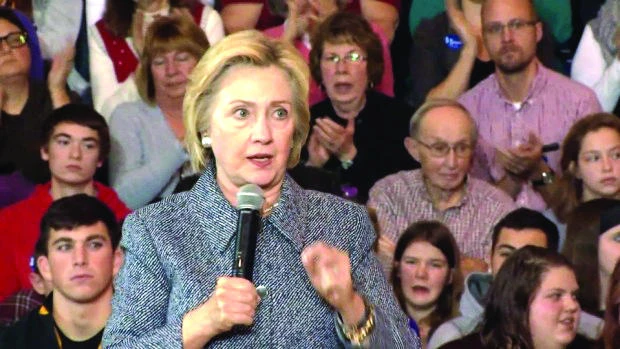
Hillary Clinton, the former secretary of state, New York senator and first lady, still holds a polling lead nationwide, but Sanders has nearly matched the former first lady in Iowa and has eclipsed her in New Hampshire, the tiny New England state adjacent to his Vermont home. He was elected to the Senate as an independent but votes with the Democrats.
Facing potential upsets in Iowa and New Hampshire, Clinton can look to the next contests in Nevada and South Carolina, where she still enjoys strong support among Latinos and blacks who make up a large segment of the Democratic base in those states. Sanders and Clinton have far out-distanced former Maryland Gov. Martin O’Malley.
The US primary system that usually decides each party’s presidential nominee often skews those choices toward the candidates who voice positions that appeal to voters at the extreme ends in both parties.
History has shown that turnout in the caucuses and primaries typically is dominated by the most motivated party base voters. That reality causes problems for candidates.
For example Republican nominee Mitt Romney in 2012 had trouble tracking back to more centrist positions in the general election.
That has become particularly evident this year as voters in both parties voice frustration and anger at the government and the congressional gridlock that has dominated American politics during the eight years of President Barack Obama’s presidency.
Primary voting begins in next year’s bitter American presidential race