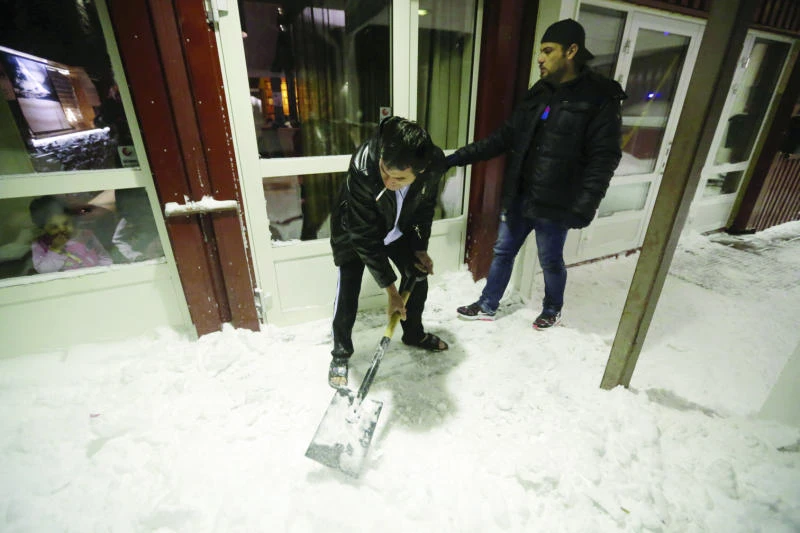
RIKSGRANSEN, Sweden: Far above Sweden’s Arctic Circle, two dozen refugees stepped off a night train onto a desolate, snow-covered platform, their Middle Eastern odyssey abruptly ending at a hotel touted as the world’s most northerly ski resort.
It was Sweden’s latest attempt to house a record influx of asylum seekers.
No one was here to greet them. Only a few, swaying lights flickered on the otherwise empty platform as women fruitlessly wrapped hijabs around their faces to protect themselves from the mountain blizzard.
“Where are we? Is this the final destination?” said Alakozai Naimatullah, an Afghan who worked as a US military translator. He wore tennis shoes, buried in the snow. His words went unanswered in the disorder of arrival. Their bare hands frozen, husbands, wives and children bent over to drag plastic bags filled with worldly possessions over a steep, snowy path to hotel lights a hundred meters below.
They joined around 600 refugees, mainly from Syria and Afghanistan, holed up for two months in Riksgransen. It is some 124 miles (200 km) north of the Arctic Circle and a two-hour bus ride to the nearest town — if the road is not closed by snow.
It is an example of the extremes Sweden is going to in order to house some 160,000 refugees this year in a country of 10 million people. Shelters range from heated tents to adventure theme parks, straining resources.
Refugees find haven in ski resort above Sweden’s Arctic Circle