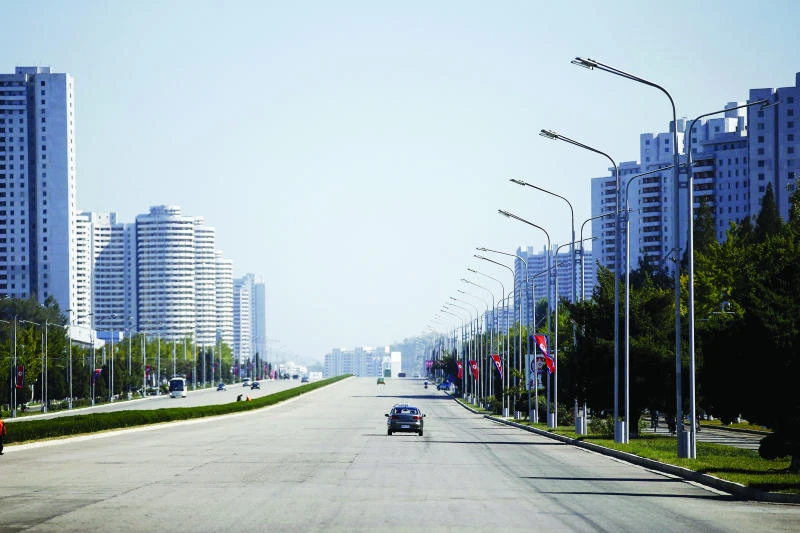
PYONGYANG: Ahead of North Korea’s ruling Workers’ Party anniversary on Saturday, it is a parade of taxis, not tanks, that stands out most in the isolated country’s capital, Pyongyang.
Parts of impoverished North Korea have been serviced for decades by a small fleet of run-down taxis, but in the last few years the industry has mushroomed in Pyongyang, fueled by a rising consumer class.
One of the newest players is Air Koryo, North Korea’s national airline, which launched a fleet of sky blue and white taxis when Pyongyang’s new airport terminal opened earlier this year.
“They didn’t just trickle in,” said Rowan Beard, a guide with Young Pioneer Tours, which brings in Western visitors. “Suddenly there were blue taxis absolutely everywhere.”
The for-hire signs on the roofs of taxis cruising for fares now punctuate Pyongyang’s dimly-lit roads at night.
Air Koryo’s taxis include sedans as well as mini buses and SUVs.
Commercial activity is highly regulated in North Korea but in recent years public-private partnerships between state enterprises and private investors from both inside and outside the country have helped foster a burgeoning dual economy.
North Korea’s Ministry of Transport first imported Chinese-made green and yellow taxis in 2013, regular visitors and residents of Pyongyang said, adding to an older fleet of worn-out Volkswagens and locally-produced sedans.
Taxis now parade in once-empty streets of North Korean capital