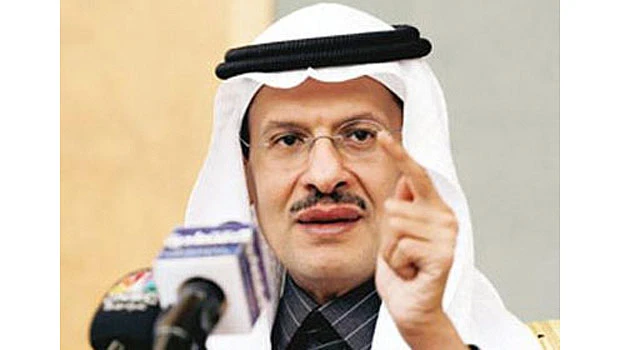
- JEDDAH: Prince Abdul Aziz bin Salman, assistant minister of petroleum and mineral resources for petroleum affairs, on Tuesday thanked the Indian government for lifting an anti-dumping duty it had imposed on the Kingdom's polypropylene exports.
According to the prince, New Delhi lifted the 6.5 percent duty on Dec. 30, 2011, opening a new chapter in its relations with Saudi Arabia. The duty was imposed after Indian authorities accused Saudi Basic Industries Corp. (SABIC) and two other Saudi petrochemical companies of dumping.
Prince Abdul Aziz, who is chairman of the Saudi team dealing with anti-dumping and subsidy cases, said his team had made intensive efforts to convince Indian authorities to lift the duty. He also thanked the Indian negotiation team for its cooperation.
In addition to SABIC, exports of National Industrialization Company (Tasnee) and Advanced Petrochemical Company (Advanced) were also facing the anti-dumping duty, which New Delhi imposed after carrying out an investigation on Feb. 24, 2009.
Anti-dumping measures against petrochemical exports taken by India and China in 2009 interrupted trade flows and hurt businesses in the Gulf region.
The Indian move came a few weeks after the European Commission said it had decided to end anti-dumping and anti-subsidy cases against Saudi exports of polyethylene terephthalate.
"The European Commission has accepted a request to withdraw the cases filed by companies through the Association of Product Manufacturers in Europe after having discovered the two cases do not harm the interests of the European Union," Prince Abdul Aziz said in December.
Custodian of the Two Holy Mosques King Abdullah set up the team headed by Prince Abdul Aziz to deal with anti-dumping cases against Saudi petrochemical exports in different countries.
The Kingdom gives utmost importance to the petrochemical industry that contributes heavily to its diversification drive and helps attract foreign investment.
Prince Abdul Aziz said the team contacted the European Commission and the governments of the European Union to clarify the Kingdom's position concerning these issues.
"We have told that the support given by the Saudi government to its industries goes in line with World Trade Organization's regulations as well as the agreement reached with EU during negotiations to win the Kingdom's admission to the WTO," the prince pointed out.
Abdul Rahman Al-Zamil, president of the Saudi Export Development Center, has expressed his happiness over the decision taken by EU and India to lift the duty on Saudi petrochemical exports.
"This is a big achievement that reflects the government's keenness to challenge dumping cases against Saudi exports," Al-Zamil said. "The appointment of a special team under the leadership of Prince Abdul Aziz shows that the government has taken the matter seriously," the SEDC chief said, adding that such cases pose a threat to the Kingdom's economy.