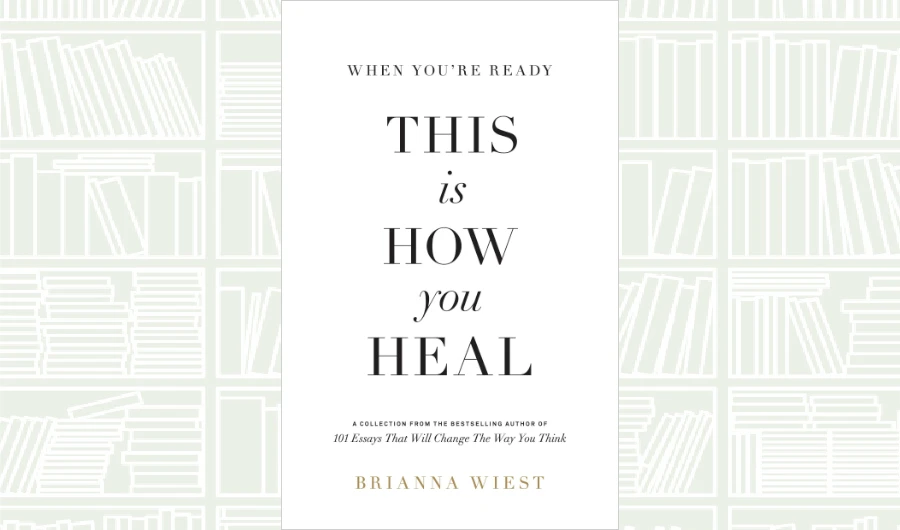
Some books offer advice, while others make readers feel as though someone has finally put their unspoken emotions into words. Brianna Wiest’s “When You’re Ready, This Is How You Heal” belongs to the latter category.
Reading this book felt surprisingly personal. At times, it was almost as though Wiest was speaking directly to me, acknowledging feelings and experiences I had struggled to explain.
Her words offered a sense of validation, reminding me that pain does not always need to be justified or hidden to be understood.
What makes the book particularly moving is its gentle approach to healing. Rather than presenting recovery as a dramatic transformation, Wiest explores how it can begin with small, often unnoticed decisions: choosing rest without guilt, recognizing personal needs, setting boundaries and learning to forgive ourselves for things we did not know or understand at the time.
One of the book’s most meaningful themes is making peace with the person we used to be. We often look back at earlier versions of ourselves with regret, questioning our decisions or wishing we had been stronger.
Wiest encourages readers to approach those memories with compassion, recognizing that sometimes we were simply doing our best to survive.
The book also challenges the idea that strength must always mean remaining composed, independent or unaffected by difficult experiences. Sometimes, the strength we work so hard to demonstrate makes us forget how to be vulnerable, acknowledge our fears and allow ourselves to heal.
This was perhaps the message that resonated with me most. We can become so accustomed to being strong that softness begins to feel unfamiliar, even when it is exactly what we need.
Wiest’s writing is soft yet powerful, making the book particularly accessible to those beginning their healing journey. Its reflective style offers comfort rather than pressure, allowing readers to approach difficult emotions at their own pace.
I would recommend “When You’re Ready, This Is How You Heal” to anyone learning to make peace with their past, confront their fears or reconnect with themselves.
Ultimately, it is a reminder that healing does not always mean becoming someone new. Sometimes, it simply means learning to treat the person you already are with a little more kindness.