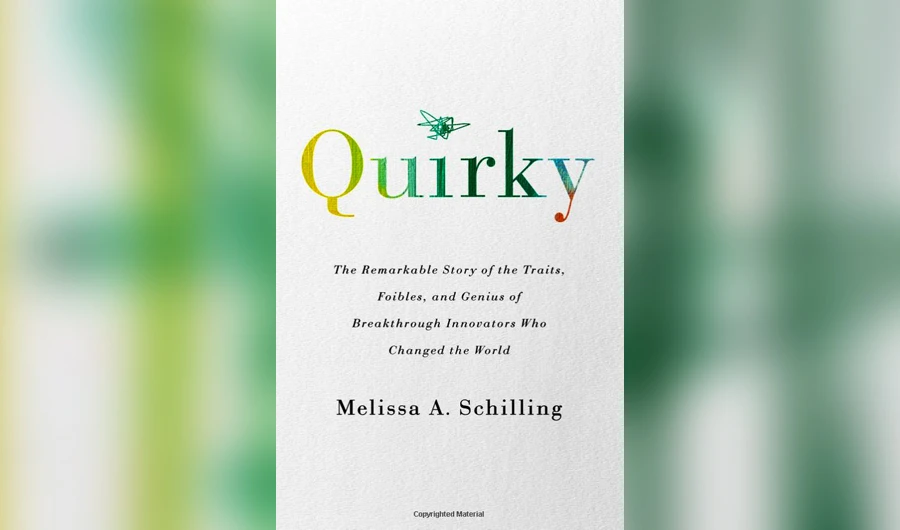
- The author takes us on a fascinating journey through the minds, experiences and ideas of people whose innovations have transformed the world
Why are some people so innovative? Are they different from the rest of us? Is it a question of genes, education or luck?
The idea for the book “Quirky” goes back to 2011. Melissa Schilling was teaching a class in “innovation strategy” when she overheard students commenting on Steve Jobs’ sudden weight loss. What would happen to Apple without its iconic leader, they asked.
“I began to study Steve Jobs, comparing every detail I could find on him with the existing research on innovation and creativity,” Schilling said. After finding similarities between Jobs and other innovators, she decided to go ahead with a research project on eight serial innovators.
“I didn’t care if it turned into something I could publish,” she said. “I knew it was a high-risk project. I did it because it was pure fun. It was illuminating.”
This enthusiastic tone is present throughout the book. The author takes us on a fascinating journey through the minds, experiences and ideas of people whose innovations have transformed the world. One characteristic shared by most innovators is a sense of separateness and estrangement that manifests itself in a rejection of rules and norms, and a lack of interest in social interaction.
Jobs was described by his girlfriend Chrisann Brennan as “disconnected and awkward.” Microsoft founder Bill Gates has also been characterized as an introvert, lacking strong social skills. Elon Musk, the man behind SpaceX and Tesla, has said that “he never truly had a chance to make friends.”
What is surprising is that some innovators possess little previous training or knowledge in their field. Musk, for example, had only an undergraduate degree in physics and economics but was able to design a prototype for a reusable rocket after being told by US manufacturers that it was impossible.
Breakthrough innovators do not live normal lives. They cross boundaries, ignore limits — and remain in a league of their own. As our “quirky” journey comes to an end, we understand the potential for innovation lies within all of us.