Communities’ innovation is very much relevant in a prospering real estate sector, particularly here in Saudi Arabia, where demand surpasses supply.
Communities by real estate definitions have several meanings, all of which lead to the same concept.
A community could be known as a semi-gated or gated quarter or locality in which a group of people live, or a group of people living in the same locality under the same lifestyle, environment, or people living and interacting with one another in a particular environment.
They’ve similarity in social and professional background, interests, preferences and needs.
Traditionally, the community has been defined as a group of interacting people living in a common location.
The word is often used to refer to a group that is organized around common values and social cohesion within a shared geographical location, generally in social units larger than a household.
The concept of community innovation comes from the concern with the public realm, particularly from our neighborhoods.
This certainly leads us to investigate the social interaction in public spaces and how we can go about revitalizing neighborhoods and developing economic resilience that are safe, secure and smart; while taking into consideration the increased demand and emphasis on community collaboration, which indicates the need for social recognition and independent living.
Innovation on the other hand, is about creating a niche over others to be met by demand.
It starts with evaluation of likely changes and outcomes from such a demand.
This should help us to identify new ideas and opportunities.
This collection of resources represents a practical roadmap, which will help us to identify opportunities for adapting our innovation initiatives in any given economic conditions.
We’ve used this roadmap to help to position our company’s brand Rafal to take full advantage of the upturn when it inevitably comes.
It is imperative to learn how to redouble the focus on clients’ needs, and strengthening the positioning of the products and services using marketing innovation.
Today, clients need assurances that we are the best possible real estate developer that is there to meet their needs.
Are our products and services differentiated enough so that clients can see the advantages we offer? We make sure that we clearly understand how your key clients determine values, and align our products, services and marketing tools with those values. And we also focus at the same time, on our key clients and communities’ innovation, monitoring how their needs have evolved, but never neglecting markets complementary to the ones we serve.
Today, real estate developers must prune the innovation portfolio by getting rid of some of the riskier, long-term, or broadened strategies and concepts, and deploy their funds to support more promising initiatives with shorter time-frame.
They should abort the least promising ideas and focus on those with the greatest potential.
Many companies that claim to have no resources actually have plenty of resources, but they are tied up in the wrong activities and projects.
We look for opportunities to inexpensively test new ideas. Fail fast and cheaply.
“Build, test and learn cheaply” is the mantra that we follow.
One must be ready to embrace an open-source innovation. Look for opportunities beyond the existing walls to continue with research and development, but at a lower cost and lower risk.
This practice certainly enables us to submit our idea, challenging a large community for example and by teaming-up with experts, maintaining the momentum through the life cycle.
We must always look for creative ways to extend our current portfolio, by considering adding value-added services to our communities, and brainstorming the appropriate ways to provide new client experiences and lifestyles.
We think in terms of other uses of the communities and provide greater utility than those of our competitors.
The credibility and reputation stands second to none. One ought to take a fresh look at the stakeholder relationships.
Many companies habitually undervalue their suppliers.
Chances are that we improve the efficiency of collaboration, logistics and other elements of your logistics’ chain. Strengthening those relationships, help us brainstorm other potential partnerships that could increase your value to our key clients.
The developers must conduct disruptive threat assessment very often to identify any emerging competitors who may see their weakness as an opportunity to advance.
Sometimes, incumbents tend to ignore new entrants because their products and business models are too basic to be taken seriously.
But, in reality, many new comers are providing products and services that have already ‘overshot’ the needs of their core clients.
Most importantly, one should not just think of innovation in terms of products, services, and business models, but should spare time to brainstorm with a cross-functional team to identify areas of waste and take corrective steps to minimize it, which sometimes uncover huge opportunities for cost savings.
Gentlemen, last but not the least, I believe that it takes vision, creativity and determination to develop a land into an environment; crafting different lifestyles, quality homes in community style living.
Each community serves its own special purpose and presents unique culture and challenges.
For us, at Rafal, it’s far more than a business, it’s a consuming passion. It is about purpose, composition and absolute professionalism. It is about being bold, exceptional, transparent, aspirer and achiever. This is the essence and this is what Rafal is all about.
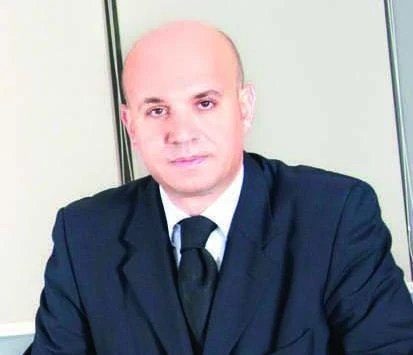
— Darwish Bakeer is the chief commercial officer at RAFAL.
Real estate: Focus on communities’ innovation