DEAD SEA: The routes that have carried Gulf trade for centuries may not hold, and Jordan could become the new road to Europe, a senior European Commission official told Arab News.
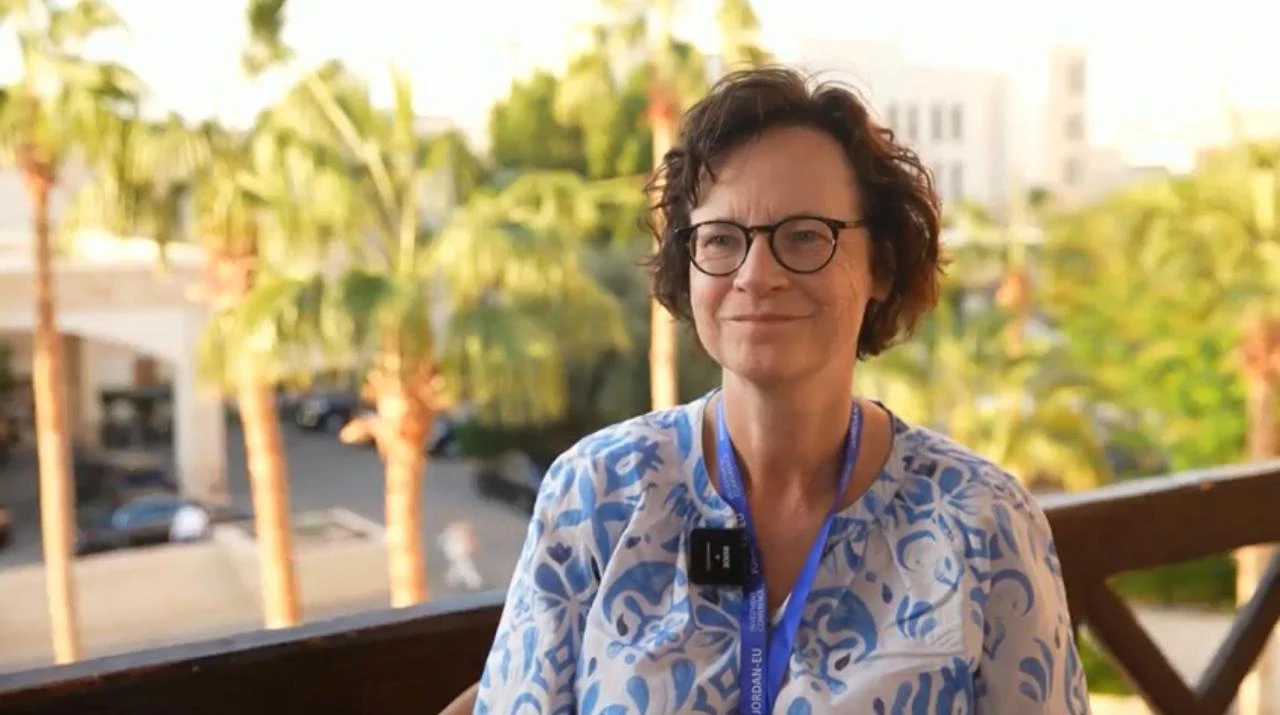
Henrike Trautmann, director for the Middle East at the Commission's Directorate-General for Middle East, North Africa and the Gulf, said the upheaval of recent years had forced the Gulf to rethink how it connects to the world. That, she said, has created an opening for the EU, the Gulf and Jordan to invest together.
"You can see that with all the changes in the region in the last three years, and particularly in 2026, there is a need to diversify," she said on the sidelines of the Jordan-EU Investment Conference at the Dead Sea.
"The Gulf countries know that the trade routes and connectivity routes they have been using for decades, for centuries, are not necessarily going to function forever in the same way."
The search for alternatives, she said, leads north. "Some of those alternatives will go through Jordan and through Syria and connect back to Europe in a different way. There are huge opportunities for investment."
Trautmann described the cooperation between the three sides as "super important" and pointed to the Gulf presence at the conference as evidence that the interest is real.
The opportunity extends beyond Jordan's borders. Syria, she said, is where the scale of the task is greatest, and where Gulf and European money can work together.
"They're also interested in investing in Syria, where after 50 years of dictatorship and 15 years of war, everything needs to be redone," she said. "So you build roads, build factories, renovate hospitals, and also bring people into jobs. That is something the investments the EU and the Gulf make together will help with."
If physical trade routes are shifting, so are the routes that carry data. Trautmann said a visit to the Aqaba Digital Hub on the eve of the conference showed how far Jordan had moved before the global AI race began.
"If you look at what they have built up in the last couple of years, before AI was even a thing, the data centers they have now and the cable connections that are already operating, Medusa, Blue-Raman and all these things, I think there are huge possibilities," she said.
The hub, she said, has room for five more data centers. "If you can get the investment going, and I think they're well on the way to that, then it will play a big role not only for the region, but in particular for Jordan and also for the relationship between Jordan and the EU."
She was careful not to overstate AI's role in the region's economic recovery. She said it would be important, but how the technology develops over the next few years remains to be seen.
Behind all of this, Trautmann said, is a human question: whether Jordan can keep the talent it produces. The kingdom has 30 universities, ten state and 20 private, and its graduates are in demand.
"Traditionally, many of the engineers and many of the STEM graduates go to the Gulf or to Europe, so they're not staying in the country," she said. "The investments we discussed here today will give them the possibility to stay in the country."
She said the EU also wants to reach young people who do not go to university, through initiatives under the Pact for the Mediterranean, signed a year ago, that aim to build the skills needed for the job market of tomorrow.
"Jordan's youth will benefit from that, and so will young people in the rest of the region," she said.
The picture Trautmann describes has three parts. Gulf capital is looking for new routes, Europe brings financing and policy support, and Jordan sits between them as a corridor for goods, data and reconstruction.
In a region where old certainties are fading, the EU official's message was that Jordan's geography, once seen as exposure to neighbouring crises, is becoming its strongest selling point.