Saudi Arabia’s economic transformation is creating new possibilities for a generation ready to turn ambition into enterprise.
Across the Kingdom, entrepreneurs are building businesses in technology, tourism, retail, hospitality, the creative industries and professional services. Their impact extends far beyond the businesses they build: they are creating jobs, opening new markets and advancing Saudi Arabia’s economic diversification.
Their stories are diverse, but many share distinct values: ambition, authenticity, determination and a willingness to embrace change.
Perhaps one of the clearest indicators of Saudi Arabia’s economic transformation is the remarkable growth of its small and medium-sized business community.
The Kingdom now has more than 1.7 million SMEs, compared with around 429,000 in 2016. Together, they employ approximately 8.8 million people and contribute 22.9 percent of the GDP. More than 474,000 enterprises are owned by Saudi youth.
These numbers tell an important story. Entrepreneurship is increasingly becoming a meaningful part of how Saudis participate in and shape the economy.
The ambition is also clear in the Kingdom’s longer-term objectives. Saudi Vision 2030 aims to increase SMEs’ contribution to the GDP to 35 percent, recognizing their importance to private-sector development and economic diversification.
But entrepreneurship is about more than numbers. Behind every new company is someone who has identified an opportunity, taken a risk and decided to build.
What is particularly interesting about Saudi Arabia’s entrepreneurial growth is that modernization has not meant abandoning local identity.
Many businesses are finding opportunity precisely by drawing upon it.
Saudi entrepreneurs are building contemporary businesses around local food, fashion, design, tourism, entertainment, crafts and culture. Others are taking ideas developed for Saudi consumers and considering how they might travel beyond the Kingdom.
The growth of homegrown franchise brands illustrates this shift. By the second quarter of 2026, 744 Saudi franchise brands were operating in the Kingdom, compared with 93 when Monsha’at’s Franchise Center was established in 2020.
This reminds us that authenticity and commercial ambition do not have to compete. Increasingly, Saudi identity itself can be a source of creativity and differentiation.
At the same time, the tools available to entrepreneurs have changed dramatically.
A small business no longer needs to think only about the customers who walk through its doors. Digital storefronts, social platforms, logistics networks, and electronic payments have enabled businesses to reach customers across cities, regions, and increasingly, borders.
At Visa, we see this transformation firsthand. Across Saudi Arabia, entrepreneurs are increasingly leveraging digital payments and commerce tools to serve customers more efficiently, streamline operations and unlock growth opportunities beyond their immediate markets. As business models evolve, access to secure and seamless payment capabilities is becoming an increasingly important enabler of business growth and economic participation.
This shift reflects the broader digital transformation taking place across the Kingdom. Today, approximately 85 percent of retail payments in Saudi Arabia are conducted digitally, highlighting how consumer expectations have evolved, underscoring the growing importance for SMEs to offer seamless digital payment experiences. As more consumers embrace digital-first ways to pay, businesses that can meet those expectations are better positioned to compete, grow and serve customers wherever they choose to shop.
Visa’s recent Pay and Be Paid study highlights that Saudi SMEs have largely moved beyond basic digital payment adoption, with the vast majority now actively accepting and making digital payments. The research also points to the next opportunity for many businesses: connecting payments with broader business operations such as invoicing, cash flow management and day-to-day administration.
Saudi Arabia’s e-commerce ecosystem reflects that momentum. By the second quarter of 2026, the Kingdom had more than 48,000 e-commerce commercial registrations, with particularly strong activity in Riyadh, Makkah and the Eastern Province.
For an entrepreneur, this technology is ultimately practical. It can make it easier to start a business, accept payments, understand customers, manage operations and reach new markets.
Technology is therefore not the story in itself. What matters is what entrepreneurs can do with it.
Increasingly, many Saudi businesses are also being built digital-first from Day 1, using online channels, digital tools and integrated business platforms from the outset rather than adopting them later. This reflects a broader entrepreneurial shift toward growth models that are designed to be scalable, connected and adaptable from the start.
Starting a business has never been easy. Entrepreneurs everywhere face questions of financing, talent, competition and the challenge of turning an idea into a sustainable operation.
Saudi entrepreneurs are no different.
What has changed is the ecosystem surrounding them. Greater access to financing, incubators, accelerators, digital infrastructure, and specialized support is creating more pathways for businesses to establish themselves and grow.
That ecosystem matters because successful entrepreneurship requires both individual determination and an environment that allows that determination to translate into opportunity.
As Saudi Arabia’s economy continues to diversify, SMEs will play an increasingly important role not simply as beneficiaries of transformation, but as participants in creating it.
Their contribution can be seen not only in national figures and growth targets, but also in everyday success stories: in the restaurant opening its second location, the designer taking a Saudi brand online, the technology startup solving a local problem, or the family business preparing for its next generation.
Together, these businesses tell a broader story about modern Saudi Arabia — ambitious about what comes next, confident in where it comes from, and increasingly equipped to turn ideas into opportunity. As a long-standing partner to businesses of all sizes, Visa is committed to helping entrepreneurs access the tools, capabilities and networks that can help transform ambition into sustainable growth and opportunity.
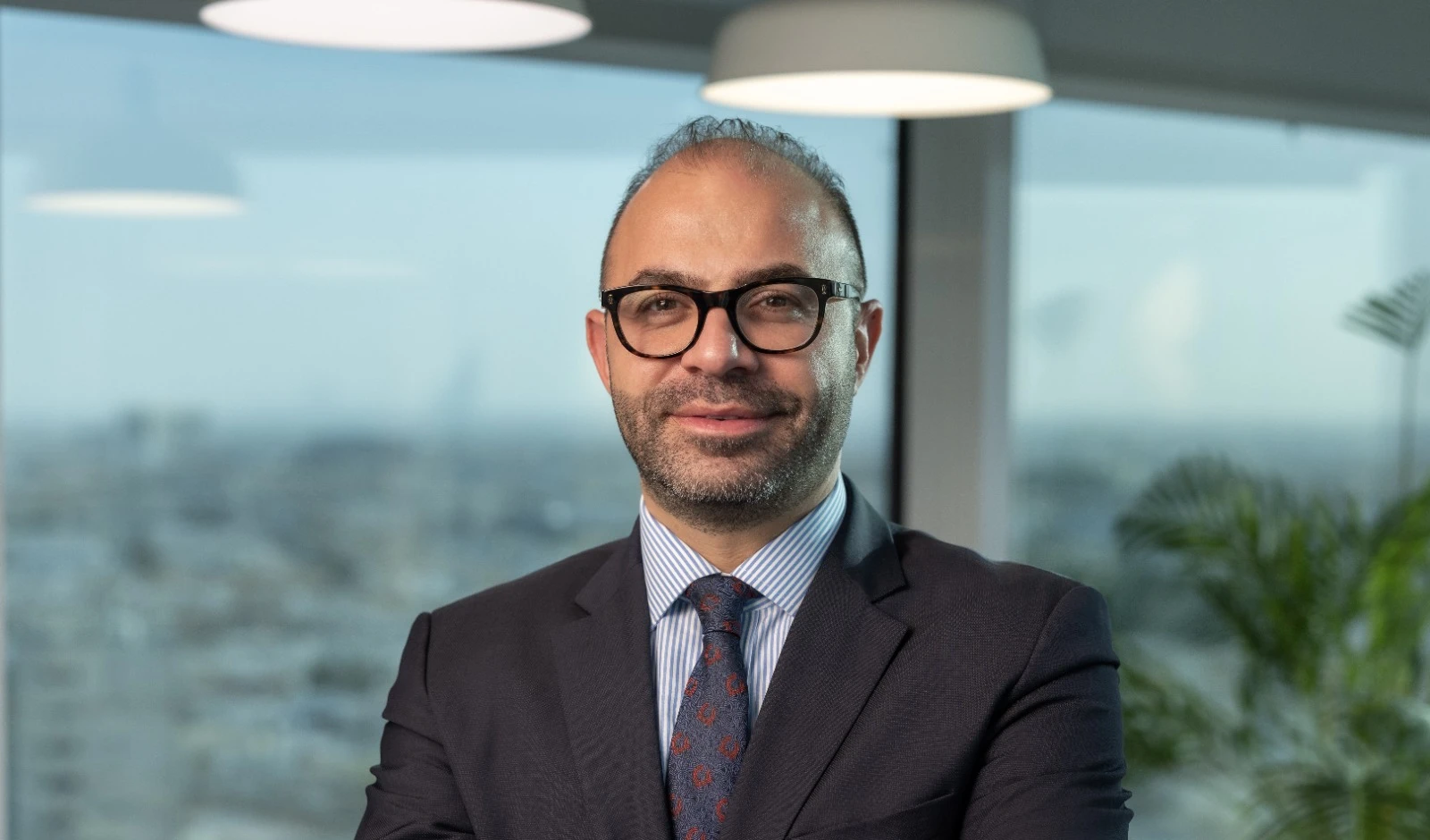
The writer is senior vice president and group general manager for Saudi Arabia, Bahrain and Oman at Visa.