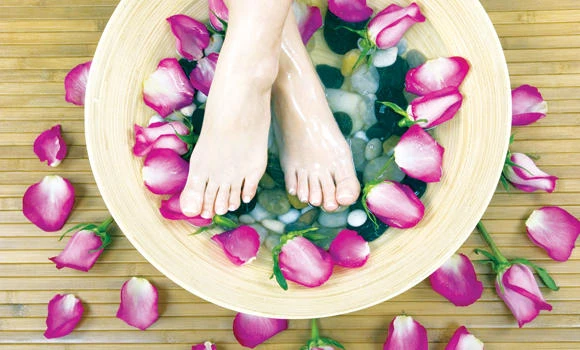
Newspapers, magazines and television programs overwhelm us with all kinds of information about hair, skin, nail care, diet and exercise programs but very little concerns our feet. In fact specialized products for the feet still make up a very small percentage of sales.
“There’s actually very little literature about foot care available to the public, unless you know where to look or have an interest. But I hope to change that with this book” writes Stephanie Tourles about his book “Natural Foot Care: Herbal Treatments, Massage, and Exercises for Healthy Feet.”
Many of us do not even take proper care of our feet. Yet, our feet allow us to walk and run, taking us where we need to go but what do we really do to keep them in good shape?
Ill-fitting shoes are the source of most foot problems. We stuff our feet into high heels or loafers with narrow toes or wrap them in nylon socks so they can’t breathe. We also not only tend to buy shoes that are too small but also wear shoes past their designated life span until all the supportive cushioning is no longer able to do its job.
Furthermore, most people feel that they must follow the latest shoe fad and it is an accepted fact that our feet must suffer for fashion’s sake.
“Nearly 75 percent of a foot specialist’s patients are women, and the majority of their problems are shoe-inflicted. We encourage manufacturers to keep producing narrow, pointy flats and heels by continuing to purchase them. We buy shoes mainly for their aesthetic appeal and we’ll put up with a degree of discomfort if it makes our ‘outfit’ look smashing.”
For vanity’s sake, many of us wear shoes that are too small for our feet, in order to have a more “dainty appearance.” It is not uncommon for a woman of sixty years of age, for instance, to still purchase the same size shoe she wore when she was thirty, even though she knows she should wear a larger size. Your feet tend to widen and change shape as you age. They should be measured whenever new shoes are purchased to help avoid the development of blisters, bunions, corns, calluses and other foot problems that can be caused by shoes that are too tight or ill-fitting.
Furthermore, heels which give added height and a feeling of power can also cause our body to become unbalanced. The body’s weight is no longer evenly distributed. It is shifted forward onto the balls of the feet, which dramatically increases the pressure on the toes and arches, instead of on the heels. Wearing high heels every day increases your chances for foot and leg problems. Rather than wear high heels every day, wear them infrequently and limit heel height to two inches or less. Last but not least, put your high heels on no longer than three hours or so at a time.
In addition to shoe abuse, our feet also suffer from lack of daily care but people are finally realizing that well cared-for feet are the key to a comfortable and healthy body. The percentage of pedicures is increasing every year, especially the number of male customers. It is recommended to have a professional pedicure once a month if possible. Furthermore, one should use a rich cream two to three times a week to have a smooth skin and smooth your calluses with a good foot file once or twice a week.
Calluses are layers of hard, tough dead skin that form on the bottom of your feet, heel, side or even tips of your toes. The only way to remove permanently a callus is to remove the cause. So unless you never walk, calluses will return no matter how often you scrape them off.
Finally, what better than a foot massage to “soothe your spirits, reduce your stress, put the spring back into your step, and soften your feet.” The first written records of massage date back three thousand years to China and a bas-relief on the tomb of Ankh-mahor, an Egyptian priest who lived around 2200B.C. depicts a seated man who is given an energetic foot massage.
Incidentally diabetics frequently suffer from foot problems such as athlete’s foot, neuropathy (gradual loss of nerve function in the legs and feet leading to loss of feeling or sensation), numbness, cold feet, ulceration, calluses, and corns. It is therefore recommended for diabetics to visit a foot specialist at least twice a year to prevent any minor problem from developing into potentially limb-threatening complications.
To conclude, walking is the best exercise for your feet as well as for your body. Walking strengthens and stretches your muscles, revs up your circulation to keep your feet warm; and if your feet tend to swell, walking helps alleviate that problem too. Try to get into the habit of walking for health at least four to five times per week and work up to thirty to forty-five minutes each session.
Natural Foot Care is a classic of it’s kind. This comprehensive book tells us all we have to know about sore and irritated feet. Besides easy recipes for moisturizing creams, healing ointments and herbal recipes for an at-home pedicure, you will also find natural solutions to problems like corns and cold feet and advice for finding shoes that really fit as well as exercises for strengthening and stretching foot muscles.
—
Email: [email protected]
How to care for your feet naturally