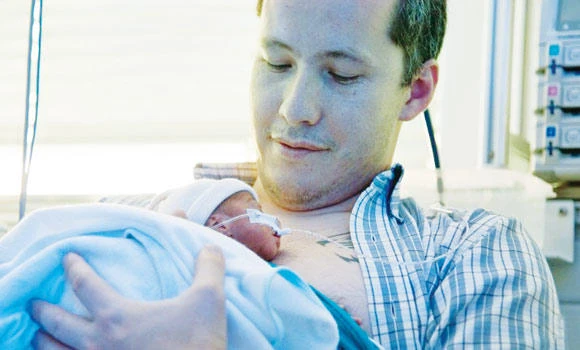
At Bogota’s San Ignacio hospital, Cesar Algeciras often spends five hours straight in the neonatal intensive care unit, lovingly clutching his premature son to his bare chest.
“Feeling his heart beat is a delight,” said the 36-year-old computer engineer. “Sometimes I don’t even have to check the monitor to make sure he’s fine.”
This simple practice of skin-to-skin contact is known as “kangaroo care” — in a nod to the marsupials who carry their young in a pouch after birth to complete their development — and started in Colombia more than 30 years ago due to a shortage of incubators.
After an initial bout of skepticism, it has become common practice in this South American country — and has spread around the world.
At just 27 weeks, Algeciras’s son is one of several early-term newborns in the hospital struggling to survive.
And, while he does spend some time in an incubator, his father is convinced the physical contact is working wonders.
That’s also the belief of Nathalie Charpak, the doctor who has pushed to standardize “kangaroo care” since 1978.
“An infant in intensive care doesn’t sleep for more than 19 minutes at a time,” she told AFP. “It’s really traumatizing to be frank, it’s torture.” While it sounds easy enough, “kangaroo care” comes with certain rules.
Parents are not allowed to change position — except to feed and change the baby. And even at night, they can’t lie down to ensure the infant stays upright and in constant contact with their skin.
The surrounding environment is also key. In an effort to recreate womb-like conditions, nurses at San Ignacio ensure the lights are dimmed and are alerted if the noise level rises above 60 decibels.
The practice — which Charpak claims is “as effective as an incubator” — has gained traction abroad.
‘Kangaroo care’ practice helps Colombian babies