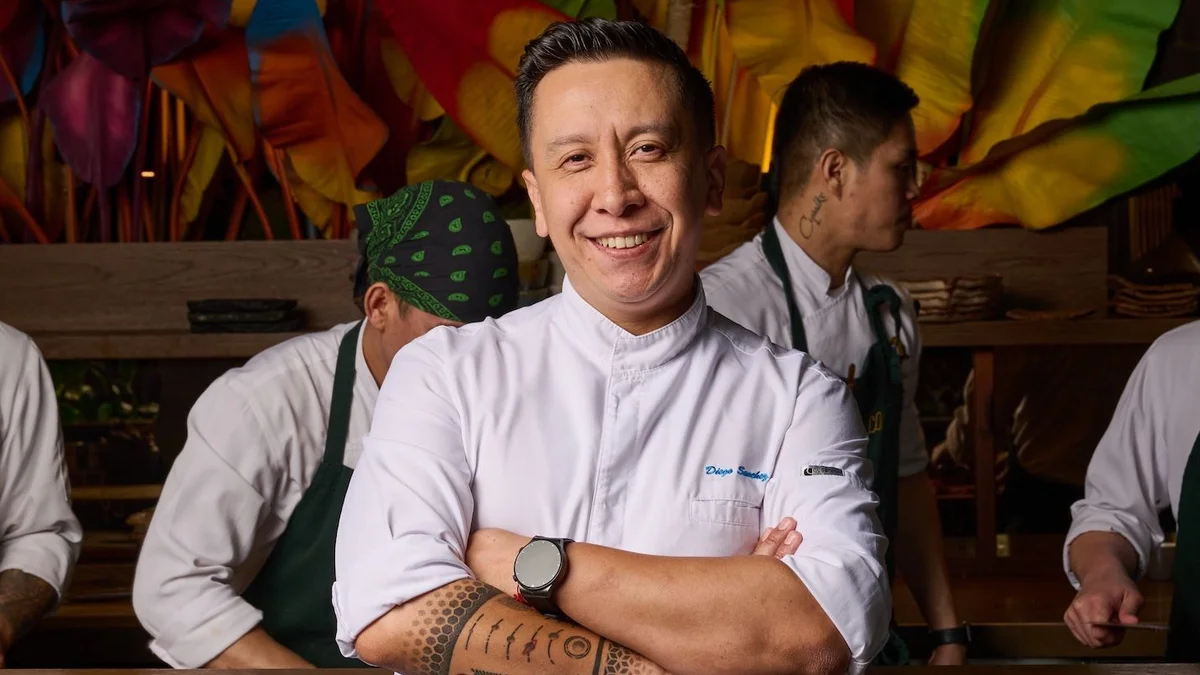
- The culinary director of Amazónico talks tasting, togetherness, and trusting your instincts
DUBAI: Colombian chef Diego Sanchez Vargas grew up in Bogotá with three brothers. Their mother taught them all to cook when they were young so that they could help around the house.
“Cooking was simply part of our everyday life, and eventually one thing led to another,” Vargas told Arab News.
In 2001, three months after finishing high school, he enrolled in culinary school. He later studied pastry in Buenos Aires and went on to work with Peruvian chefs Gastón Acurio and Virgilio Martínez and Mexican chef Richard Sandoval. Today, he is culinary director of Amazónico, overseeing its kitchens across the Middle East and Europe.
“There’s a lot of glamour surrounding the culinary industry these days, but I don’t think enough recognition is given to the cooks working behind executive chefs and celebrity chefs,” he said. “They’re the ones who make everything happen every single day. For me, helping those people grow and succeed is one of the most rewarding parts of my career.”
When you started out, what was your biggest challenge?
Insecurity. I was always worried about not getting the meat cooked perfectly or not achieving the right flavor in a dish. That uncertainty created pressure, and when you’re under pressure and afraid of making mistakes, that’s usually when you make them. With experience, you learn to trust yourself and your instincts.
What’s your top tip for amateur chefs?
Don’t just follow recipes. Try to understand the reason and the science behind cooking. Why does something work? What happens to an ingredient when you cook it a certain way? Once you understand these things, you can start trusting your instincts. Cooking becomes much more interesting when you know why you’re doing something, because then you can adapt, experiment and improve.
What one ingredient can instantly improve any dish?
Almost any ingredient can make a dish better if you know how to use it. The secret is understanding your ingredients, and the only way to really do that is by tasting, tasting and tasting again.
When you go out to eat, do you find yourself critiquing the food?
If I’m somewhere casual, then I don’t expect fine-dining standards. But when you go to an elegant restaurant, the small details really matter. One mistake I see quite often these days is making simple things unnecessarily complicated. Sometimes there’s too much storytelling around a dish just to justify its value. For me, great ingredients should speak for themselves.
What’s your favorite cuisine to order?
I love the intensity of the flavors, the freshness, and the natural balance between vegetables and animal proteins in Asian cuisine. From Nepalese food to Chinese and Japanese cuisine, each has such a strong identity and beautiful traditions. Sometimes all I need is a really good wok-fried rice or a few perfectly prepared nigiri. Simple food, done properly, is always a pleasure.
What’s your go-to dish if you have to cook something quickly at home?
I almost always have some fish at home, so that’s usually my starting point. I like to marinate it with a little soy sauce, vinegar, ginger and garlic. While that’s resting, I’ll roast some green vegetables, usually broccolini, snow peas and mushrooms. Then I sear the fish in a hot pan and finish it with a little of the marinade and some butter, making sure the sauce cooks through. It’s quick but full of flavor.
What customer behavior most annoys you?
When someone claims to have a food allergy when, in reality, they simply don’t like an ingredient. We take allergies very seriously in professional kitchens, so it’s important to know the difference. Lately, I’ve also noticed people vaping in places where smoking isn’t allowed. I find that quite annoying, especially when other guests are trying to enjoy their meal.
What’s your favorite dish to cook?
Ceviche. Or a good afternoon barbecue with friends and family. Both bring back beautiful memories of spending time with the people I love. For me, cooking has always been about much more than just preparing food. It’s about bringing people together, sharing stories, having a few laughs and enjoying the moment. Those are the experiences that make food special to me.
As a leader, what are you like?
My style has definitely evolved over the years. Different roles and responsibilities require different approaches. Today, I’d say I’m a leader who values people’s opinions and believes in involving the team in the process; I always try to make sure everyone understands why we make certain decisions and what we’re trying to achieve. Keeping the team motivated and maintaining positive energy is just as important to me as achieving results. I believe you can be demanding and maintain high standards while still being fair, approachable and supportive.
Chef Diego’s traditional ceviche
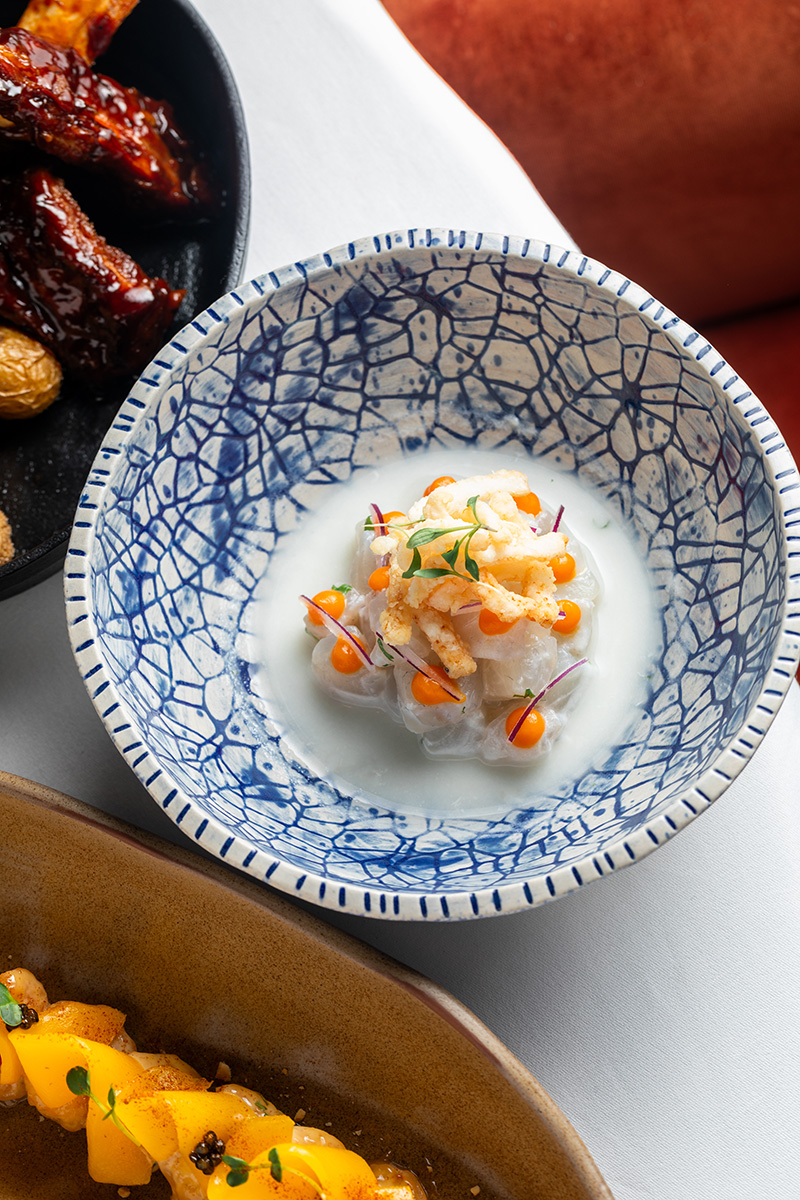
Serves 4
Tiger milk (leche de tigre)
Celery — 133g
White onion — 80g
Garlic — 8g
Ginger — 5g
Fresh chili — 1 (adjust to taste)
Fresh white fish, trimmed — 80g
Cold water — 240g
Ice cubes — 213g
Fresh coriander leaves — 5g
Fresh lime juice — 300g
Salt, to taste
Peel the garlic and ginger. Cut the celery, onion, garlic, ginger, chili and fish into small cubes.
Place them in a blender with the cold water and ice. Do not add the coriander yet. Blend on high speed for 45–60 seconds, until the ice is fully blended and the mixture is very cold.
Add the lime juice and blend for only 5–10 seconds. Season with salt and adjust the acidity, heat and salt until balanced.
Add the coriander and blend for about 5 seconds only, so the mixture doesn’t turn too green.
Strain through a fine sieve without pressing hard. Keep chilled.
Roasted sweet potato
Sweet potato — 100–120g
Olive oil — 5g
Sugar — 3g
Cinnamon — 1 small stick or a pinch of ground cinnamon
Clove — 1
Salt — a small pinch (optional)
Preheat the oven to 180°C. Wash and dry the sweet potato.
Place it on aluminum foil, add the olive oil, sugar, cinnamon and clove, and wrap tightly.
Roast for 40–60 minutes, depending on size, until completely tender when pierced with a knife.
Let cool, then unwrap, discard the cinnamon and clove, and peel.
Cut into 1cm slices.
Sweet corn with star anise
Fresh sweet corn on the cob — 2 ears
Water, to cover
Star anise — 1
Sugar — 15g
Remove the husks and silk from the corn. Cut each cob in half if you like.
Bring enough water to cover the corn to a gentle simmer. Add the star anise and sugar, stirring until dissolved.
Add the corn and simmer gently for 10–15 minutes, until tender.
Remove the corn, let it cool and discard the star anise. Cut the kernels from the cob.
Red onion
Red onion — 80g
Peel the onion, trim both ends and cut in half from root to tip.
Slice each half lengthwise into very thin strips, about 1–2mm wide.
Separate the strips. For a milder, crisper garnish, soak in ice-cold water for 5 minutes, then drain and dry thoroughly.
Keep chilled and covered until serving.
Assembly
Sea bass, cleaned and cut into 1cm cubes — 240g
Tiger milk — 200g
Roasted sweet potato — 60g
Cancha (toasted Peruvian corn) — 40g
Cress — 4g
Keep the sea bass and tiger milk well chilled until serving.
Divide the sea bass into four 60g portions. Just before serving, dress each with 50g of tiger milk.
Place 15g of sweet potato on each chilled plate and arrange the sea bass alongside or on top.
Finish each plate with 10g of sweet corn, [the red onion, cancha and cress]. Serve immediately, cold.
Chef’s tips: The amount of lime juice you need depends on how acidic the limes are, so taste and adjust as you go. Squeeze the limes gently by hand to avoid extracting bitter compounds from the peel. Buy the freshest fish you can, and ask your fishmonger to clean, fillet and skin it. Sea bass is a great starting point; for something more refined, try red snapper or corvina. Always keep the fish well chilled and make sure it’s suitable for eating raw.