SAN FRANCISCO: 3-D printing used to construct everything from art to toys to spare parts for the space station may one day produce human organs at a hospital near you.
The 20-year-old technology uses liquid materials that become hard as they print out three-dimensional objects in layers, based on a digital model. Current medical uses are in dentistry, for hard-material crowns, caps and bridges, as well as prosthetics.
Last year, a 3-D printer was used to create a structure from moldable polymer that replaced more than 75 percent of a patient’s skull.
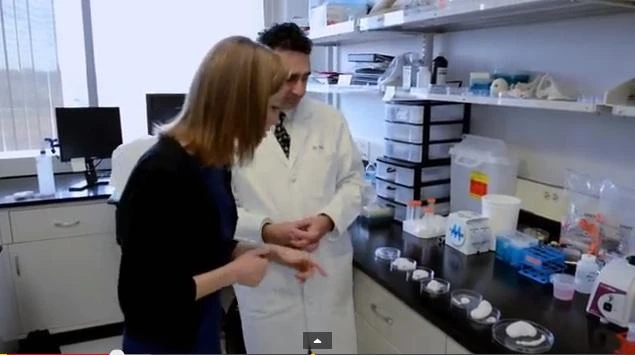
Now, Organovo Holdings Inc. is using 3-D printers to create living tissue that may one day look and act like a human liver, able to cleanse the body of toxins. Drugmakers and cosmetic companies already plan to use 3-D printed human tissue to test new products.
Eventually, the technology may help reduce organ shortages and cut transplant rejections as patients receive new organs constructed from their own cells.
“3-D printing is like a new tool set,” said Organovo Chief Executive Officer Keith Murphy. “You can make a living tissue you can grow outside the body. That’s the core of our technology. How can you be smart about doing that?“
Organovo already is preparing to sell strips of liver tissue to drugmakers this year to be used to test toxicity of potential treatments, Murphy said in a telephone interview.
The San Diego-based company’s five- and 10-year goals are first to use a patient’s own cells to print tissue strips that can be used to patch failing organs, and finally to be able to create entire new organs.
The first 3-D printer was produced in 1992. Since then, a variety of materials have been used as the technology has improved. The only limitation is that the printing material must be able to change from a liquid to a solid. Printers commercially available now sell for as little as $300.
Companies can save time and money using the printers to create customized products and single samples in-house rather than being ordered in from an outside manufacturer. To take that to an extreme, International Space Station astronauts plan to bring a 3-D printer to the craft this year, for making spare parts.
In 2012, the market for the 3-D products reached $777 million, and it may grow to $8.4 billion in 2025 as medical uses for the printers are developed, according to Anthony Vicari, an analyst at Lux Research Inc. in Boston.
The use of human cells works because of the natural tendency of the cells to stick together during embryonic development and move together in clumps with liquid-like properties. The first printing effort using cells occurred in 2003 using a modified ink-jet printer.