
- Christina Assi, who lost a leg in a 2023 strike that killed Reuters’ Issam Abdallah, accuses Beirut, Washington and European capitals of failing survivors of such attacks
- ‘Press freedom cannot exist where killing journalists carries no consequences,’ she tells panel discussion in New York organized by the Committee to Protect Journalists
NEW YORK CITY: A Lebanese photojournalist who lost a leg in an Israeli strike on a group of reporters in southern Lebanon three years ago told a gathering in New York that the international community had betrayed journalists by allowing those responsible for such attacks to go unpunished.
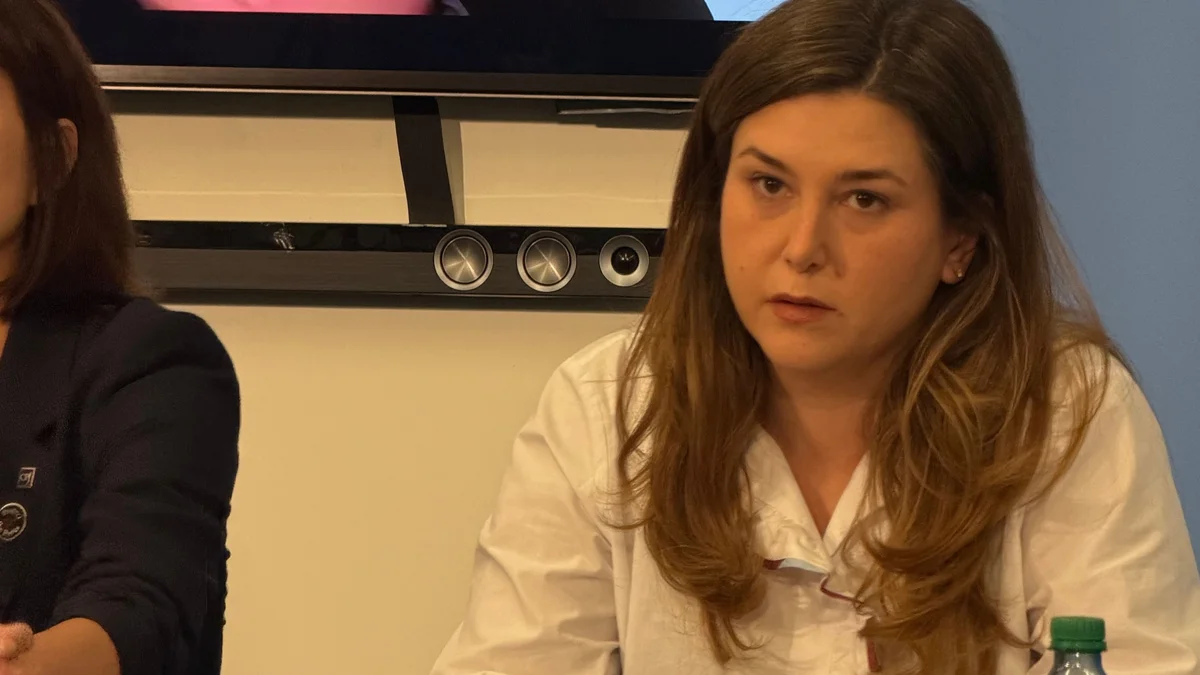
“The world knows what happened and those in power looked away,” Christina Assi, a photojournalist with Agence France-Presse, said on Tuesday during a panel discussion organized by the Committee to Protect Journalists.
“Press freedom cannot exist where killing journalists carries no consequences.”
Assi was among a group of journalists from AFP, Reuters and Al Jazeera who were reporting from the border village of Alma Al-Shaab on Oct. 13, 2023, when they were hit by two strikes, 37 seconds apart. Issam Abdallah, a video journalist working for Reuters, was killed instantly. The others were wounded, including Assi’s AFP colleague, Dylan Collins, an American.
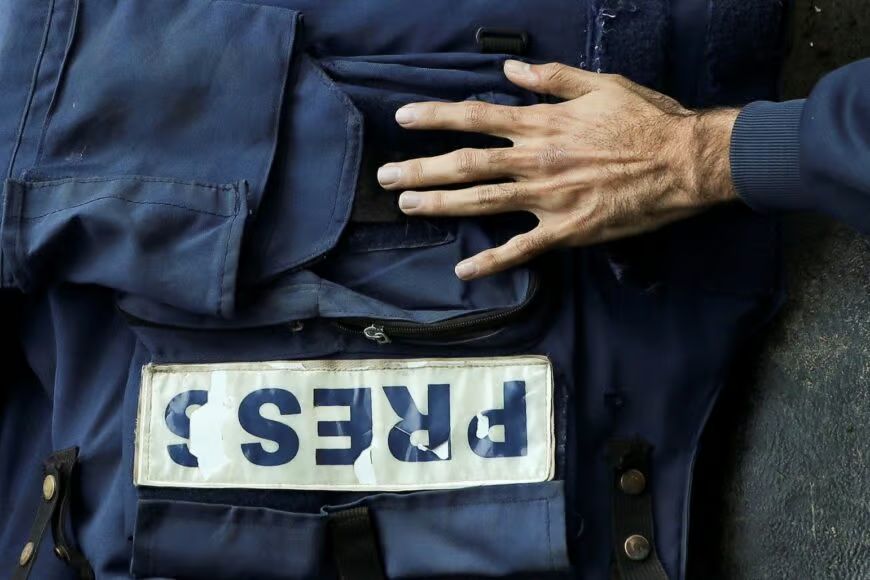
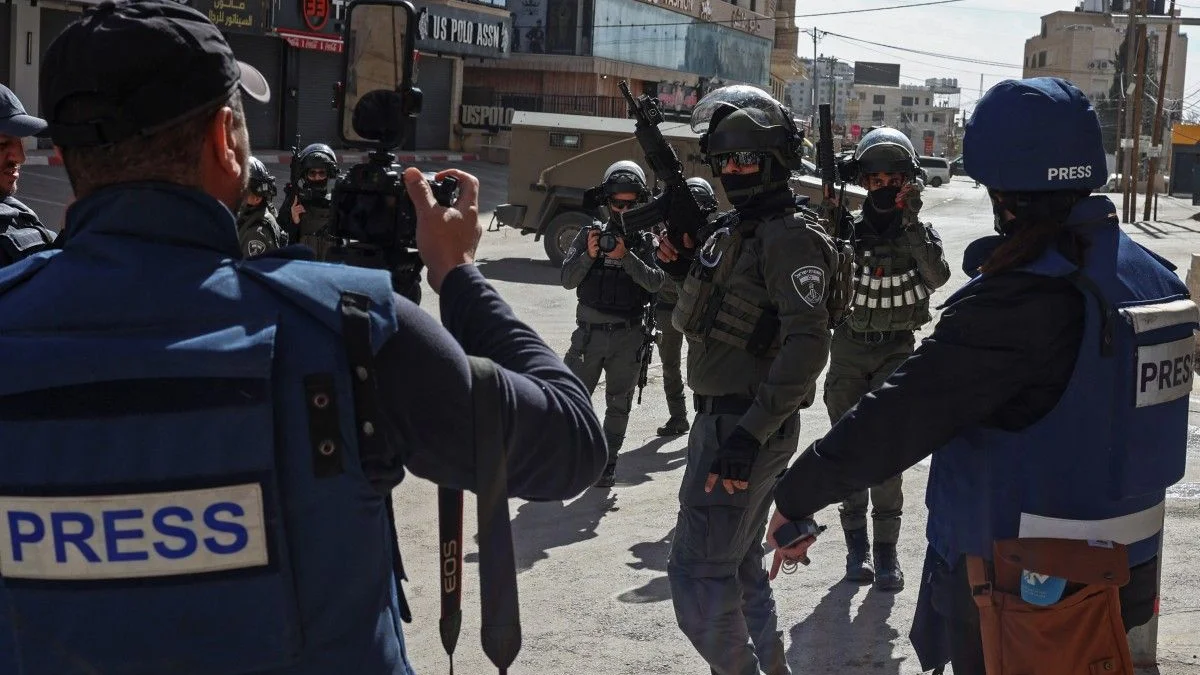
She said the members of the group were wearing vests that identified them as “press,” carrying cameras, and had been working from an exposed hillside for more than 40 minutes while an Israeli drone observed them.
“They knew we were journalists,” she said. “They knew exactly what we were doing.”
Assi spent two weeks in an induced coma and required numerous surgeries as medics battled to save her life and her badly injured legs.
Five independent investigations into the incident found no sign of fighters or military activity at the scene, and established that aerial surveillance had been in place before the strikes, she said.
“The evidence is there,” she told the panel. “Yet, three years later, accountability remains absent.”
She said the survivors of the attack had “knocked on every possible door” but found only indifference and silence.
At times, she said, the journalists had even been expected to prove they were not terrorists, “a label I never imagined I would have to defend myself against simply because I was a journalist.”
She added: “What we experienced was terror in its most brutal form: being watched, identified and struck twice while doing nothing more than documenting.”
Assi described the attack as part of a wider pattern of assaults on journalists in Lebanon and Gaza. In particular, she named three female reporters who were killed in Lebanon over the past three years: Farah Omar, Fatima Ftouni and Amal Khalil.
She cited UNESCO’s latest Director-General’s Report on the Safety of Journalists and the Danger of Impunity, published this month, which put the global impunity rate for killings of journalists at 86 percent.
“Let that number sink in,” she said. “What message does this send to every military, every government and every journalist still working in a conflict zone?”
She also accused Israeli authorities of keeping journalists out of southern Lebanon, which she said had created an information blackout like the one in Gaza, where foreign reporters are barred and Palestinian journalists have faced death, hunger and displacement.
“They are controlling what the world can see,” she said, adding that the restrictions were designed to hide violations from scrutiny.
Assi was highly critical of the response from Western capitals. She said the US and European governments could not keep presenting themselves as defenders of press freedoms while simultaneously providing military and political support to a state accused of repeatedly breaking international humanitarian law.
“Statements of concern mean very little when they are not followed by consequences,” she said.
She also criticized international media outlets, some of which she accused of repeating Israeli military narratives without enough scrutiny and of barely covering the killing of their own colleagues at all.
The government of her own country came in for some of her sharpest criticism. She said authorities in Lebanon had failed to investigate the attack in which she was injured, had never met the survivors, and had not protected the rights of victims during their latest framework agreement with Israel.
“Our right to justice cannot be treated as a bargaining chip in political negotiations,” she said.
She acknowledged that the path to justice was difficult; neither Lebanon nor Israel is party to the International Criminal Court’s Rome Statute, which makes international prosecution more difficult. But she said other avenues existed, and governments had a duty to pursue them.
“Investigating the killing of journalists is not an obstacle to peace,” she said. “We are not asking for sympathy. We are demanding protection, justice and action.
“Why should I have to sit here, three years later, asking those in power to do what they already know they should be doing?”
The Committee to Protect Journalists will present Assi with one of its 2026 International Press Freedom Awards during a gala in New York on Thursday. In announcing the award, the group described the strike on the reporters at Alma Al-Shaab as “the most well-documented attack on journalists by Israel on record.”
UNESCO’s biennial report on the safety of journalists, published on Nov. 2, found that impunity for journalist killings had risen for the first time since the organization began tracking the data in 2012, reaching 86 percent in 2024-2025, an increase of 1 percent.
Two-thirds of the killings it recorded took place in conflict zones, where the impunity rate was close to 100 percent.
Amal Khalil, one of the women mentioned by Assi and a correspondent for the Lebanese daily Al-Akhbar, was killed by an Israeli strike on the southern town of Al-Tiri in April, during a ceasefire, on the eve of talks between Lebanon and Israel in Washington.
The Lebanese president, Joseph Aoun, described her killing as a war crime. Human Rights Watch has warned that the text of the recent framework agreement between Lebanon and Israel could limit victims’ access to justice for serious international crimes.