- The Syrian Telecommunications Co. is restoring landline services to Deir Ezzor after a 14-year interruption, focusing on Al-Jubaila and Al-Ummal neighborhoods
- Communications Minister Abdul Salam Haykal emphasized the need to modernize telecommunications infrastructure to enhance internet services in Syria
DEIR EZZOR: The Syrian Telecommunications Co. is carrying out a project to expand the landline network in two neighborhoods of Deir Ezzor, paving the way for the restoration of telephone services to residents after an interruption that has lasted since 2012.
The project covers parts of Al-Jubaila and Al-Ummal neighborhoods and involves installing new underground telephone networks and distribution boxes to reconnect subscribers.
In Al-Ummal, the expansion includes laying a main cable with a capacity of 1,200 lines and distributing it across four groups.
Abdul Sami Saleh Al-Hamidi, head of the technical workshop, said that implementation had faced several challenges, particularly the theft of cables and telephone distribution boxes, as well as the deterioration of large sections of the existing infrastructure.
He said new networks of main and secondary cables had been completed, along with the necessary expansion groups, with preparations underway to bring them into service in the coming period.
Al-Hamidi said the project was part of a broader plan to rebuild the telecommunications sector in Deir Ezzor, where extensive work was needed to rehabilitate damaged networks and infrastructure and restore services to areas that had experienced prolonged interruptions.
The expansion is also intended to improve telecommunications services across the governorate and increase the efficiency of services provided to residents.
Meanwhile, Communications and Information Technology Minister Abdul Salam Haykal said recently that the sector had faced major difficulties in recent years as a result of the international isolation imposed by the policies of the former regime, which led to a halt in investment and the withdrawal of companies operating in the field.
He said developing telecommunications infrastructure was among the ministry’s top priorities, describing it as the foundation for modernizing the sector.
The infrastructure will facilitate faster data transmission and provide the technical capacity needed to improve internet services across Syrian cities and towns.
Zain Group has been approved for Syria’s second mobile operating license following the completion of a settlement between Syria and global telecommunications operator MTN Group, he said.
Under the license, the new operator is required to build a mobile network using the latest technologies and international standards, helping deliver internet services that meet the needs and expectations of Syrians.
Haykal said Syria was working to mobilize the resources needed for recovery, reconstruction and the building of a new state.
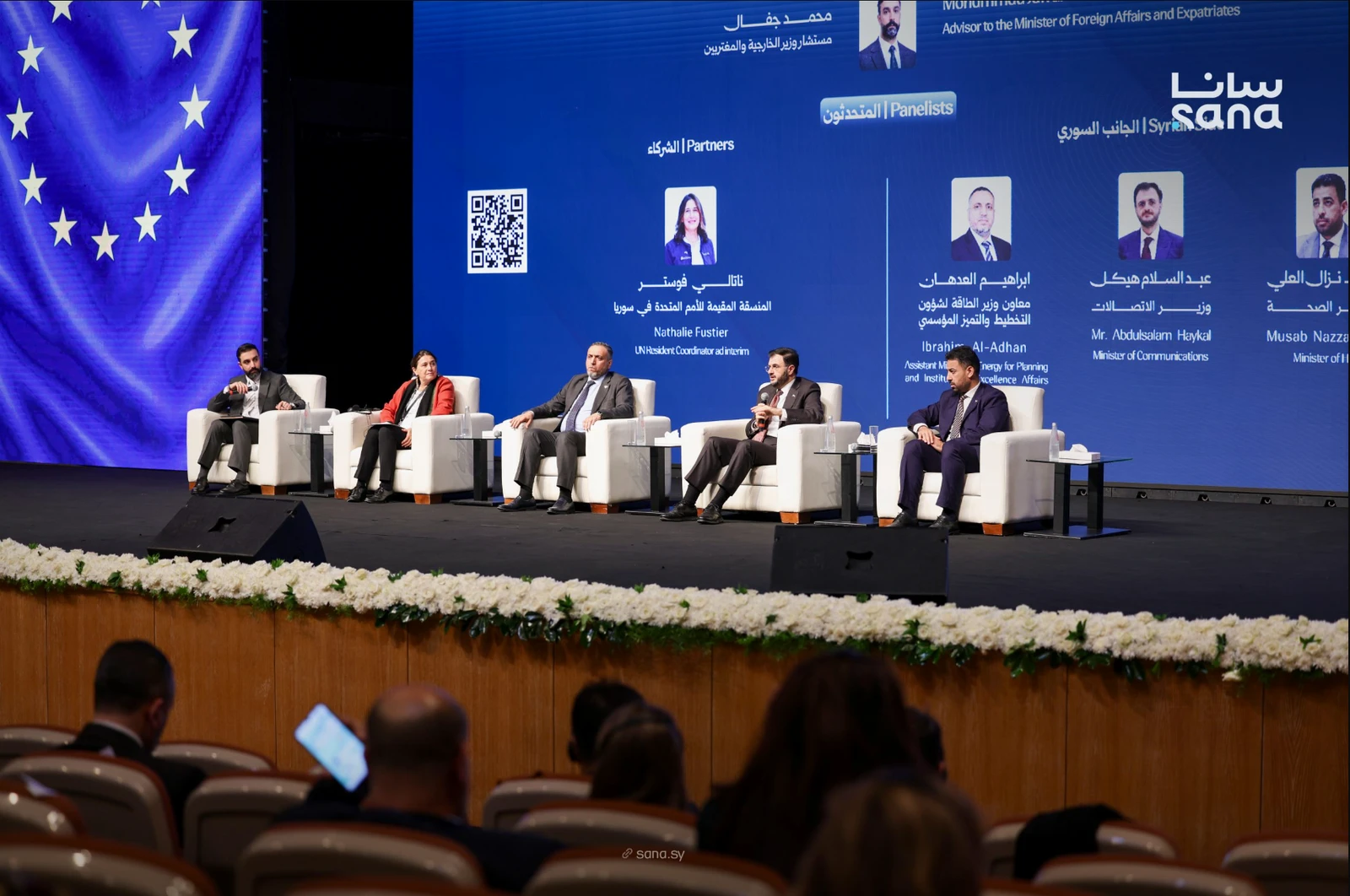
He described the forum as an important platform for strengthening cooperation with the European Union, which he said was an important partner for Syria.
Syria is seeking to deepen its partnership with the EU in telecommunications, particularly through the SilkLink project, which aims to establish the country as a regional and international telecommunications corridor.
The project is intended to serve the mutual interests of both sides, drawing on their geographical links across the Mediterranean, Haykal said.
Haykal said telecommunications investment was among the key issues being discussed with the EU, stressing the need for sustainable funding to upgrade networks and services, meet growing demand for internet access and support the development of Syria’s digital economy.
These include the International Finance Corporation, the European Investment Bank and the European Bank for Reconstruction and Development. Several projects and proposals are being developed within this framework, he said.
Cooperation with European partners also covers support for mobile sector reform and the development of fixed-line telecommunications services, contributing to a more attractive investment environment and supporting Syria’s digital transformation.