- Digital platform invites Lebanese at home and abroad to contribute copies of photographs, films, letters and recordings
- Archaeologists warn destruction in the south is severing communities from centuries of collective memory
BEIRUT: Lebanon is turning to its citizens at home and abroad to help preserve a cultural inheritance increasingly threatened by war, inviting them to submit digital copies of photographs, letters, films and recordings before the memories they contain disappear.
The Israeli military escalation in southern Lebanon, which began in 2023, has threatened not only people and infrastructure but also the country’s cultural and historical heritage.
Appeals to spare archaeological and religious sites have failed to protect them from attack, prompting growing concern among Lebanese heritage specialists that centuries of collective memory are being erased.
“In the past, we did not worry about the archaeological treasures buried beneath layers of history because we believed they were protected and could be excavated whenever necessary,” Tania Zaven, an archaeologist at Lebanon’s Ministry of Culture, told Arab News.
“We can read history through a piece of pottery discovered thousands of years later. But our fear has grown after witnessing the weapons Israel is using in the systematic destruction of southern villages, their markets, traditional homes, schools, universities and libraries. These weapons pulverize stone until it becomes dust and can destroy what lies deep underground.”
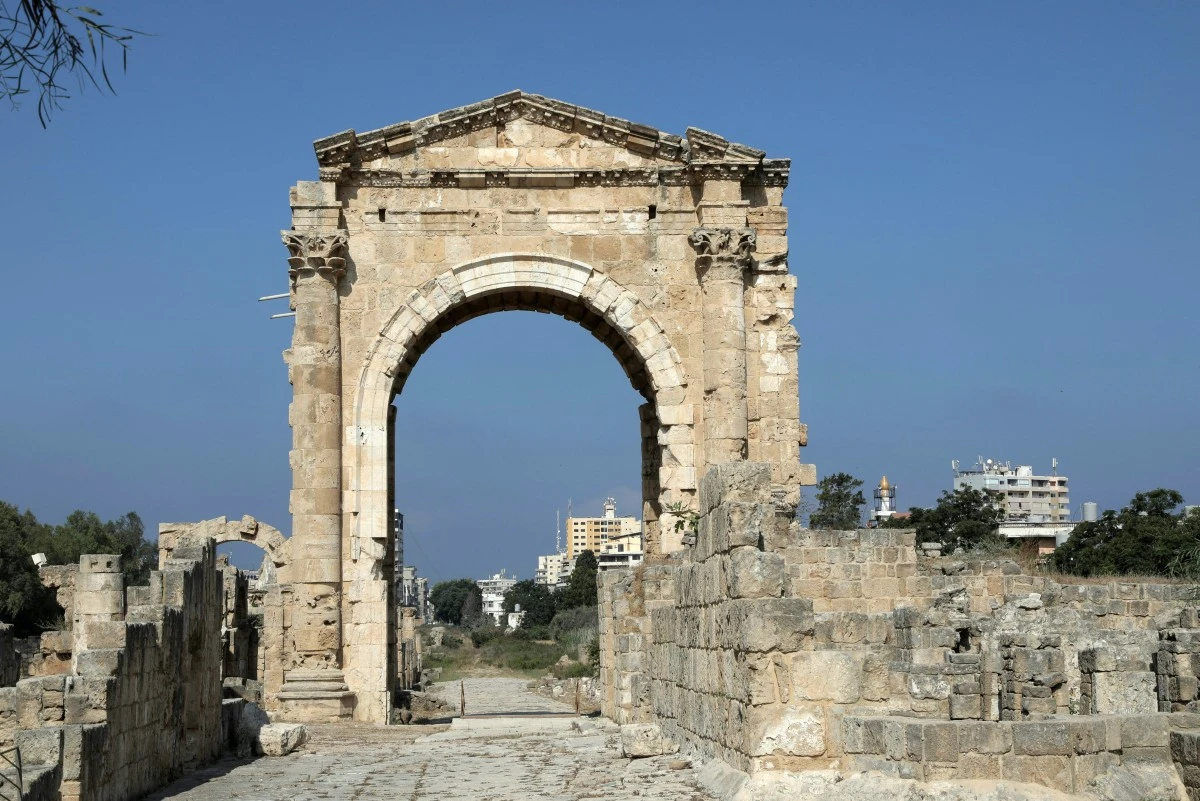
Overlooking the Mediterranean, Lebanon contains archaeological remains spanning thousands of years and reflecting Phoenician, Roman, Byzantine, Crusader and Ottoman civilizations. UNESCO has granted “enhanced protection” to 34 cultural properties in Lebanon. Under the 1954 Hague Convention, an attack on such sites could constitute a serious violation and potentially lead to prosecution.
However, many of Lebanon’s archaeological and historical properties are not included on UNESCO’s list. Some have been damaged or destroyed, including churches, historic cemeteries, old markets and Crusader-era castles.
Lebanon has already lost an irreplaceable part of its heritage, according to Sarkis Khoury, the country’s director general of antiquities.
“We have not yet been able to document all of it because the full scale of the destruction remains unclear,” he said.
Lebanon’s financial crisis has left the government struggling to respond to the worsening humanitarian emergency, let alone fund the restoration of damaged archaeological and heritage sites.
Biladi, an organization headed by archaeologist Joanne Farchakh Bajjaly, has been documenting the damage and losses. The organization describes what is happening as the destruction of memory itself.
A six-month documentation project launched in 2024 examined Nabatieh Al-Fawqa, Nabatieh Al-Tahta and the villages of Kfar Tebnit, Zawtar Al-Gharbiyeh and Zawtar Al-Sharqiyeh. Researchers found that the communities contained historic centers and about 400 religious, residential and administrative buildings. Some dated back to the 17th century.
Together, the buildings chronicled the communities’ economic and social development. They also embodied the intangible bond between residents and the places in which they lived — a connection that forms part of individual identity and the shared memory tying people to their land.
Field documentation stopped in 2026 because Israeli incursions and continuing destruction made access impossible. In some locations, the level of destruction had reached 90 percent. Researchers now depend on residents of the affected villages for information and surviving photographs.
“It is a painful and sorrowful form of communication because it means searching through a wounded memory,” Farchakh Bajjaly said.
In October, the National Network for the Protection of Libraries, Archives and Cultural Heritage in Lebanon launched a campaign to collect 1 million books. The initiative aims to help rebuild and equip damaged libraries, replace lost books and collections, and support cultural institutions affected by the destruction.
“What the Israelis are doing is appalling,” Zaven said. “No one has the right to attack another people’s historical continuity. To do so is to uproot them.”
She said residents might one day return to southern villages they could no longer recognize.
“It is a feeling that is difficult to imagine because people are still living through the trauma,” she said. “They have not yet absorbed that the destruction has displaced them and severed the link between previous and future generations.”
To help preserve that connection, the Ministry of Culture is establishing a digital platform dedicated to Lebanon’s tangible and intangible heritage.
“We decided to create the platform in response to what we see as a systematic attempt to erase Lebanese culture,” Zaven said. “Even cemeteries have not been spared, in an effort to cut people off from their land.”
Lebanon ratified UNESCO’s Convention for the Safeguarding of the Intangible Cultural Heritage in 2007.
The new platform will encourage people to contribute digital copies of old family photographs, images of their homes and records of traditional crafts that are now disappearing. Contributions can also include videos, letters, recorded conversations and old songs.
“It is a platform for collecting microhistory,” Zaven said. “We want to preserve information and landscapes — images of olive, oak and carob trees — and reconstruct the narratives through which we understand the past and the present.”
However, persuading Lebanese families to share their personal archives could prove difficult.
“People are not accustomed to entrusting their private heritage to the public sector for preservation,” said Jelnar Atwi, executive director of Lebanon’s National Library. “Some do not realize the importance of what they inherited from their grandparents. They also may not know that the National Library preserves this heritage but does not own it. It remains the property of its original owner.”
Lebanon’s civil war resulted in the loss of rare documents and archives, Atwi said: “We stored our documents in boxes, but the fighting reached the area surrounding the library in central Beirut. Some gunmen burned documents to keep warm. We do not know what was stolen because there were no records. What reached us after the war was simply what had survived theft or destruction.”
Zaven said the ministry would receive digital copies rather than original documents, which would remain with their owners. A specialist committee would verify the authenticity of submissions and ensure they had not been copied from websites or manipulated.
“Our goal is preservation, using modern techniques that extend the life of a photograph or document,” she said.
People wishing to preserve original materials can deposit them with the National Library for safekeeping, Atwi said. A legal deposit agreement protects the owner’s intellectual property rights. Ownership remains with the depositor, who can withdraw the material at any time.
Zaven said the documents and photographs kept in private homes could, in some cases, be more historically valuable than the holdings of official institutions. She also urged millions of Lebanese living abroad to contribute to the platform.
“When they emigrated, they took memories with them in the form of photographs, home movies and documents,” she said. “They may have images of their houses, their villages or even the flowers that once grew in their gardens. We want to preserve this history before it disappears — both in a world changing at extraordinary speed and amid Israeli destruction that is erasing our identity.”
The multilingual platform includes Portuguese to encourage participation from Lebanese communities in countries such as Brazil.
Zaven said the project would also approach private collectors, embassies and universities for materials and testimonies documenting Lebanon’s history.
“That history,” she said, “is priceless.”