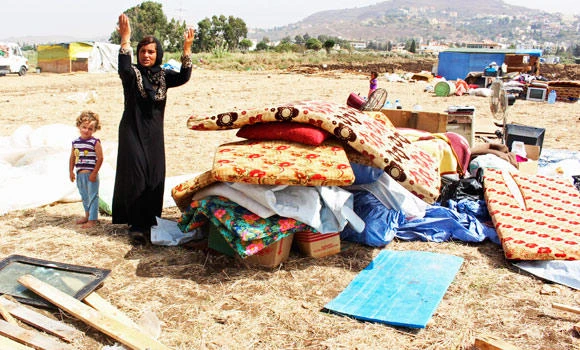
BEIRUT: Insults, attacks and curfews have become commonplace experiences for some Syrian war refugees in Lebanon, with rights watchdogs saying the community faces growing discrimination.
In many parts of the country, it is no longer unusual to see posters prohibiting “foreigners” — understood to mean Syrians — from being outside after 8 p.m.
And both Lebanese and Syrians report witnessing harsh treatment of Syrians or even attacks against them, including by municipal guards who at times enforce the curfews.
Human Rights Watch, a New-York based group, has identified at least 45 municipalities in the country that have imposed curfews on Syrian refugees. In a new report on Friday it called for an end to practices “that feed into a climate of discrimination against and stereotyping of Syrians in Lebanon.”
Even before the flood of war refugees, Syrian workers in Lebanon were often treated with a mixture of condescension or mistrust, in part a legacy of resentment over Syria’s 30-year military presence in Lebanon.
But the situation has deteriorated since the beginning of the conflict in 2011, with more than a million refugees flooding into Lebanon, which is profoundly divided between those who back President Bashar Assad and those who support the uprising against him.
The influx has placed new pressure on already scarce resources, and created resentment against Syrians in some places.
Some Lebanese justify the measures taken against Syrians, accusing refugees of crime, and urging them to “go home.” “There must be limits for Syrians,” one local official in the Mount Lebanon region said on condition of anonymity.
“They take jobs from the Lebanese. It’s not that bad if we teach them a lesson now and again,” he said.
Online, such sentiments are expressed even more freely, with one Facebook user insisting “We must chase every suspect Syrian out of the country.”
And public figures have even claimed Syrians are creating traffic jams in Lebanon, despite the fact that the country’s highways were snarled with cars for years before the Syrian war began.
But many Lebanese are appalled by such comments. Lara, a 25-year-old civil servant, said she was “shocked” to see police beating a Syrian and asking why he was out at 9 p.m. in the town of Jounieh.
She intervened and shouted at the police and “they stopped beating him and ordered him to go home.”
She is angered by hearing fellow Lebanese justify such incidents, or tell her they can recognize a Syrian by the way they dress, implying their clothes are cheap and tattered. “It’s the height of racism,” she said.
In Lebanon, Syrians face discrimination