BAGHDAD: Despite intense US pressure to act to keep Iraq’s largest dam from collapsing, Baghdad has done little to prepare Iraqis for the possibility of a burst that could unleash a flood reaching the capital and killing hundreds of thousands of people.
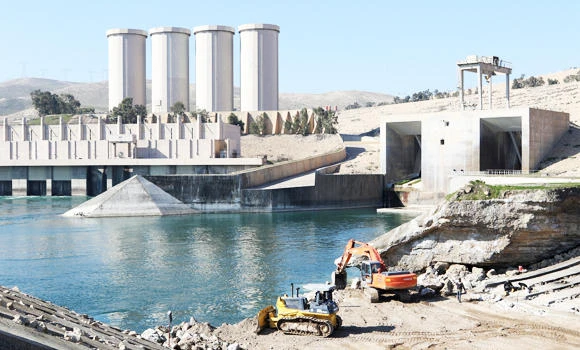
The government signed a $296-million contract with Italy’s Trevi Group last month to reinforce northern Iraq’s fragile Mosul Dam, but it has not announced any specific plans to try to rescue people in the event of a breach or instructed them in detail how to react safely.
Prime Minister Haider Al-Abadi’s most significant public statement on the dam, which was not widely distributed, advised millions of people living in the path of a potential flood that they should move to higher ground, but provided few specifics.
US officials have said Washington feels Baghdad has failed to take the threat seriously enough.
A US government briefing paper released in late February said the 500,000 to 1.47 million Iraqis living in the highest-risk areas along the Tigris River “probably would not survive” a flood’s impact unless they evacuated. Swept hundreds of miles along in the waters would be unexploded ordnance, chemicals, bodies and buildings.
A senior official at the US Agency for International Development (USAID) said the most lives could be saved by advising people in advance of what to do in the event of a breach of the structure, once known as Saddam Dam and opened in the mid 1980s.
“You want to make sure when you have a major hazard risk that the population that is going to be potentially affected is aware of that, that they know what to do about it when it happens, and they understand how they’re going to be alerted to it,” the official said. Instead, Iraqi authorities have downplayed the threat. The water minister estimated last month there was only a one in 1,000 chance of failure, a “risk level present in all the world’s dams.”
On Jan. 21, US Secretary of State John Kerry met with Abadi in Davos, Switzerland, and handed him a confidential note from President Barack Obama pleading for urgent action.
The president’s personal intervention indicated how the dam’s fragility has moved to the forefront of US concerns over Iraq, reflecting fears its failure would also undermine US efforts to stabilize Abadi’s government and complicate the war against Daesh.
Baghdad updated a 2006 evacuation plan last year that calls for moving people to the southern provinces, a government source briefed on Mosul Dam planning said last month.
The humanitarian impact would be “a logistical nightmare,” the source said. “Water, toilets, food. If this happens in summer you need to get them out of the sun. If it happens in the winter, you need to keep them warm.”
The source said the government had planned to set up a siren system in high-risk areas and use television, radio, social media and text messages to tell people what to expect and how to prepare. So far, none of that has happened.
The government source told Reuters the Iraqi government had consulted with military commanders about how to evacuate millions of people from their homes but then decided to leave it to municipal authorities to keep residents informed.
Mosul Dam emergency plans: Iraqis kept in dark