CAIRO: Egypt’s deposed President Muhammad Mursi and 132 others, including members of Hamas, will stand trial for a prison break and the murder of officers during the 2011 uprising, the prosecution said on Saturday.
Almost 70 of the defendants are members of Hamas and Hezbollah, the Palestinian and Lebanese militant groups, who will be tried in absentia.
It will be the third trial announced for Mursi on separate charges, amid a crackdown on his Muslim Brotherhood movement following his overthrow in July.
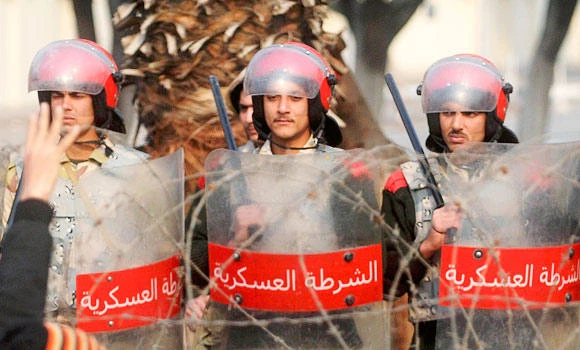
Prosecutors claim that Brotherhood, Hamas and Hezbollah attacked prisons and police stations during the first few days of the revolt against former ruler Hosni Mubarak, killing policemen and helping thousands of inmates escape.
Several Hamas and Hezbollah members were in jail and escaped during the unrest.
At least two of the Hamas inmates, including militant leader Ayman Nofal, have been indicted, the prosecution sources said.
A Hezbollah commander named Mohamed Mansur, convicted in 2010 of plotting attacks in the country and who escaped, was also charged.
The other defendants include leaders of Mursi’s Muslim Brotherhood, who also escaped from the Wadi Al-Natrun prison during the revolt, and prominent Qatar-based cleric Yousef Al-Qaradawi.
Mursi had been under investigation for the Jan. 28, 2011 prison break along with Brotherhood members.
He is already on trial for allegedly inciting the killings of opposition activists during his one year in power.
And prosecutors said earlier this week he will also stand trial for espionage involving Hamas.
Egypt’s first democratically elected president, Mursi quickly alienated his secular opposition, the police and the military, which overthrew him in July after millions rallied across the country demanding his resignation.
Mursi himself had given a telephone interview to a television station shortly after he escaped prison, saying the guards had left and the inmates walked out of their cells.
He and other Muslim Brotherhood leaders had been rounded up on the morning of Jan. 28, after the Islamic group said they would join protests against Mubarak.
The uprising forced the hated Interior Ministry to withdraw from the streets, and Mubarak resigned on Feb. 11 after three decades in power and handed the reins to the military.
Mubarak, his interior minister and top police commanders were put on trial for the killings of protesters during the uprising. Their defense blamed the violence on the Brotherhood, Hamas and Hezbollah.
Since Mursi’s ouster, more than 1,000 people, mostly Brotherhood supporters, have been killed in street clashes with police, and thousands imprisoned.
Mursi’s supporters continue near daily protests demanding his reinstatement, while the military battles an insurgency in the Sinai peninsula that has killed dozens of soldiers and policemen since Mursi’s overthrow.
Meanwhile, courts this week dismissed corruption charges against Ahmed Shafiq, Mursi’s rival in the 2012 election. A prime minister under Mubarak, he fled the country after narrowly losing to the Brotherhood.
Shafiq will not stand in presidential elections scheduled for next year if military chief Abdel Fattah Al-Sisi, widely popular for toppling Mursi, declares his candidacy.
Mursi to face third criminal enquiry