- Drones have increasingly become the weapon of choice in Sudan’s three-and-a-half-year-old civil war
KHARTOUM: Sudan’s paramilitary Rapid Support Forces have intensified deadly drone attacks in government-held towns in the frontline state of North Kordofan, disrupting normal life and causing a deep sense of insecurity, residents say.
Reuters filmed the aftermath of major attacks that took place this month in two frontline cities, which residents described as part of an apparent new campaign of such strikes after several weeks when the RSF appeared to have scaled them back under international pressure.
The RSF did not respond to a request for comment but has said it does not intentionally target civilians.
Drones have increasingly become the weapon of choice in Sudan’s three-and-a-half-year-old civil war, with both the RSF and their foes, the Sudanese army, deploying the latest technologies used in other war zones such as Ukraine. The UN says drone attacks by both sides killed more than 1,000 civilians in the first half of this year.
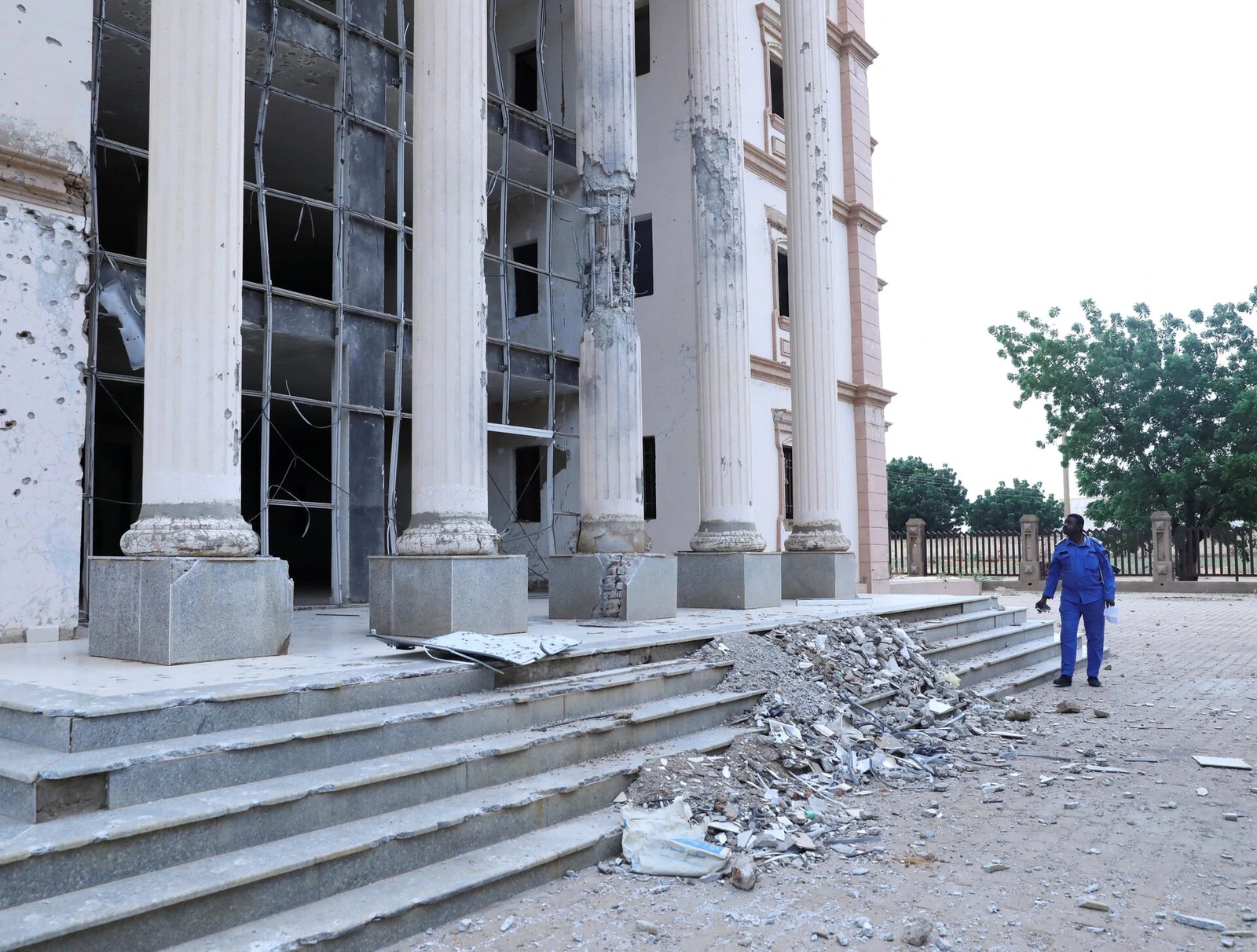
On September 8, a drone hit a crowded courtroom in the government-held town of Um Ruwaba in North Kordofan, a state in central Sudan that is now one of the war’s main front lines.
Some 10 people were killed and dozens injured, according to Emergency Lawyers, a human rights monitor. When Reuters reached the site, the entire facade had been blown out, with columns at the front of one of the city’s most prominent buildings blasted apart.
A day later, a drone struck a college in Al-Obeid, the state capital, blasting off the roof. The dean, Abdel Aziz Al-Sheikh, standing amid the damage as workers cleared away rubble, said a security guard had been killed and eight classrooms damaged.
“As you can see, the entire faculty is destroyed and we feel that our dreams are destroyed, our future is destroyed,” said Omnia Aboul Gassim, a student who had taken her exams at the college in Al-Obeid the day before it was struck, standing by the ruins.
At a hospital in Um Ruwaba, Salah Bakheit, whose arm had been smashed and body pockmarked by shrapnel in the attack on the courthouse, said he had come to that city in search of shelter after fleeing Al-Obeid, which the RSF had bombarded with drones for months earlier this year in an attempted siege.
“Once I heard the sound of the blast, I knew it was a strategic drone,” he said. “I have been living with drones of all types, strategic drones and suicide drones. I can distinguish between them.”