- Country to address the growing challenges of climate change
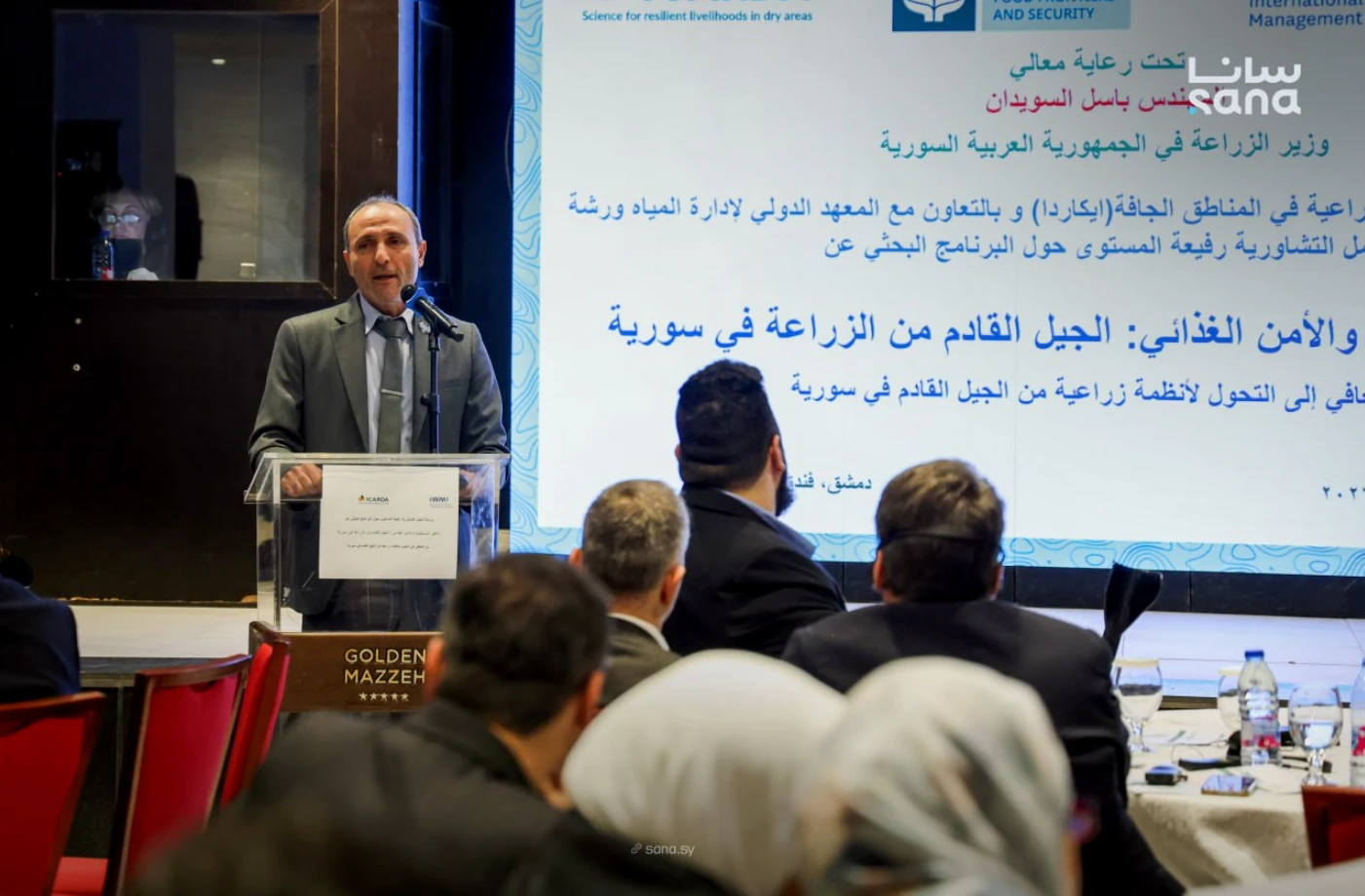
DAMASCUS: Agricultural experts and officials gathered in Damascus on Sunday for a consultative workshop aimed at modernizing Syria’s agricultural sector, strengthening food security and addressing the growing challenges of climate change and water scarcity.
The workshop, titled “Future Horizons and Food Security: The Next Generation of Agriculture in Syria,” is organized by the International Center for Agricultural Research in the Dry Areas, in cooperation with the International Water Management Institute, under the auspices of the Ministry of Agriculture.
The workshop focuses on using scientific research and digital technologies to improve agricultural productivity, strengthen climate resilience and promote sustainable water and land management in line with the Syrian Arab Republic’s 2026–2030 agricultural strategy.
Mohammed Youssef Al-Miqdad, deputy minister of agriculture for policies and rural development, told the workshop that Syria is developing a new generation of agricultural systems capable of addressing climate challenges, resource scarcity and food security needs.
He stressed the importance of moving beyond recovery toward long-term transformation by translating scientific research into practical solutions.
Al-Miqdad said traditional farming practices were no longer sufficient to address the challenges facing Syria’s agricultural sector, highlighting the need for modern, resilient and sustainable systems that draw on scientific data and create new investment opportunities.
Muhi El-Dine Hilali, the center’s country coordinator in Syria, said the country was at a critical juncture, requiring a shift from emergency response toward sustainable, evidence-based solutions.
He identified water scarcity, declining irrigation efficiency, deteriorating water infrastructure, climate change and recurring droughts as unprecedented challenges facing agricultural production in Syria.
Hilali said the workshop aims not only to review research and data but also to establish shared priorities and develop practical investment plans to ensure sustainable water management, improve water-use productivity and rehabilitate damaged agricultural systems and ecosystems.