- Rashad Al-Alimi pledged to break the Houthi siege of Taiz and restore state authority nationwide
- He thanked Saudi Arabia for its support and condemned Iran's role in the conflict
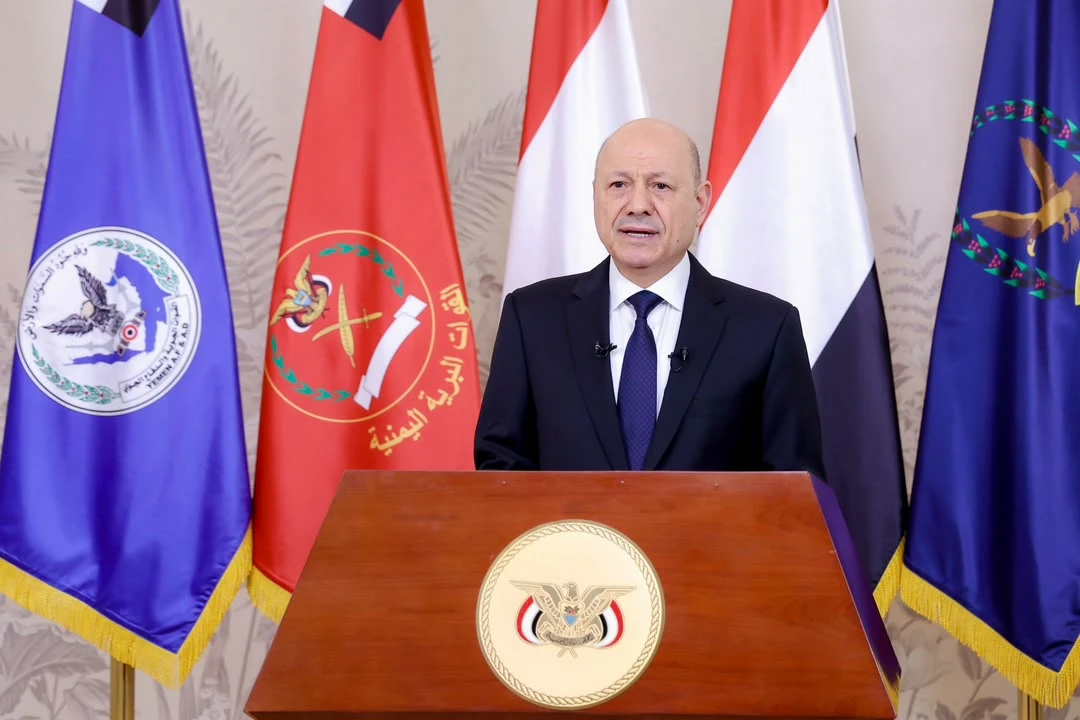
ADEN: Yemen's Presidential Leadership Council chairman, Rashad Al-Alimi, vowed on Sunday to break the Houthi siege of the southwestern city of Taiz. He thanked Saudi Arabia for its support and pledged to continue the “Yemen Dawn” operation until the Houthi "coup" ends and state authority is restored nationwide.
Speaking in a televised address marking the 59th anniversary of Yemen’s independence, Al-Alimi said he was confident the armed forces, military formations and popular resistance could end the siege.
“This new siege will be broken, and Taiz will remain, as always, a cradle of change, a symbol of resilience, and a stronghold of the republican system,” Al-Alimi said, recalling the 70-day siege of Sanaa, which he said Yemenis ended in defense of the republic.
Al-Alimi, who is also commander in chief of the armed forces, said troops backed by the Coalition to Restore Legitimacy in Yemen “are capable of regaining the lead and decisively winning the national battle against the Houthi terrorist militias.”
Al-Alimi thanked Saudi Arabia, King Salman bin Abdulaziz, Crown Prince Mohammed bin Salman, and the Saudi government and people for their steadfast support of Yemen and its institutions.
He hailed the Kingdom's generous humanitarian and development assistance, including royal directives to regularize the status of hundreds of thousands of Yemeni expatriates there.
In his address, Al-Alimi also highlighted recent developments fronts where some units have been repositioned, saying state leadership would take full responsibility for any mistakes or shortcomings.
Decisions had been reviewed, corrective measures taken and those who fell short held accountable, he said. “A soldier who holds his position deserves leadership that matches his courage and sacrifices.”
Al-Alimi praised the resilience of people in Taiz, Aden, Lahj, Al-Dhalea and Marib during the latest fighting with the Iran-backed Houthis.
He also pointed to unity between north and south, citing shared sacrifices and condolences. He singled out residents of Al-Sabihah, who shared food and shelter with displaced people, and Marib, which he said has kept its doors open to millions of Yemenis.
On domestic politics, he said the state recognizes the grievances of southern residents and their right to pursue legitimate aspirations. A fair solution to the southern cause, he said, should reflect their free will within any national settlement.
Al-Alimi urged residents of Houthi-held areas, especially tribal sheikhs and notable figures, not to send their sons to die or to glorify “a culture of killing and destruction.”
He said Yemenis did not choose the war, and he also accused Iran and its proxies of starting it by sending weapons and experts. “That is why Parliament approved the law designating the Houthi militias as a terrorist organization.”
He urged the international community to take a unified stand to open roads, secure the immediate release of all hostages and “avoid giving incentives to terrorists.” He warned that “whoever gives militias incentive today in hopes of freeing an innocent detainee, exposes another person tomorrow to the same fate.”