- The economic crisis and soaring prices have not stopped new cafes from popping up in major cities
- Yet not everyone can afford a visit, as high inflation — 89 percent in September — and the depreciation of the rial have turned a cup of coffee into a luxury for many Iranians
TEHRAN: Iranians are flocking to stylish cafes in the capital, as they look for respite from soaring inflation and the spectre of renewed war with the United States.
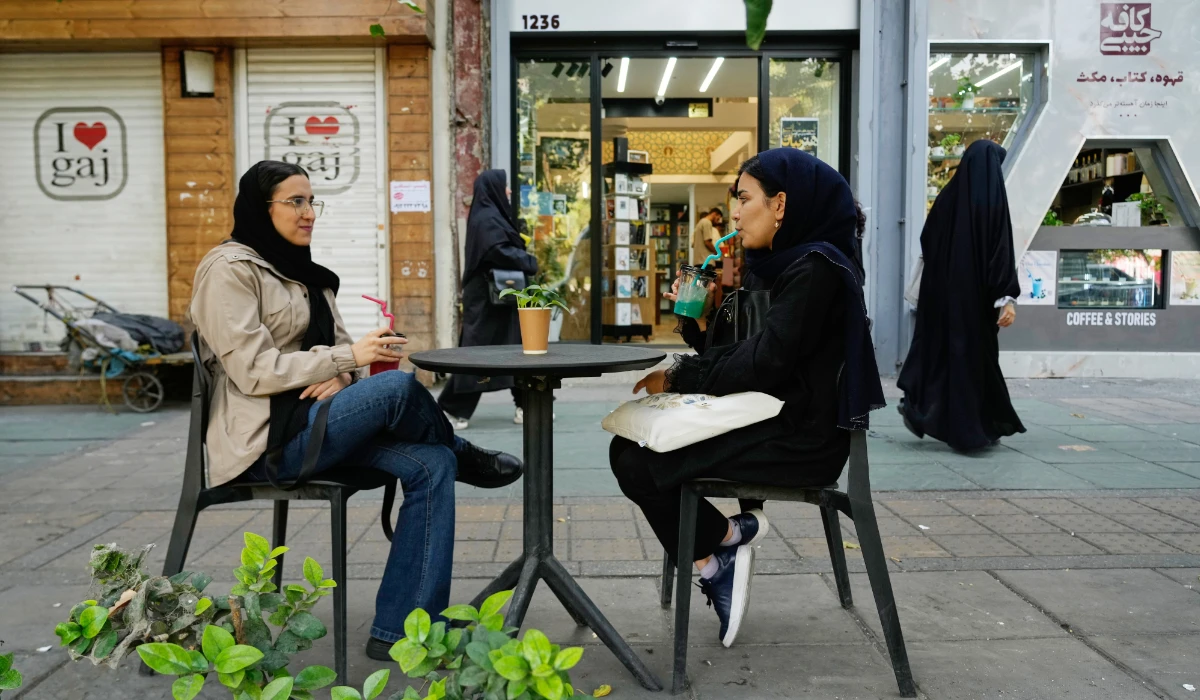
“Cafes offer a chance to unwind, to escape the stress of exorbitant prices, war and anxiety-inducing news,” said Mitra Alipour, celebrating her birthday at a coffee shop in Tehran.
Since the start of the Middle East conflict, triggered in late February by US-Israeli airstrikes, “everything has become more expensive,” the 28-year-old told AFP.
She regrets that she can no longer travel or afford a new phone, but she can at least get a coffee.
“How do I know if I’ll still be able to afford it next year? So I tell myself I’ll make the most of it and treat myself, while I still can,” she added.
In downtown Tehran, cafes are constantly packed — a striking sight for a country grappling with Western sanctions and an economic slump exacerbated by the war.
Washington has imposed sanctions on Tehran since the 1979 Islamic Revolution toppled the US-backed shah, and more recently has applied further economic pressure.
Yet upscale cafes near shopping malls stocked with Western products remain a common sight along Fereshteh Street, in the city’s north.
As night falls, groups of young people and couples head to cafes to unwind and socialize, just meters from Valiasr Avenue, known as the Champs-Elysees of Tehran.
Headscarves are less conspicuous among women in these fashionable neighborhoods, despite compulsory hijab rules introduced after the revolution established clerical rule.
‘NO OTHER ENTERTAINMENT’
Cafes “have become a gathering spot,” said Alireza Ashouri, a 22-year-old medical student in Tehran.
“There is no other entertainment,” he added from an establishment that he visits “two or three times a week, often in the evening, and sometimes to study.”
Fatemeh Hosseinzadeh, a 38-year-old English teacher still living with her parents, goes to cafes to escape.
“It’s a safe place where no one bothers me. I settle in there for two hours and disconnect from work, from home and from all my worries,” she said.
According to officials, the Iranian capital is home to some 3,000 cafes, a recent phenomenon that has become widespread over the last decade.
Amir-Hossein Manafi, 24, a student, said he visits cafes “three to four times a week, usually after class.”
As he enjoyed his iced mocktail, thumping electronic music played while a group of women laughed at a nearby table at Lova cafe in affluent northern Tehran.
“Drinking coffee has now become an integral part of our culture,” said Parsa Nobaghi, who opened Lova two years ago.
“Today, Tehran is teeming with cafes. You can find one or two on every street corner.”
’FULL EVERY SINGLE DAY’
The economic crisis and soaring prices have not stopped new cafes from popping up in major cities.
Their decor ranges from refined to retro, while chains like Raees and Lamiz draw some inspiration from Western brands such as Starbucks.
“At a cafe, you talk about all sorts of things. You discuss changes in people’s lives and lifestyles, as well as societal problems,” Manafi told AFP.
The cafe craze remains strong, even as many Iranians fear that hostilities with the US and Israel could resume.
One waiter, who preferred to remain anonymous, was surprised to see the cafe “full every single day,” even during the worst of the attacks on the capital.
Yet not everyone can afford a visit, as high inflation — 89 percent in September — and the depreciation of the rial have turned a cup of coffee into a luxury for many Iranians.
The average price of an espresso has more than tripled over the past two years, reaching around 2.5 million rials, around one dollar at the current exchange rate.
That is a considerable sum in a country where the minimum wage stands at around $65.