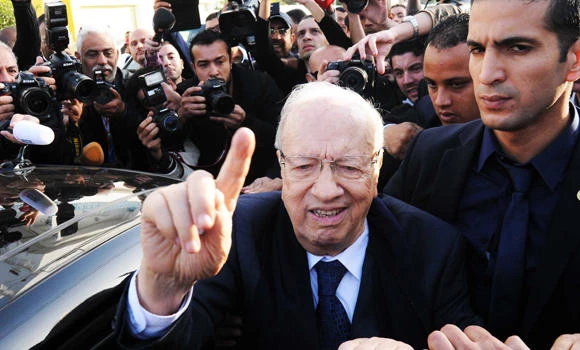
TUNIS: The battle for an expected runoff for the Tunisian presidency got under way on Monday before the first round results were even in from the landmark post-Arab Spring election.
Veteran liberal politician Beji Caid Essebsi, whose party placed first in a parliamentary election last month, looked set to fall short of the 50 percent threshold required to win outright, his campaign team conceded.
He is poised to face off against incumbent Moncef Marzouki, a secular politician who has made common cause with the rightists against what he says is an attempt at a comeback by former loyalists of the autocratic regime overthrown in 2011.
The election is a milestone for the North African nation, whose ouster of long-time strongman Zine El Abidine Ben Ali set off a chain of revolts that saw several Arab dictators toppled by citizens demanding democratic reform.
US Secretary of State John Kerry hailed an “historic moment” in Tunisia’s transition to democracy, and pledged Washington’s support for the next government, whoever leads it.
Tunisian leaders pride themselves on the fact that the country has been spared the bloodshed that has ravaged other Arab Spring states such as Libya and Yemen and, despite fears of disruption by militants, polling day passed off peacefully.
But the expected runoff scheduled for late next month is likely to be polarizing, with Marzouki’s camp portraying him as the last line of defense against a return to the autocratic ways of the old regime, and his opponent deriding him as an rightist pawn.
In a speech late Sunday, Marzouki called on “all democratic forces” to back him against Essebsi, who served under both Ben Ali and his predecessor Habib Bourguiba.
Tunisia set for runoff