Oman’s new ruler Haitham bin Tariq promises good ties with all nations

Oman’s new ruler Haitham bin Tariq promises good ties with all nations
1 / 2
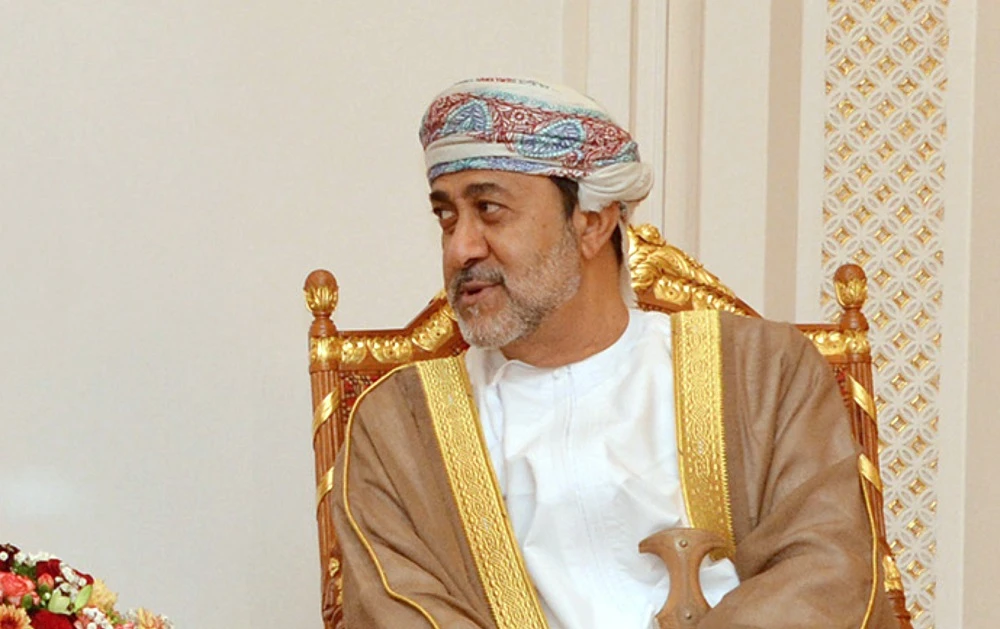
The 65-year-old cousin of late Sultan Qaboos was sworn in as the new royal ruler on Saturday morning. (AFP)
Oman’s new ruler Haitham bin Tariq promises good ties with all nations
2 / 2
Tariq Al-Said was the minister of heritage and national culture, and the cousin of Sultan Qaboos. He graduated from Oxford University in 1979 after studying the Foreign Service Programme. (File/AFP)
Short Url
Updated 13 January 2020

Oman’s new ruler Haitham bin Tariq promises good ties with all nations

Oman’s new ruler Haitham bin Tariq promises good ties with all nations
  • The 65-year-old newly appointed sultan was Oman's former culture minister
  • He graduated from Oxford University in 1979 after studying the Foreign Service Programme

MUSCAT: Oman's new ruler Sultan Haitham bin Tariq Al-Said promised on Saturday to maintain the Gulf Arab state's foreign policy which he said was built on peaceful coexistence and maintaining friendly ties with all nations.

In a speech broadcast on state television, he also called for efforts to develop the relatively small oil producer, continuing the path of his predecessor Sultan Qaboos bin Said who died on Friday. Qaboos, who built modern Oman, had acted as a regional mediator. 
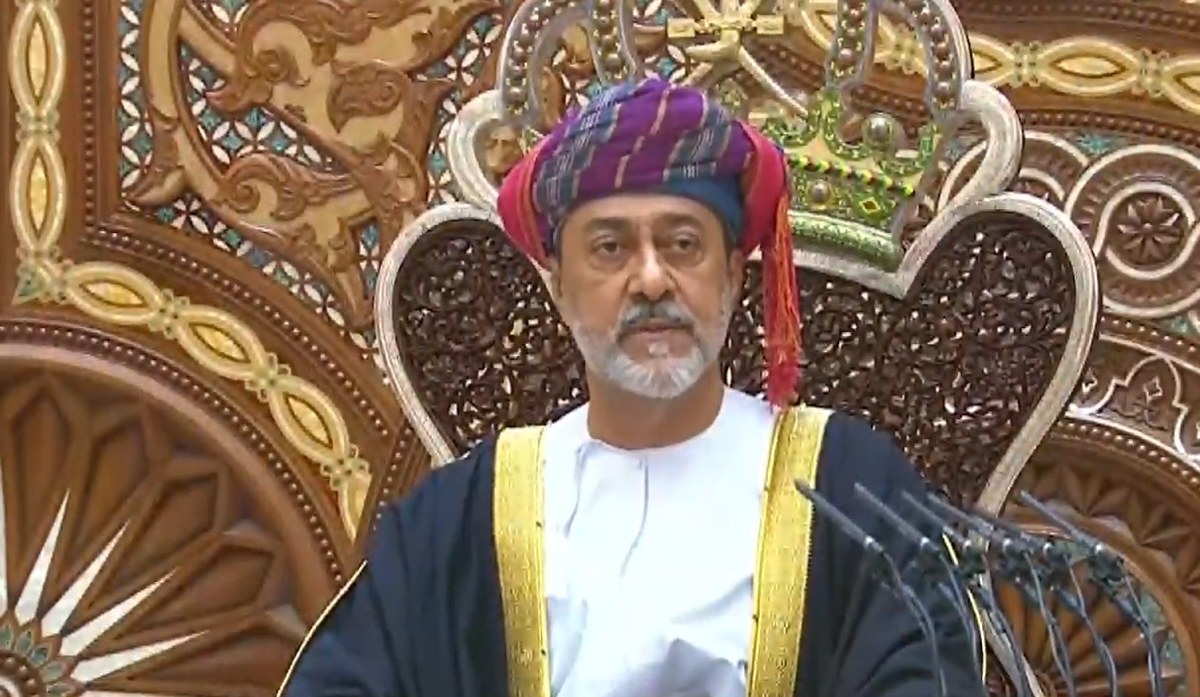
The 65-year-old cousin of late Sultan Qaboos was sworn in as the new royal ruler on Saturday morning, the government said

"Haitham bin Tariq was sworn in as the new sultan of the country... after a meeting of the family which decided to appoint the one who was chosen by the sultan," the government said in a tweet.

In his first speech as sultan, Haitham pledged to follow the non-interference policy that made the sultanate a vital regional mediator under Sultan Qaboos who reigned for half a century.

"We will follow the path of the late sultan," he said, dressed in the Omani royals' signature coloured turban and gold-trimmed robes.

He expressed support for "our country's foreign policy of peaceful living among nations and peoples... and not interfering in the internal affairs of others, respecting nations' sovereignty and international cooperation".

And he said that under his reign, Oman would continue to "promote peaceful solutions" to regional and global crises.
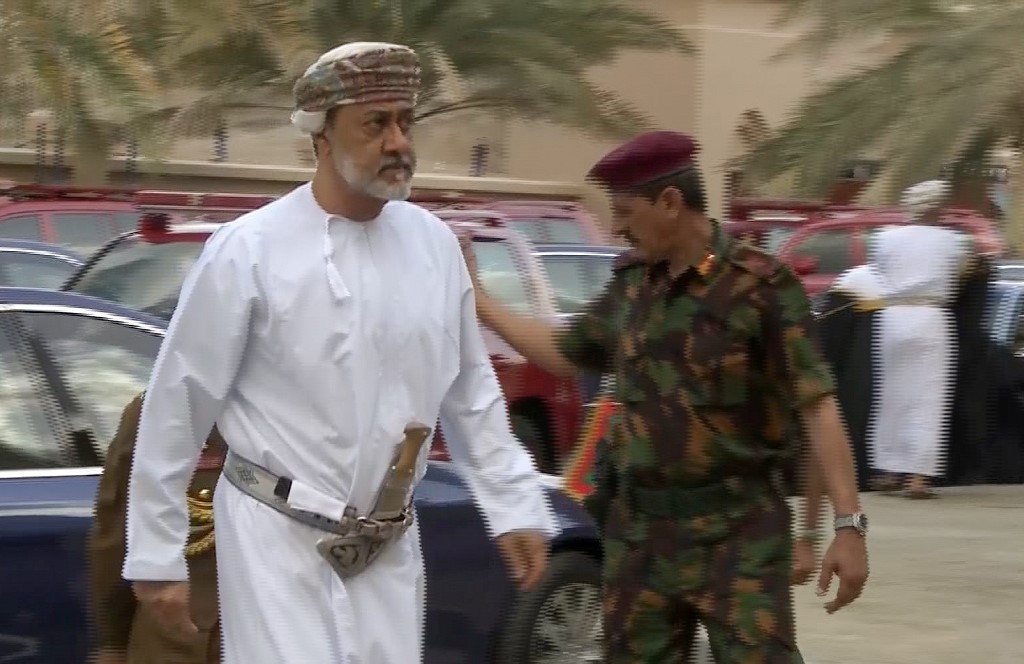


An image grab taken from Oman TV on January 11, 2020, shows Oman's newly sworn-in Sultan Haitham bin Tariq arriving to the Grand Mosque in the capital Muscat to take part in the funeral of Sultan Qaboos. (AFP)

Sultan Qaboos, the longest-reigning leader of the modern Arab world who died Friday at the age of 79, was unmarried and had no children, and left no apparent heir.

Tariq Al-Said, a sports enthusiast, held the position of undersecretary of the ministry of foreign affairs for political affairs before becoming the minister of heritage and culture in the mid-1990s.

He graduated from Oxford University in 1979 after studying the Foreign Service Programme and was the first head of Oman's football federation in the early 80s.

Tariq Al-Said often played an important diplomatic role representing Oman abroad and welcoming Britain’s Prince Charles and his wife Camilla, for example, upon their arrival to the country for a visit in 2016.

(With agencies)

Archaeological dig in Egypt discovers world’s oldest brewery

Archaeological dig in Egypt discovers world’s oldest brewery
An Egyptian archaeological mission has discovered a part of a wine press and storage units in Beheira governorate, 34 km east of Alexandria. (Supplied)
Updated 2 min 31 sec ago

Archaeological dig in Egypt discovers world’s oldest brewery

Archaeological dig in Egypt discovers world’s oldest brewery
  • Excavations revealed storage containers and other artifacts inside the workshops, indicating that the townspeople were making beer and bread at this site

CAIRO: The joint Egyptian-American archaeological mission, headed by Matthew Adams of New York University and Princeton University’s Deborah Yashar, has uncovered what is believed to be the oldest high-production brewery in the world.
The mission is working in North Abydos in Sohag governorate, 450 km south of Cairo.
“The factory is likely to date back to the era of King Narmer. It consists of eight large sectors with an area of 20 meters in length,” Mostafa Waziri, secretary-general of the Supreme Council of Antiquities in Egypt said, which would make it about 5,000 years old.
“They were used as units for the production of beer, as each sector contains about 40 pottery ponds arranged in two rows to heat the mixture of grains and water,” he said.
“Studies have proven that the factory produced about 22,400 liters of beer at a time. It was probably built in this place specifically to supply the royal rituals that were taking place inside the funerary facilities of the first kings of Egypt. These establishments show evidence of beer being used in sacrificial rituals,” Matthew Adams said.
After 16 years of excavation in the city of Tal Edfu, north of the city of Aswan and 600 km south of Cairo, archaeologists and researchers from the University of Chicago discovered a complex of buildings indicating the oldest stages of life in the city, and evidence of food production.

BACKGROUND

• After 16 years of excavation in the city of Tal Edfu, north of the city of Aswan and 600 km south of Cairo, archaeologists and researchers from the University of Chicago discovered a complex of buildings indicating the oldest stages of life in the city, and evidence of food production.

• The complex consists of two large mud-brick buildings surrounded by vast open squares and workshops. These buildings date back to about 2400 BC, the period known as the Old Kingdom in Pharaonic history, during which the pyramids were constructed.

The complex consists of two large mud-brick buildings surrounded by vast open squares and workshops. These buildings date back to about 2400 BC, the period known as the Old Kingdom in Pharaonic history, during which the pyramids were constructed.
Excavations revealed storage containers and other artifacts inside the workshops, indicating that the townspeople were making beer and bread at this site.
An Egyptian archaeological mission has discovered a part of a wine press and storage units, in addition to a large wall of mud bricks and a residential building adjacent to a mill in the area of Terogi, in Beheira governorate, 34 km east of Alexandria.
Ayman Ashmawy, head of the Egyptian Antiquities Sector, said that the building, in which small regular and irregular blocks of limestone were used in the foundations amid the mud bricks, may have been used to control the temperature for preserving wine.


Death of 13 Turkish hostages sparks debate about military operation

Death of 13 Turkish hostages sparks debate about military operation
Turkey has been pressing the US to end its policy of arming the Syrian Kurds, who are in close contact with their offshoots in Iraq. (Reuters/File)
Updated 8 min 35 sec ago

Death of 13 Turkish hostages sparks debate about military operation

Death of 13 Turkish hostages sparks debate about military operation
  • Those killed were believed to be former soldiers and police officers, although Ankara says they were civilians

JEDDAH: The killing of 13 Turkish hostages in Iraq by the outlawed Kurdistan Workers’ Party (PKK) has caused anger, and also a debate about the possibility of a wide-scale operation by Turkey. The hostages were executed in the Gara region, inside a special PKK cave “prison.”
It has been claimed they were former soldiers and police officers, although Turkey has said they were civilians.
Turkey lost three of its troops during the cross-border operation, which began on Wednesday, while 48 PKK fighters were killed.
The PKK is designated a terrorist group by Turkey, the US and EU. It has been fighting against the Turkish state since 1984, with more than 40,000 people killed so far.
Turkey said the hostages, who were held captive for years, were killed by the PKK. But the People’s Defense Center, which is the party’s military wing, said that Turkish forces shelled the cave, leading to the hostages’ death.
A military expert, who requested anonymity, said that those captured were automatically considered as civilians in Turkish military procedures.
“However, I don’t expect a bigger operation in the region for now,” the expert told Arab News. “The winter conditions are so hard there to sustain any military move.”
Similar operations — to free captives from the hands of the PKK — have been mediated by the pro-Kurdish Peoples’ Democratic Party (HDP).
But such mediation has become unlikely given the HDP’s alleged ties to the PKK.
“Turkish forces are now occupying a couple of villages lower down from the Gara mountain hideout, through which PKK fighters and their supplies have to move,” analyst Bill Park, a visiting research fellow at King’s College London, told Arab News.
“The Iraqi Kurdistan Democratic Party (KDP) seems to be going along with it, because they are dependent on Turkey in many ways and because they also don’t welcome the PKK presence. But it is evident that they are also embarrassed, as local Iraqi Kurds don’t welcome Turkey’s presence and often suffer from its bombing and other raids.”
He added that the Patriotic Union of Kurdistan, which has been always closer to the PKK and less trusting of Turkey, had been more critical of this intensified Turkish action.
Last year, following its Operation Claw-Tiger against PKK insurgents along the Qandil mountains that host PKK headquarters, Turkey was leaving its military footprint deeper into northern Iraq with plans to set up temporary bases in the region in order to better target the party’s hideouts, routes and logistic capabilities.

BACKGROUND

• The PKK is designated a terrorist group by Turkey, the US and EU. It has been fighting against the Turkish state since 1984, with more than 40,000 people killed so far.

• Turkey said the hostages, who were held captive for years, were killed by the PKK. But the People’s Defense Center, which is the party’s military wing, said that Turkish forces shelled the cave, leading to the hostages’ death.

• A military expert, who requested anonymity, said that those captured were automatically considered as civilians in Turkish military procedures.

Iraqi Kurds feared that this expanded presence meant a longer and maybe permanent presence in their territory, he added.
“It does indeed look like Turkey is digging in for a long stay, as in northern Syria too.”
Turkey’s ruling Justice and Development Party and its ally the Nationalist Movement Party keep calling for the closure of the HDP. The latest PKK attack is likely to trigger more political actors to repeat such demands by blaming the HDP.
Park said that the policy line from the new US administration would also be a factor in terms of Turkey’s Iraq moves, as President Joe Biden’s team is expected to focus on fighting the remnants of Daesh in Syria with the help of local allies the Syrian Kurds.
“The Turkish approach is also complicated by the presence of the Syrian Kurdish PYD/YPG forces in Syria, and the anger of a growing number of increasingly radicalized young Iraqi Kurds. Indeed, Turkish actions in northern Iraq are partly driven by developments in northern Syria,” Park said.
Turkey has been pressing the US to end its policy of arming the Syrian Kurds, who are in close contact with their offshoots in Iraq.
“There is far more sympathy in Washington for the general Kurdish causes now, both in Congress and in the Biden administration. So, Turkey’s diplomatic relations will be made more difficult by this attempt at a military crackdown,” Park said.


Hariri marks 16th anniversary of father’s assassination

Hariri marks 16th anniversary of father’s assassination
Lebanese Prime Minister-designate Saad Hariri in Beirut. (Reuters)
Updated 22 min 25 sec ago

Hariri marks 16th anniversary of father’s assassination

Hariri marks 16th anniversary of father’s assassination
  • Hariri rejected criticism of his late father, saying: “Hariri’s policy had brought back Lebanon to the scene, attracted investors and tourists, and set the first cellular network in the Middle East even before Israel did, and it was a policy of moderation

BEIRUT: Lebanon’s Prime Minister-designate Saad Hariri said on Sunday that although he had been subjected to “slander and lies,” he was “very patient” and determined to form a new government.
In a televised speech marking 16 years since the assassination of his father, Rafik Hariri, he said that he would never accept giving “the blocking third in the government to the president of republic.”
Hariri said that during his meeting with Michel Aoun on Friday “the president of the republic asked for a quota of six minsters and for granting the Armenian Tashnag party a minister out of this quota.”
“Things are not going well, for the economy is in crisis, a dear part of our beloved Beirut was destroyed by the explosion of the port, the new coronavirus pandemic is devastating our families, and the series of assassinations is continuing with the last victim being martyr Lokman Slim,” Hariri said.
“A specialists’ government of nonparties members is the only one capable of implementing the necessary reforms, whose road map was set by the initiative of French President Emmanuel Macron, otherwise no one will help us and the deterioration will continue until the big explosion.”
He continued: “Fighting corruption starts with a reform that guarantees the independence of the judiciary, which stops pressures on some judges to open or close certain cases according to political affiliations.”
Hariri considered that “the one who is blocking the forming of the government is the one who is obstructing the launching of reforms, delaying preventing the collapse, and launching reconstruction.”
On the anniversary of his father’s death, Hariri stressed that the ruling issued by the Special Tribunal for Lebanon against Slim Ayyash, convicted in absentia of killing Rafik Hariri in a 2005 bombing, should be executed and that he should be handed over no matter how long it took.
Ayyash is still at large and Hezbollah refuses to hand him over as it does not recognize the tribunal.

HIGHLIGHT

Hariri rejected criticism of his late father, saying: ‘Hariri’s policy had brought back Lebanon to the scene, attracted investors and tourists, and set the first cellular network in the Middle East even before Israel did, and it was a policy of moderation.’

Hariri rejected criticism of his late father, saying: “Hariri’s policy had brought back Lebanon to the scene, attracted investors and tourists, and set the first cellular network in the Middle East even before Israel did, and it was a policy of moderation.”
The prime minister-designate also objected to allegations that he infringed on the president’s prerogatives in forming the government or on the Christians’ rights but that he “did not allow the president of the republic to choose the ministers he wanted, especially Christian ministers.”
He added: “Where were you from Christians’ rights when the seat of the first presidency remained vacant for three years? Christians’ rights lie in a strong economy and in stability, and if there is no state there would no rights for Christians or for anybody else.”
“We are for a forensic investigation in the Central Bank, and in all institutions, ministries, and directorates, whether in communication, dams, funds, and everything else starting from 1989 onward so that truth of what happened will be known to everybody and so that all violators, corrupts, and thieves will be sued.”
He said that his visits to Arab and foreign countries were to “gather support to Lebanon and to re-establish relations, especially with Arab states, so that the solution will be launched quickly when the government is formed, and it will definitely be formed for there is no way out of this crisis without the Arabs and the international community, without deep reconciliation with the Arab brothers, and without stopping using Lebanon as a platform to attack the Arab Gulf and damage the interests of the Lebanese.”
The current lockdown forced Hariri to cancel the annual gathering of his supporters to commemorate the anniversary of the assassination.
On the anniversary of the assassination there were declarations by political parties commemorating the event, while Free Patriotic Movement (FPM) activists launched a wave of criticism
on social media against the late prime minister.


UAE swears in country's first ambassador to Israel

UAE swears in country's first ambassador to Israel
Updated 14 February 2021

UAE swears in country's first ambassador to Israel

UAE swears in country's first ambassador to Israel
  • Sheikh Mohammed bin Rashid wished Al-Khaja success in his mission
  • UAE cabinet last month approved establishment of an embassy in Tel Aviv

DUBAI: Mohammed Mahmoud Al-Khaja has been sworn in as the new UAE ambassador to Israel.
Al-Khaja took the oath in front of UAE Vice President, Prime Minister and Ruler of Dubai, Sheikh Mohammed bin Rashid.
He swore to be loyal to the UAE and its president, respect the constitution and the state’s laws and to place its interest above all else, as well as perform his duties in a safe, faithful and confidential manner, Emirates news agency WAM reported on Sunday.

The ceremony comes after the cabinet approved the setting up of an embassy in Tel Aviv last month.
Sheikh Mohammed bin Rashid wished Al-Khaja success in his mission, and called on him to work to consolidate relations between the UAE and Israel in a way that promotes a culture of “peace, coexistence and tolerance,” the report said.
The UAE and Israel signed a US-brokered deal on Sept. 15, known as the Abraham Accords, which established diplomatic relations between the two countries for the first time.
Since then, several bilateral meetings and visits have been conducted between both sides.
Israel officially opened its embassy in the UAE capital Abu Dhabi last month with Eitan Na’eh serving as an acting ambassador.


Lebanon’s Hariri sees no way out of crisis without Arab support

Lebanon’s Hariri sees no way out of crisis without Arab support
Updated 14 February 2021

Lebanon’s Hariri sees no way out of crisis without Arab support

Lebanon’s Hariri sees no way out of crisis without Arab support
  • Lebanon seeks rescue from financial meltdown
  • Hariri says Lebanon cannot be staging point for Gulf attacks

BEIRUT: Lebanese Prime Minister designate Saad Al-Hariri on Sunday said that his country could not be rescued from its current crisis without the support of Arab countries and the international community.
Gulf states have long channelled funds into Lebanon’s fragile economy, but they are alarmed by the rising influence of Hezbollah, a powerful group backed by their arch-rival, Iran, and so far appear loath to ease Beirut’s worst financial crisis in decades.
“There is no way out of the crisis ... without a deep reconciliation with our Arab brothers and an end to using the country as a staging point for attacking Gulf countries and threatening their interests,” Hariri said in a televised speech marking 16 years since the assassination of his father, ex-premier Rafik Al-Hariri.
A UN backed tribunal in December convicted a Hezbollah member of conspiring to kill Rafik Al-Hariri in a 2005 bombing. Hezbollah has denied any links to the attack.
Saad Al-Hariri, a former prime minister himself, was given the task of forming a government in October but is struggling so far to cobble together a cabinet to share power with all Lebanese parties, including Hezbollah.
After a meeting with President Michel Aoun on Friday, Hariri said there had been no progress on the formation of a government.
Under a sectarian power-sharing system, Lebanon’s president must be a Maronite Christian and the prime minister a Sunni Muslim. President Aoun is an ally of Hezbollah, listed as a terrorist group by the United States.
On Sunday Hariri blamed Aoun for impeding progress, saying he had visited the president 16 times since his nomination as prime minister and proposed names to no avail.
France has been spearheading efforts to rescue Lebanon from its worst crisis since the 1975-1990 civil war.
A new government is the first step on a French roadmap that envisages a cabinet that would take steps to tackle endemic corruption and implement reforms needed to trigger billions of dollars of international aid to fix the economy, which has been crushed by a mountain of debt.
“In all my communications there is a readiness and an enthusiasm to help Lebanon, to stop the collapse and rebuild Beirut,” Hariri said.
“But it is all waiting for the push of a button and that button is government formation.”