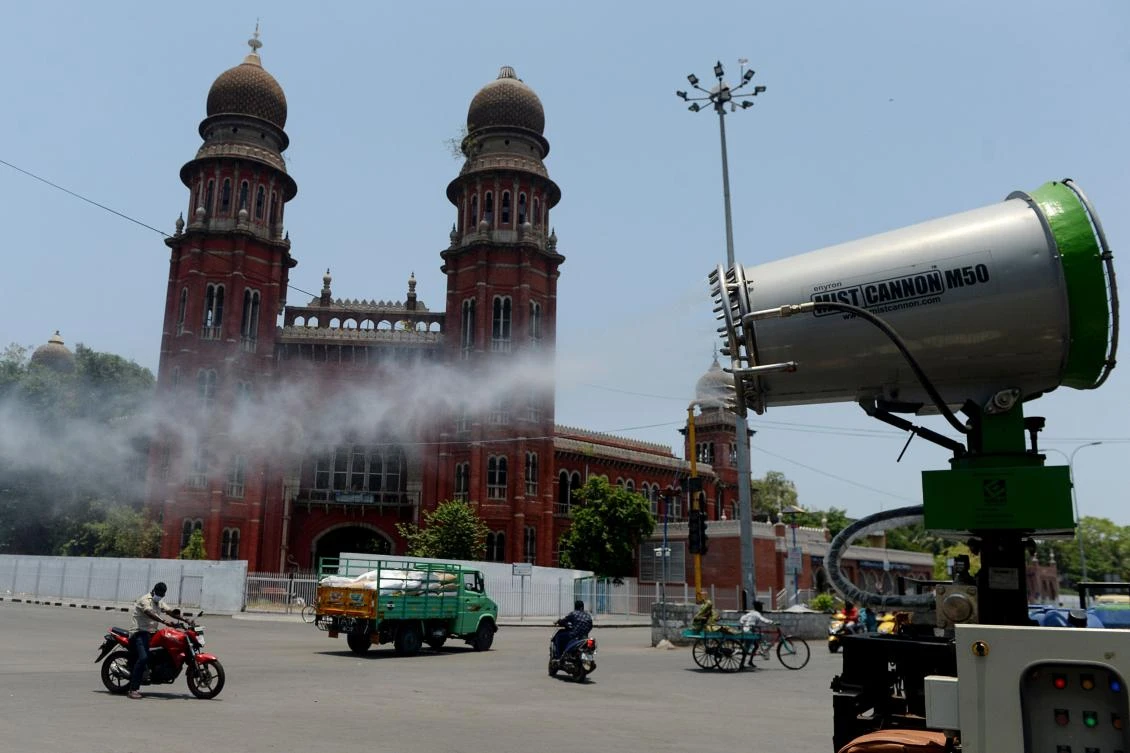
- There are concerns that if the virus catches hold in a big way, India's poorly funded health care system will be severely stretched
- Some experts have said the vast country of 1.3 billion, home to some of the most congested cities in the world, is not testing enough
NEW DELHI: The Indian government said on Friday that the world's biggest coronavirus lockdown will be extended for two weeks beyond May 4, but with some easing of restrictions.
The home ministry said in a statement that in view of "significant gains in the COVID-19 situation", areas with few or no cases would see "considerable relaxations".
The lockdown imposed on March 25 has caused misery for millions of workers in India's vast informal sector and dealt a major blow to Asia's third-biggest economy.
However the stringent restrictions have been credited with keeping confirmed cases of coronavirus to a relatively low 35,365 as of Friday, with 1,152 deaths.
But some experts have said the vast country of 1.3 billion, home to some of the most congested cities in the world, is not testing enough.
In addition, there are concerns that if the virus catches hold in a big way, India's poorly funded health care system will be severely stretched.
The government has now divided India into red zones with "significant risk of spread of the infection"; green zones with either zero cases or no confirmed cases in the past 21 days; and those in between as orange.
Red and orange zones will continue to have intensified contact tracing, house-to-house surveillance, and no movement in or out except for medical emergencies and the supply of essential goods and services, the home ministry statement said.