Human Rights Watch says Houthi cargo ship attacks amount to war crimes

Human Rights Watch says Houthi cargo ship attacks amount to war crimes
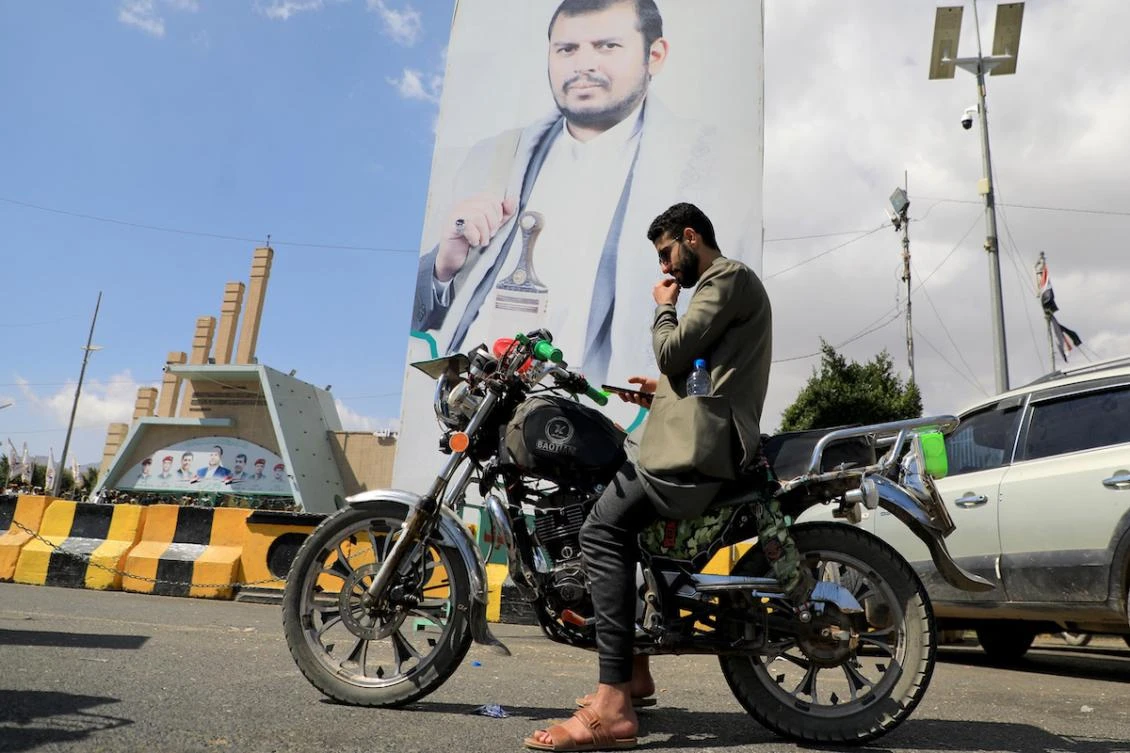
Human Rights Watch on Wednesday condemned Yemen’s Iran-backed Houthi rebels for deadly attacks that sank two commercial vessels this month. (FILE/AFP)
Short Url
Updated 23 July 2025
Follow

Human Rights Watch says Houthi cargo ship attacks amount to war crimes

Human Rights Watch says Houthi cargo ship attacks amount to war crimes
  • The Houthis struck the Magic Seas and Eternity C cargo ships in the Red Sea, part of a campaign against maritime traffic they accuse of having links to Israel

BEIRUT: Human Rights Watch on Wednesday condemned Yemen’s Iran-backed Houthi rebels for deadly attacks that sank two commercial vessels this month, calling them violations of the laws of war.
The Houthis struck the Magic Seas and Eternity C cargo ships in the Red Sea, part of a campaign against maritime traffic they accuse of having links to Israel, launched over the Gaza war.
Fifteen people — including four confirmed dead — remain missing after the July 7 attack on the Eternity C.
The Yemeni rebels claimed to have “rescued” an unspecified number of crew, whose whereabouts are still unknown.
The attacks were “violations of the laws of war amounting to war crimes,” Human Rights Watch said in a statement, adding it found “no evidence that the ships were military targets.”
“They deliberately attacked commercial vessels that could clearly be identified as civilian,” the New York-based group said, adding that “detaining rescued crew members is also prohibited.”
Rebel leader Abdel Malek Al-Houthi justified the attacks, saying both ships belonged to companies serving Israeli ports.
But HRW said the ships had no connection to Israel and were not heading there.
The Magic Seas was en route to Turkiye from China carrying fertilizer and steel billets when it was attacked on July 6.
The Eternity C was heading to Saudi Arabia from Somalia after delivering humanitarian aid for the United Nations World Food Programme.
“The Houthis have sought to justify unlawful attacks by pointing to Israeli violations against Palestinians,” said Niku Jafarnia, HRW’s Yemen and Bahrain researcher.
“The Houthis should end all attacks on ships not taking part in the conflict and immediately release the crew members in their custody,” she added.
Since November 2023, the rebels have carried out more than 100 attacks on vessels in the Red Sea and Gulf of Aden, according to the Joint Maritime Information Center, run by a Western naval coalition.
HRW said it had previously found those actions to be war crimes.
It also warned of environmental risks, citing findings by Wim Zwijnenburg of Dutch peace organization PAX.
Zwijnenburg said satellite imagery showed large oil slicks trailing from the sites where both vessels sank, threatening wildlife in a protected nature reserve off Eritrea’s coast.
Oil was also reportedly washing ashore near a fishing community, he was quoted as saying.

Kuwait eyes large-scale battery storage to ease power crisis

Kuwait eyes large-scale battery storage to ease power crisis
Updated 10 sec ago
Follow

Kuwait eyes large-scale battery storage to ease power crisis

Kuwait eyes large-scale battery storage to ease power crisis
  • The battery storage initiative is part of a broader push to stabilize Kuwait’s grid and reduce reliance on fossil fuels during peak demand periods

KUWAIT CITY: Kuwait is negotiating a major battery storage project with a discharge capacity of up to 1.5 gigawatts and total energy storage of between 4 and 6 gigawatt-hours, in a bid to ease chronic power shortages, a senior Electricity Ministry official said on Monday.
The Gulf state, a major oil producer and OPEC member, has been grappling with severe electricity shortages driven by rapid population growth, urban expansion, rising temperatures and delays in plant maintenance.
The strain has forced authorities to impose planned power cuts in some areas since last year.

SPEEDREAD

• The battery storage initiative is part of a broader push to stabilize Kuwait’s grid and reduce reliance on fossil fuels during peak demand periods.

• If implemented, it would mark one of the largest energy storage deployments in the region.

“It is still in the negotiation phase ... the picture is becoming clearer and we may soon have an outcome from it,” Adel Al-Zamil told reporters.
The battery storage initiative is part of a broader push to stabilize Kuwait’s grid and reduce reliance on fossil fuels during peak demand periods. If implemented, it would mark one of the largest energy storage deployments in the region.
Momentum has picked up since Emir Sheikh Meshal Al-Ahmad Al-Sabah dissolved parliament in 2024 for four years, clearing the way for long-delayed projects.
Both the Al-Khairan power plant and the first phase of the Shagaya renewable energy project, with a combined planned capacity of around 2.9 gigawatts, are expected to be awarded in the second half of 2026, Al-Zamil said.
The Public-Private Partnership Authority invited bids in September for the first phase of Al-Khairan, which will contribute at least 1.8 gigawatts. The first phase of Shagaya, with a planned capacity of 1,100 megawatts, has completed its pre-qualification stage.