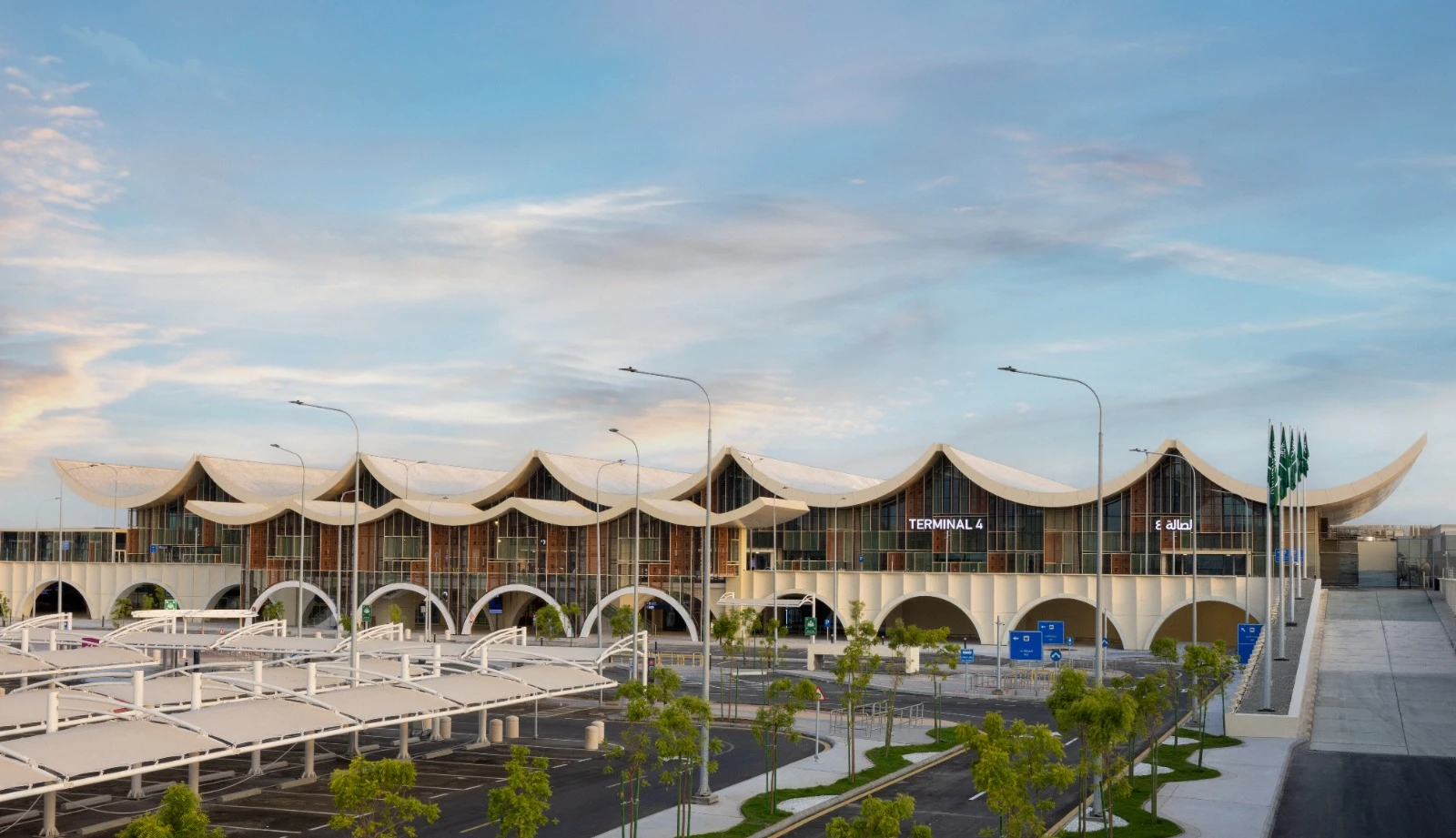
- Here’s a sneak peek at its first flight, luxury lounge launch, and new partnerships
RIYADH: Announced at its headquarters in the Kingdom’s capital, Riyadh Air is officially taking to the skies — and it’s earlier than you think.
The airline’s maiden flight will depart from Riyadh to London’s Heathrow on Oct. 26 with a Boeing 787-9 technical spare aircraft named “Jamila,” which means “beautiful” in Arabic.
Riyadh Air, the newest national airline for Saudi Arabia, was announced in 2023 and is owned by the Kingdom’s Public Investment Fund.
As well as revealing the maiden flight, the airline also announced a string of fresh updates — from its opening of a luxury lounge, launching of a loyalty program, as well as new high-profile partnerships.
Talking to Arab News, Riyadh Air CEO Tony Douglas said: “I’ll be honest, on a personal level it’s almost overwhelming. And I’m probably speaking on behalf of the whole of the Riyadh Air family. It is a historic moment. It’s been a three-year pathway to perfect, and the next stage of this is leading us through to going live on Oct. 26, daily service to London Heathrow.”
"We’ve got two new aircraft soon to be delivered. We need three to start commercial operations, with ticket sales to the general public. So we’re going to put Jamila, which is our technical spare aircraft, onto Heathrow first. When the first new one gets delivered, we switch Jamila on to Dubai, second destination. The new aircraft goes on to Heathrow.”
Flights to Dubai will soon follow, with winter 2025 and summer 2026 destinations to be announced imminently.
"When the second new aircraft arrives, that one goes on to Dubai, Jamila retires as the technical spare and then we open to general public sales. And it’s going to be very soon,
“It’s very, very soon. The first aircraft came out the paint shop 10 days ago. It’s finished. Obviously, testing and certification, it takes time. We’re not in control of it, hence the reason we’re not giving a precise date. But why have we done this release, this press conference today, is we know it’s imminent,” the CEO added.
“We are not just selling tickets; we are selling an experience,” Osamah Al-Nuaiser, senior vice president of marketing and corporate communications, told Arab News.
The first daily launch flights will carry select guests, allowing the airline to refine operations and the overall experience before general commercial passengers are welcomed.It was also announced that travelers will be welcomed into Riyadh Air’s first premium airport experience — the “Hafawa Lounge” at King Khalid International Airport, located between Terminals 1 and 2.
“Hafawa” is an Arabic word that embodies warmth and hospitality. Spanning nearly 2,000 sq. meters and accommodating 370 guests, the lounge is exclusively for Business Elite and Business Class travelers and will have private and communal spaces and dining areas.
Riyadh Air is also launching its loyalty program “Sfeer,” now open to travelers via the Riyadh Air website.
Meaning “Ambassador” in Arabic, early registrants will receive priority bookings and other perks.
When fully activated in 2026, “Sfeer” will feature gamified challenges, leaderboards, invitations to exclusive events, complimentary onboard Wi-Fi and a range of benefits from global partners.
Commenting on Sfeer, the CEO said: "So this is really exciting for us as well. To the best of our knowledge, we can’t think of another airline that launched the loyalty program at exactly the same time as launching the airline. One of the many benefits of signing up straight away to become a Sfeer member is you will become a Founders Club member as well. That will give lots of unique benefits, but also the ability to start now planning your travel with Riyadh Air.”
A cornerstone of Riyadh Air’s international strategy is its partnership with Saudia Airlines, the Kingdom’s national carrier, Al-Nuaiser emphasized.
“Saudia Airlines is very important. We started the first airline partnership with Saudia and the reason being we need to integrate not compete. Of course, we need to make sure that there’s synergy between both national carriers,” Al-Nuaiser told Arab News.
The arrangement allows travelers to earn and redeem loyalty points across both carriers, Riyadh Air and Saudia, strengthening integration and connectivity rather than competition.
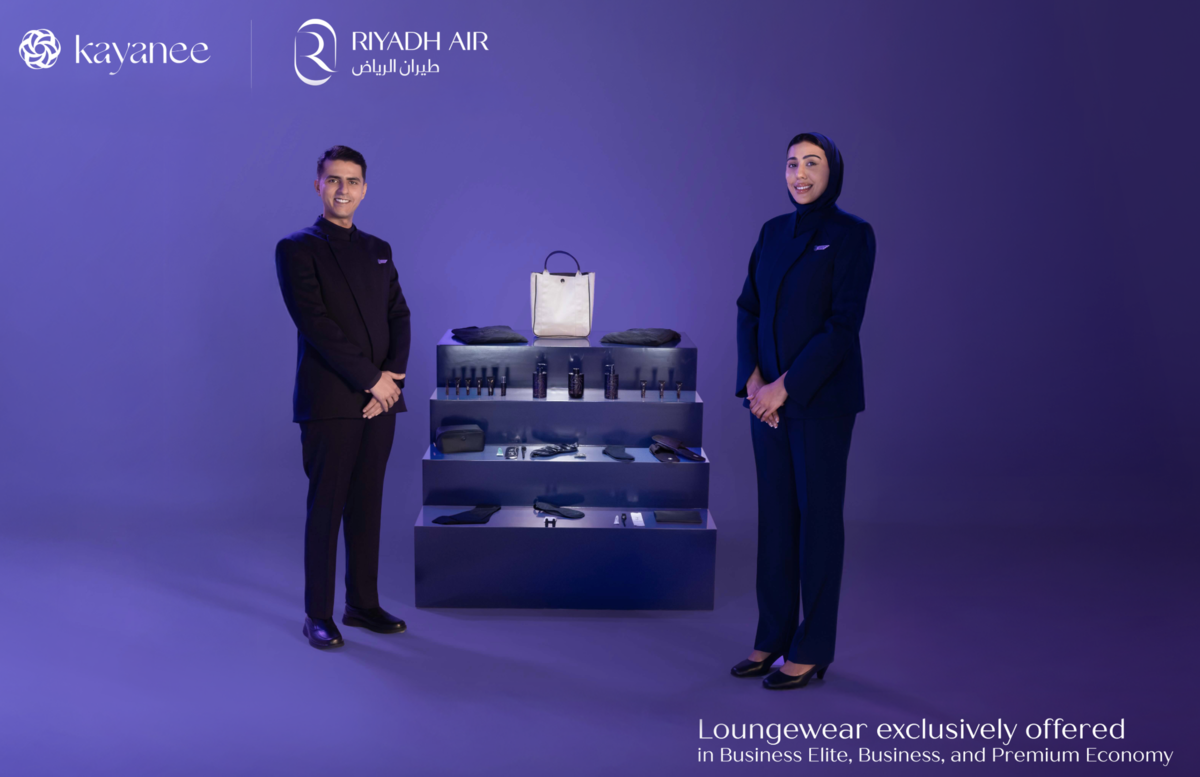
A partnership with Saudi wellness brand Kayanee was also announced, which will see the company provide loungewear and amenity kits for Business Elite, Business, and Premium Economy cabins.
Another major announcement focuses on Riyadh Air’s partnership with the popular ride-sharing brand Uber, which is already widely-used in Saudi Arabia. This collaboration will provide seamless ground transportation for travelers and integrate loyalty benefits, marking a key step in connecting the seamless transport of passengers from doorstep to departure.
Cabin crew uniforms are designed by Paris-based Saudi designer Mohammed Ashi, and were unveiled in June, 2024, at Haute Couture Week in the French capital.
As announced earlier this year, Riyadh Air’s catering will be handled by Saudi company Catrion under a five-year, SR2.3 billion ($610 million) contract, ensuring consistent food and beverage quality across all flights. Menus promise to blend Saudi and international flavors for a premium culinary experience— and plenty of Saudi coffee.
Since its launch two years ago, Riyadh Air has partnered with 10 other global carriers including Delta, Virgin Atlantic, and Turkish Airlines, as well as China Eastern, Singapore Airlines, and EgyptAir, enabling gradual network expansion.
Underlining the pace of its development, Riyadh Air has grown from fewer than 10 employees to nearly 600.
“I’m employee number nine in the airline. So I’m part of the founding members of Riyadh Air. Never been prouder than seeing the establishment of this airline come to life, but also to have been blessed with the team that has been growing the trajectory,” Al-Nuaiser said.
He also emphasized Riyadh Air’s Saudi roots and cultural mission, saying: “We are from Riyadh and we will serve the people of Riyadh and the people of the Kingdom first. At the same time, we want to attract tourists and business travelers as part of the national strategy for tourism.”
Al-Nuaiser added: “We want to take the hospitality and generosity of the people and make sure that we also carry that and connect Riyadh to the world and the world to Riyadh. Flying is such a beautiful privilege— we want to bring a little bit of glamor back to the skies. We want to create an icon that we all are proud of.”