AI industry not like internet bubble era, says State Street Investment Management CEO

AI industry not like internet bubble era, says State Street Investment Management CEO
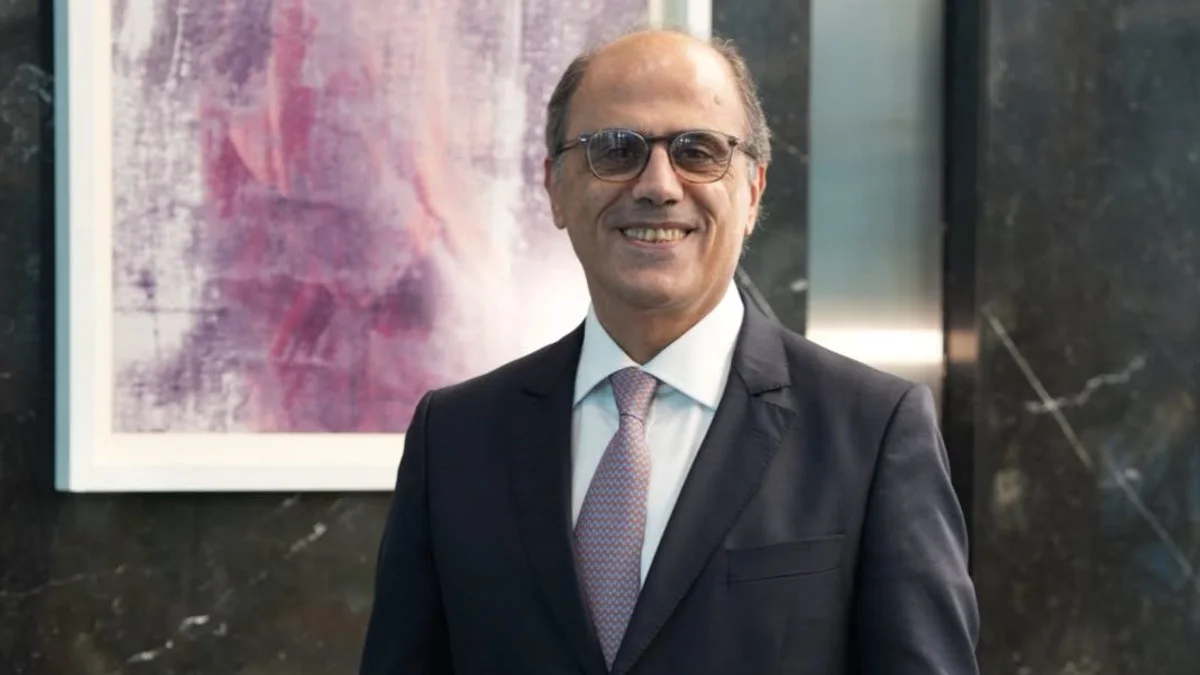
Yie-Hsin Hung, president and CEO of State Street Investment Management.
Short Url
Updated 29 October 2025
Follow

AI industry not like internet bubble era, says State Street Investment Management CEO

AI industry not like internet bubble era, says State Street Investment Management CEO

RIYADH: One of the world’s leading asset management companies has played down fears the artificial intelligence sector is a bubble akin to the early days of the internet.

Speaking to Asharq Bloomberg on the sidelines of the Future Investment Initiative in Riyadh, Yie-Hsin Hung, president and CEO of State Street Investment Management, also flagged up infrastructure and real estate as areas set to deliver returns as reflected on the current business landscape.

When asked about concerns that AI may not be a sustainable investment, she replied: “If you compare today’s big tech, compared to say the era of the internet bubble, you have companies today that are generating enormous amount of cash flow and able to deliver tremendous returns and I think the promise is there.”

Reflecting on the upcoming meeting of the US Federal Reserve to discuss whether to cut interest rates, Hung struck a postive tone, saying: “We’re calling for 75 basis points of cuts which I think is pretty much the view for the full year, so another 25 after this one. We’d like to see another 75 basis points next year because we’re more worried about the labour market but if in fact the Fed doesn’t cut it would suggest the economy is pretty strong so on balance pretty optimistic.”
Saudi Arabia’s non-oil sector posts strong growth as PMI hits 60.2 

Saudi Arabia’s non-oil sector posts strong growth as PMI hits 60.2 
Updated 8 sec ago
Follow

Saudi Arabia’s non-oil sector posts strong growth as PMI hits 60.2 

Saudi Arabia’s non-oil sector posts strong growth as PMI hits 60.2 

RIYADH: Saudi Arabia’s non-oil economy accelerated in October, with the Purchasing Managers’ Index climbing to 60.2, its second-highest level in more than a decade, signaling strong business growth momentum. 

The latest survey by Riyad Bank and S&P Global showed a sharp improvement in operating conditions across the Kingdom’s private sector, underpinned by solid demand, rising employment, and robust output growth.  

The October reading, up from 57.8 in September, highlights the sustained momentum of the non-oil economy as Vision 2030 reforms continue to drive diversification away from crude revenues. 

Speaking at the Future Investment Initiative in October, Saudi Arabia’s Minister of Economy and Planning Faisal Alibrahim said the Kingdom’s gross domestic product is expected to expand by 5.1 percent in 2025, supported by continued growth in non-oil activities. 

Commenting on the latest report, Naif Al-Ghaith, chief economist at Riyad Bank, said: “Saudi Arabia’s non-oil private sector recorded a solid improvement in business conditions in October, with the PMI rising to 60.2, marking one of the strongest readings in over a decade.”  

He added: “The acceleration was driven by broad-based gains in output, new orders, and employment, reflecting sustained demand momentum and continued strength in the non-oil economy.”  

Al-Ghaith noted that the latest survey results also indicate a strong start to the final quarter of the year, supported by both domestic and external demand. 

According to the report, the pace of growth in new orders received by non-oil companies accelerated for the third consecutive month in October, with 48 percent of surveyed firms reporting higher sales. 

Participating companies attributed the sales growth to improving economic conditions, a growing client base, and increased foreign investment. 

Output and employment also expanded sharply during the month, with job creation rising at the fastest pace in nearly 16 years.

Al-Ghaith said the persistent rise in new export orders highlights the growing competitiveness of Saudi firms and the progress achieved under ongoing diversification initiatives. 

“The rise in demand encouraged firms to expand production and workforce capacity at the fastest rate since 2009, as businesses expanded capacity to meet new workloads. Purchasing activity and inventories also increased, while suppliers’ delivery times continued to improve, reflecting efficient coordination and resilient supply chains,” he added.  

October data indicated a sharp rise in input costs for non-oil firms, driven mainly by wage increases from salary revisions and bonuses. 

On the outlook, companies remained optimistic, citing strong market demand, ongoing project work, and government investment initiatives. 

“Optimism is underpinned by solid domestic demand and the momentum of ongoing projects. Although some concerns persist around costs and competition, sentiment overall remains strongly positive, reflecting confidence in the economy’s continued expansion and the strength of the non-oil private sector,” concluded Al-Ghaith.