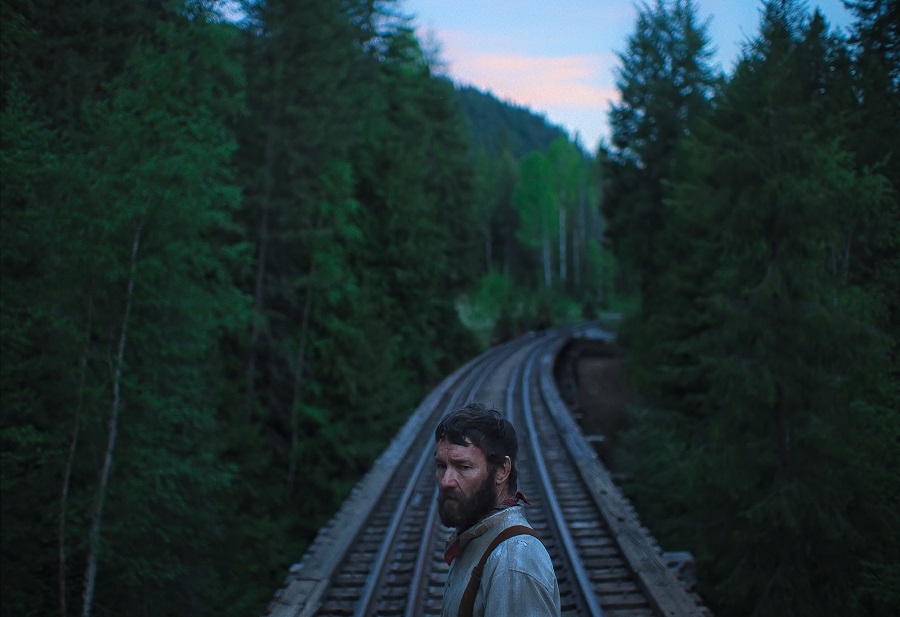
DUBAI: Not much happens — on screen at least — in director Clint Bentley’s elegiac “Train Dreams.” The film is based on Denis Johnson’s 2011 novella and tells the story of the 80-year-long life of Robert Grainier (Joel Edgerton).
Grainier was orphaned young, dropped out of school early and spent his teenage years drifting somewhat aimlessly. Then he meets Gladys Olding (Felicity Jones). They fall in love, marry, build themselves a log cabin near Idaho’s Moyie River, and have a daughter, Kate.
Jobs are hard to find in the post-WWI economy, and Grainger signs up to work in railroad construction to help expand the US’s Great Northern Railway. He also takes on seasonal logging work. All of which means he’s away from home for extended periods of time. The men he meets are mostly, like Grainger, taciturn and tough. Emotions are rarely discussed. But there are characters who become something like friends, like ageing demolition expert Arn Peeples (William H. Macy).
Edgerton is excellent. Grainier has little dialogue (indeed, most of the talking in the film comes in the form of a voiceover from an unidentified narrator), but Edgerton embodies a man with a placid surface over hidden depths. When Grainier suffers unimaginable loss, Edgerton plays out the grief, regrets, despair, and the depression empathetically and utterly convincingly, without any grandstanding.
Aside from Edgerton, the star of the film is its scenery; breath-taking sun-dappled images of the wilderness abound in Adolpho Veloso’s faultless cinematography. It’s gorgeous to look at.
There’s beauty, too, in the story. Like Grainier, it has layers, not least in that way that, as much as Grainier feels connected to nature, he’s aware that he’s responsible for destroying it in the name of progress. As his life goes on and he remains isolated in the cabin, that progress makes the outside world seem an almost alien place to him, even though he helped build it.
The ‘morals,’ such as they are, are ancient: Happiness is fleeting; days can drag, but years fly by; the smallest of kind gestures can make a world of difference; all of us, rich or poor, meet the same fate eventually… that kind of thing. That makes “Train Dreams” sound cheesy. It isn’t. It’s a pitch-perfect story with a pitch-perfect central performance, beautifully rendered and expertly told. Not much happens here, but there’s a lot going on.