
Saudi Aramco has built a global reputation for delivering energy that supports millions of peoples’ lives.
Closer to home our social responsibility efforts focus on a different type of value creation — one rooted in community empowerment, heritage preservation and sustainable livelihoods.
Harnessing our diverse capabilities and extensive business expertise, we embarked on an initiative aimed at encouraging and supporting the growth of Saudi micro-industries, which leverage traditional crafts and natural resources.
Thriving local communities and resilient, diversified economies are essential to long-term community growth and well-being.
In practice, this led us to invest in different areas of local production ecosystems, including bisht production, beekeeping, coffee cultivation, and date production and food processing industries.
Our goal has been to enable structured, income generating opportunities that preserve culturally-significant industries while equipping local practitioners with the skills, infrastructure, and market readiness required to shape their own economic futures.
Almost 10 years later, our investments are paying off through empowered local communities.
Traditional textiles industry
In December 2025, we launched the Al Mahud Bisht Factory in Al-Ahsa. The project, in cooperation with the Ftat Al-Ahsa Charity and Development Society, as well as the Herfah Cooperative Association, is an extension of our efforts to support local artisans and preserve traditional textiles and crafts.
With its focus on making bisht production a viable commercial venture for future generations, the factory is a significant addition to our portfolio of projects designed to build national capabilities, train Saudi talent, support economic growth and unlock opportunities.
The factory is equipped with modern technologies and advanced machinery, helping enhance production efficiency and meet quality standards.
A rich heritage
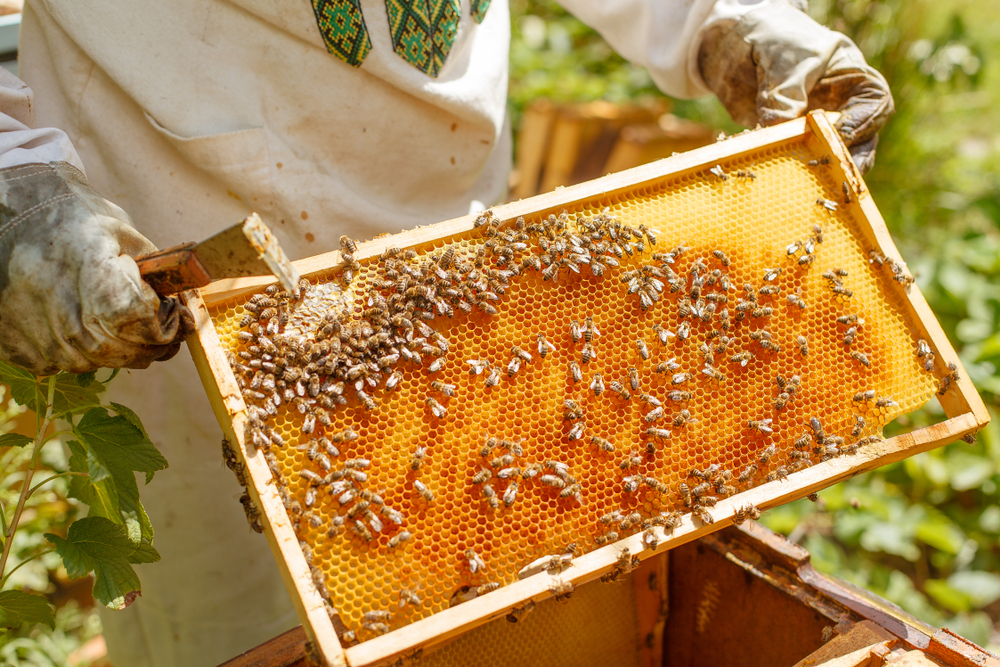
There is a long tradition of beekeeping in the Arabian Peninsula, dating back thousands of years.
But in recent years, the practice has come under pressure. Limited resources, among other challenges, have left small-scale beekeepers struggling to keep up with demand.
To help address these challenges, Aramco started the Beekeeping and Bee Products Support Initiative in 2016, in collaboration with the Beekeepers Cooperative Association in Al-Baha.
Efforts to help create and maintain the right environment for beekeeping in the Kingdom include planting 70,000 flowering trees, and offering training and resources aimed at enhancing yields and quality.
Today, the collaboration has contributed to increasing production to around 30 tonnes of honey a year, and to supporting more than 900 beekeepers.
Building on this success, Aramco expanded its beekeeping initiatives in 2019 to include Taif, Madinah, and Jazan, in partnership with local beekeepers’ cooperative societies in each region.
In parallel, Aramco launched a dedicated initiative to support low-income beekeepers in the Asir region, in collaboration with the Rijal Almaa Beekeepers Cooperative Society, supporting 1,000 beneficiaries through training and capacity building.
This collaboration led to the production of 10,000 queen bees and 5,000 local beehives, supporting a healthy ecosystem along the honey value chain.
The initiative also supported applied research through the Bee Research Center at King Khalid University, establishing a specialized queen-bee breeding station for monitoring and research purposes, connecting researchers with the Cooperative’s apiary to support scientific studies, and providing advanced equipment for honey quality testing at the university laboratory.
By 2025, around 2,600 beekeepers across the kingdom have benefited from Aramco’s honey sector initiatives.
Coffee culture
While beekeeping in our region can be traced back several millennia, coffee is a relative newcomer.
The world’s preferred variety, Arabica, originated in Ethiopia and Yemen, and records show it already being served in Yemen in the middle of the 15th century.
Today, coffee consumption is deeply established in Arab culture and demand is booming. Our traditional coffee — known as gahwa — was even recognized in 2022 by UNESCO as an intangible cultural heritage.
But, as with beekeeping, a lack of infrastructure, available training, and market access for domestic coffee producers stymied growth of the domestic market.
That is why, since 2016 in Jazan and Asir, Aramco has helped plant more than 200,000 coffee seedlings, trained over 1,000 farmers, and provided irrigation technologies that contributed in reducing water use by nearly 60-80 percent.
In 2024, Aramco established the Saudi Coffee Development Center in Jazan’s Al-Dayer governorate in collaboration with the Jazan Region Mountainous Area Development Authority and Al-Bir Charity.
The center, which supports the cultivation and production of coffee in the region, features an annual production capacity of 14,000 tonnes and has contributed in reducing processing time from 21 days to eight hours.
The center aims to help provide farmers with the ability to enhance the quantity and quality of coffee bean production, and earn a sustainable income.
This work is not just about supplying a drink. It is also about helping ensure that a cultural tradition finds its place in a modern world. Aramco and other sponsors are helping Saudi coffee to thrive and earn a premium place on world markets.
Unlocking opportunities
It is an approach that was extended to date production in 2022, when the Al Ahsa Dates Factory initiative was launched in collaboration with Nakhlah Cooperative Society.
This milestone reflected our commitment to strengthening an agricultural industry closely tied to the identity of the area.
Dates are an iconic product of Al-Ahsa, deeply rooted in its history, culture and economy. Aramco’s initiative aims to support the date palm sector through an integrated development model, intended to enhance the economic value of local produce and make it more commercially viable.
On one hand, we seek to enhance agricultural production through training farmers in modern practices and improving crop quality.
On the other, a specialized factory for processing dates into a variety of value-added products aims to develop industrial capabilities and help boost the competitiveness of Al-Ahsa’s local produce.
So far, the initiative has benefited 120 local farmers, while efforts are underway to provide training and employment opportunities within the factory, contributing to the creation of more job opportunities.
Powerful projects
Such initiatives aim to help create the platforms on which vibrant, self-sufficient domestic industries can grow.
By blending tradition with technology, and thinking in terms of ecosystems and individuals rather than isolated projects, we aim to support future generations.
And by scaling up our interventions through partnerships, we hope to help to spread the benefits. This is Aramco at its best, tapping into its knowledge base to support projects that benefit society as a whole.
- Hussain N. Hanbazazah is Aramco’s vice president of communications operations and corporate citizenship.