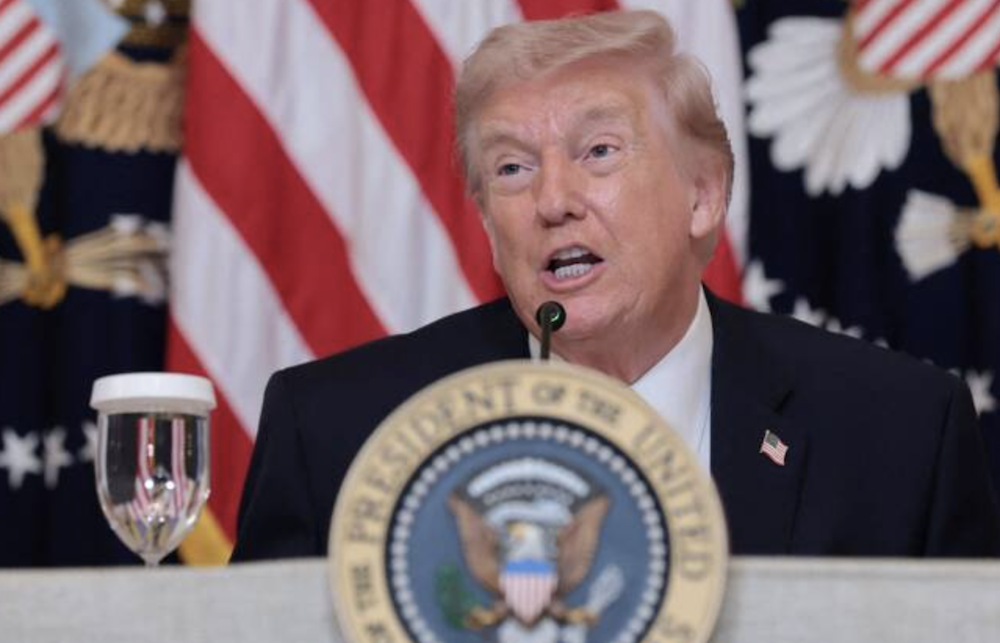

Donald Trump’s claim that he knew nothing about Israel’s attack on Iran’s main gas field suggests that significant tensions exist between the US president and Israel over how best to prosecute their joint military campaign against Iran.
Ever since Trump launched Operation Epic Fury more than three weeks ago, questions have been raised about the precise nature of the cooperation between the US military and its Israeli counterpart.
While Trump has suggested his main priority is to destroy, once and for all, Iran’s ability to develop a nuclear weapons arsenal, the Israelis, who have dubbed their effort Operation Roaring Lion, appear determined to wage their campaign until regime change has been achieved in Tehran.
To this end, Israel’s Mossad intelligence service has ruthlessly targeted key figures in the Iranian regime, with Israel said to have been heavily involved in last week’s assassinations of Ali Larijani, Iran’s national security chief, and Intelligence Minister Esmail Khatib.
There have even been reports of Mossad agents directly calling Iranian police officers and threatening to kill them in an attempt to secure defections. Leaked documents and recordings have revealed a wide-scale Israeli effort to scare lower-ranking officials in the hope of enabling a popular uprising in Iran, while also assassinating senior regime figures.
By contrast, the US military has mainly been targeting Iran’s nuclear and military sites, especially the country’s ballistic missile launch pads that have been used to attack neighboring Gulf countries. While Trump has indicated he would like to see the war ultimately result in regime change in Tehran, he does not appear as committed to such an outcome as Israeli Prime Minister Benjamin Netanyahu, who has specifically said that he wants Israel’s military attacks on Iran to result in regime change.
One crucial difference in the prosecution of the war by the Americans and the Israelis has been an unwillingness on the part of the Americans to target key Iranian infrastructure, especially its energy sector — at least so far.
Trump’s approach was clear during the recent US military attack on Kharg Island, the narrow strip of Iranian territory in the Gulf that is responsible for about 90 percent of Iran’s oil exports. While the US attacked a number of military bases operated by Iran’s Islamic Revolutionary Guard Corps, it avoided attacks on the island’s oil facilities, with Trump declaring that he had deliberately left them untouched.
By contrast, Israel appears to have no qualms about attacking key Iranian infrastructure targets, with Israeli warplanes launching an attack on the South Pars gas field on Wednesday.
While Israel insists that key Iranian infrastructure presents a legitimate target in its war against the regime, the attack on South Pars has exposed tensions between Israel and the Trump administration, with the American president insisting that he knew nothing about the Israeli attack, stating that Israel had “violently lashed out” by attacking the gas field.
Netanyahu has specifically said that he wants Israel’s military attacks on Iran to result in regime change.
Con Coughlin
In an attempt to draw a red line over which targets should and should not be attacked in the war, Trump insisted that Israel would not conduct any more attacks against Iran’s energy sector unless the Iranians continued their attacks on energy targets in the Gulf.
“Israel, out of anger for what has taken place in the Middle East, has violently lashed out at a major facility … in Iran,” Trump wrote on Truth Social. “No more attacks will be made by Israel pertaining to this extremely important and valuable South Pars field unless Iran unwisely decides to attack a very innocent, in this case, Qatar.
“In which instance the United States of America, with or without the help or consent of Israel, will massively blow up the entirety of the South Pars gas field at an amount of strength and power that Iran has never seen or witnessed before.”
Despite Trump’s warning, the Israeli attack provoked a furious response from Iran, which responded by launching attacks against the energy facilities of several Gulf nations, including an attack on Qatar’s Ras Laffan, the country’s main gas facility, which Qatari officials say suffered “significant damage.”
Despite Trump’s threat to “massively blow up” South Pars if Iran continued to attack the energy infrastructure of its Gulf neighbors, Israel’s role in initiating the tit-for-tat strikes in the energy sector has led to suggestions of a rift emerging between the US and Israel, particularly in terms of how long the fighting will continue.
Trump has indicated that the US has already achieved most of its war aims and that he might be minded to end hostilities in the near future. Netanyahu, by contrast, seems determined that Israel continue fighting so long as the regime still stands.
Speculation about a rift between the US and Israel has been fueled by comments made by Joe Kent, Trump’s former National Counterterrorism Center director, who asserts that the US president was “deceived” by Israel into launching the war.
In a letter posted on X, announcing his resignation, Kent said that Iran posed “no imminent threat” to the US and that the administration “started this war due to pressure from Israel and its powerful American lobby.”
The White House has dismissed the letter, saying the president had “compelling evidence” that Iran was going to attack the US first.
Nevertheless, with US media reports that the Trump administration is already talking to Iran about ending the conflict, Netanyahu's insistence on maintaining hostilities until his own goals are achieved could result in further tensions developing between the US and Israeli administrations.
- Con Coughlin is one of Britain’s leading journalists and an international best-selling author. His previous posts include Executive Defense and Foreign Affairs Editor with London’s Daily Telegraph. He is a leading expert on global conflict, international security and the Middle East.
- This column first appeared in Al-Majalla.