- India, Korea sign 15 MoU, including on shipbuilding, AI, upgrading CEPA
- New deals, partnerships to double bilateral trade to $50 billion by 2030
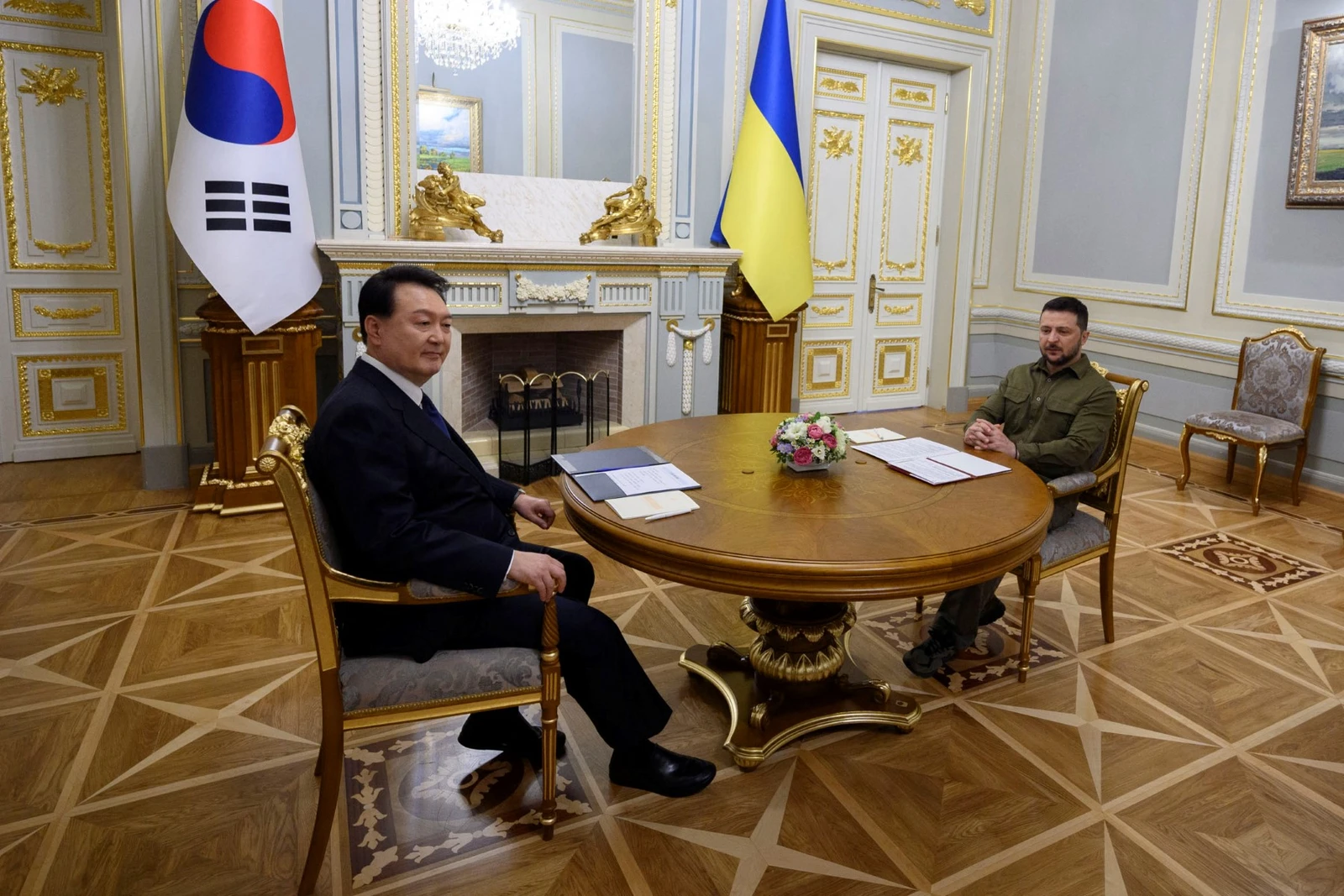
NEW DELHI: Indian Prime Minister Narendra Modi and South Korean President Lee Jae Myung announced on Monday new partnerships in energy supply chains and critical technologies to address global trade fallout from the US–Israeli war on Iran.
Lee arrived in India as the war, which started on Feb. 28, has led to the closure of the Strait of Hormuz, disrupting energy supplies for both Seoul and New Delhi.
It is South Korea’s first presidential state visit to India in eight years.
In a press conference with Modi, Lee said they had agreed to “upgrade” the 2009 Comprehensive Economic Partnership Agreement “to create new drivers” and establish the ministerial-level Industrial Cooperation Committee for partnerships in critical minerals, nuclear energy, clean energy, as well as trade and investment.
“The upgraded agreement will reflect new trade norms, enabling our two countries to respond more effectively to evolving conditions, including in areas such as supply chains and the green economy,” he said.
“In light of recent developments in the Middle East, we will continue to strengthen bilateral cooperation to ensure a stable supply of energy resources and key raw materials, including naphtha.”
Naphtha is a key feedstock for the petrochemical industry, which produces plastics and chemicals, including semiconductor-related materials, of which Korea is a major exporter. As most of Korea’s naphtha imports come from the Middle East, it seeks to increase supply from India, whose refineries are also significant producers of the liquid hydrocarbon.
Modi, who gave Lee a red-carpet welcome, said they agreed to increase bilateral trade from around $27 billion at present to $50 billion by 2030, and upgrade the CEPA next year.
“We are going to transform this trusted partnership into a futuristic partnership. We will realize new opportunities for cooperation in every field, from chips to ships, talent to technology, environment to energy, and together we will ensure the progress and prosperity of both countries,” he said.
“We are launching the India-Korea Digital Bridge to deepen partnerships in AI, semiconductors, and information technology.”
Fifteen memoranda were signed following the summit, including in trade, investment, shipbuilding, artificial intelligence, establishing the Industrial Cooperation Committee, and negotiations to upgrade the CEPA.
“The fact that South Korea is choosing to elevate its ties with India now indicates that it views India not merely as a large market but as an important strategic partner when it comes to economic security,” Vanshika Saraf, geostrategy research analyst at the Takshashila Institution, told Arab News.
The possible energy cooperation would be in securing the physical flow of energy through vulnerable sea lanes — not only through the Strait of Hormuz but also through numerous chokepoints in the Indo-Pacific region, such as the Strait of Malacca and the Strait of Taiwan.
“Second is to diversify the commercial sources and processing routes for energy-related inputs so that Korea is less exposed to disruptions from West Asia. For example, Seoul has expressed interest in increasing naphtha imports from India after asking it to expand its supplies last month,” Saraf said.
“Naphtha is a key feedstock for the petrochemical industry, which feeds plastics, chemicals, synthetic fibers, and parts of advanced manufacturing. Given that India is a large refining hub for many such petroleum products, South Korea views India as a nearby, flexible source.”