
- Hamas says it is stepping back from governing the enclave, but analysts question whether real authority will actually change hands
- A new technocratic administration could reshape Gaza’s future, yet disarmament and Israeli approval remain major obstacles
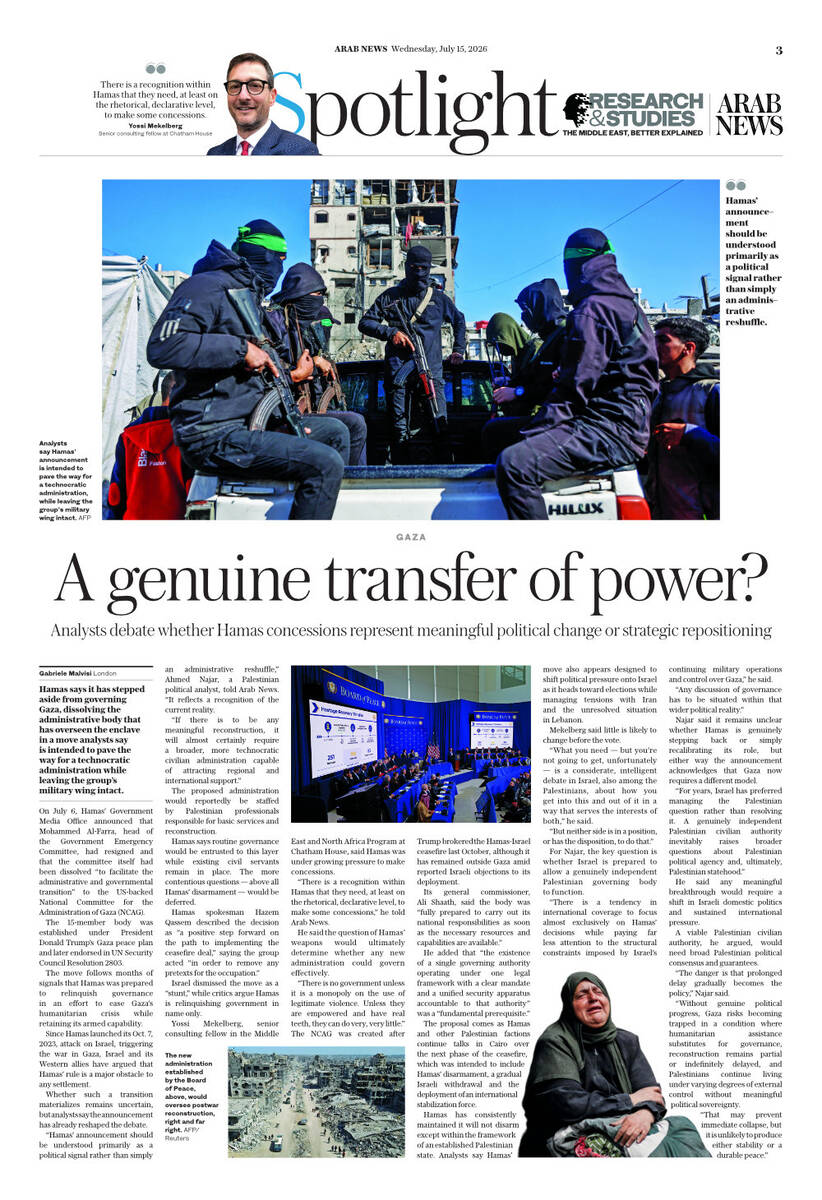
LONDON: Hamas says it has formally stepped aside from governing Gaza, dissolving the administrative body that has overseen the enclave throughout the war in a move analysts say is intended to pave the way for a technocratic administration — while leaving the group’s military wing intact.
On July 6, Hamas’ Government Media Office announced that Mohammed Al-Farra, head of the Government Emergency Committee, had resigned and that the committee itself had been dissolved “to facilitate the administrative and governmental transition” to the US-backed National Committee for the Administration of Gaza.
The 15-member technocratic body was established under President Donald Trump’s 20-point Gaza peace plan and later endorsed in UN Security Council Resolution 2803.
The announcement followed months of signals that Hamas was prepared to relinquish day-to-day governance in favor of an interim technocratic administration in an effort to ease Gaza’s humanitarian crisis and political fragmentation, while retaining its armed capability.
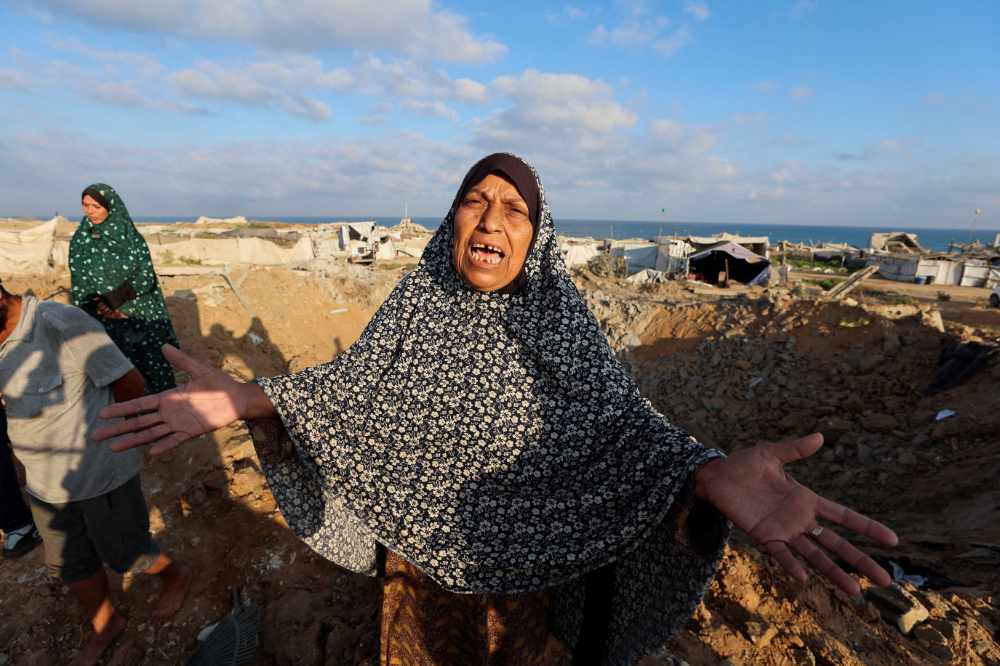
On Oct. 7, 2023, Hamas launched a surprise attack on Israel from the Gaza Strip, killing around 1,200 people and taking more than 250 hostages. The assault triggered Israel’s devastating military campaign in Gaza, which has killed at least 75,000 people, according to local sources, and left much of the territory uninhabitable.
Hamas seized control of Gaza in 2007 after winning the 2006 Palestinian legislative elections before prevailing in a brief but violent internal conflict with Fatah, the rival faction aligned with the Palestinian Authority.
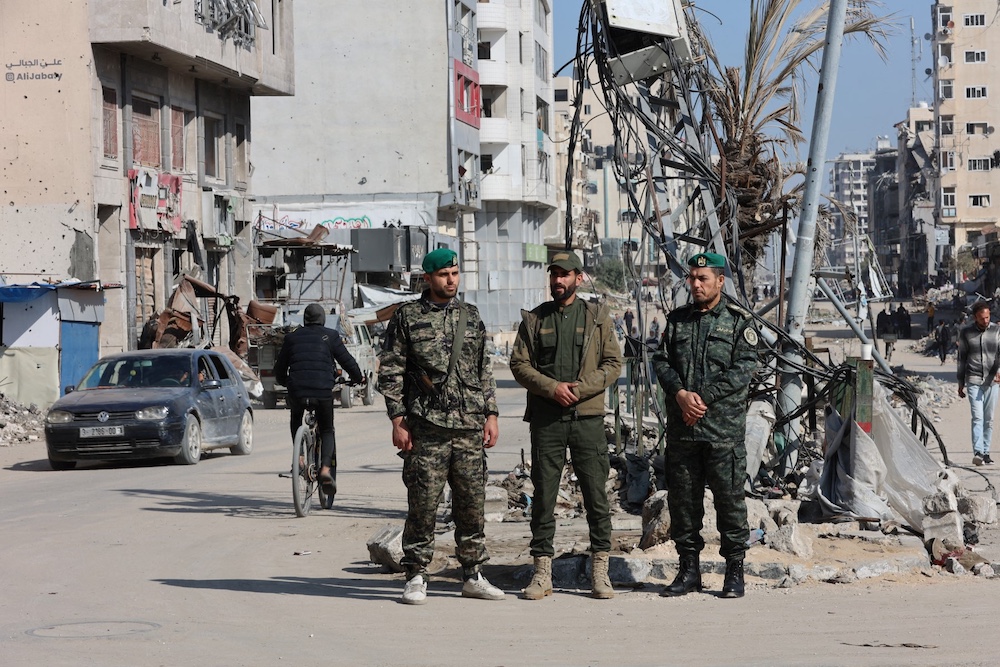
In recent months, public frustration with Hamas’ rule has also surfaced inside Gaza. During protests in March 2025, demonstrators chanted “Hamas out.” Reuters described the demonstrations as a rare public display of dissent, driven by exhaustion with the war and anger over Hamas’ grip on the territory.
Israel and its Western allies have long argued that Hamas’ rule is a major obstacle to any political settlement, insisting that Gaza’s future depends on a different governing authority.
Whether such a transition will materialize remains uncertain, with key aspects of the negotiations still unresolved. Even so, analysts say Hamas’ announcement has already begun to reshape the political debate.
“Hamas’ announcement should be understood primarily as a political signal rather than simply an administrative reshuffle,” Ahmed Najar, a Palestinian political analyst, told Arab News. “It reflects a recognition of the current reality.
“If there is to be any meaningful reconstruction, it will almost certainly require a broader, more technocratic civilian administration capable of attracting regional and international support.”
The proposed technocratic administration is intended to address many of the concerns Israel and its allies have repeatedly raised.
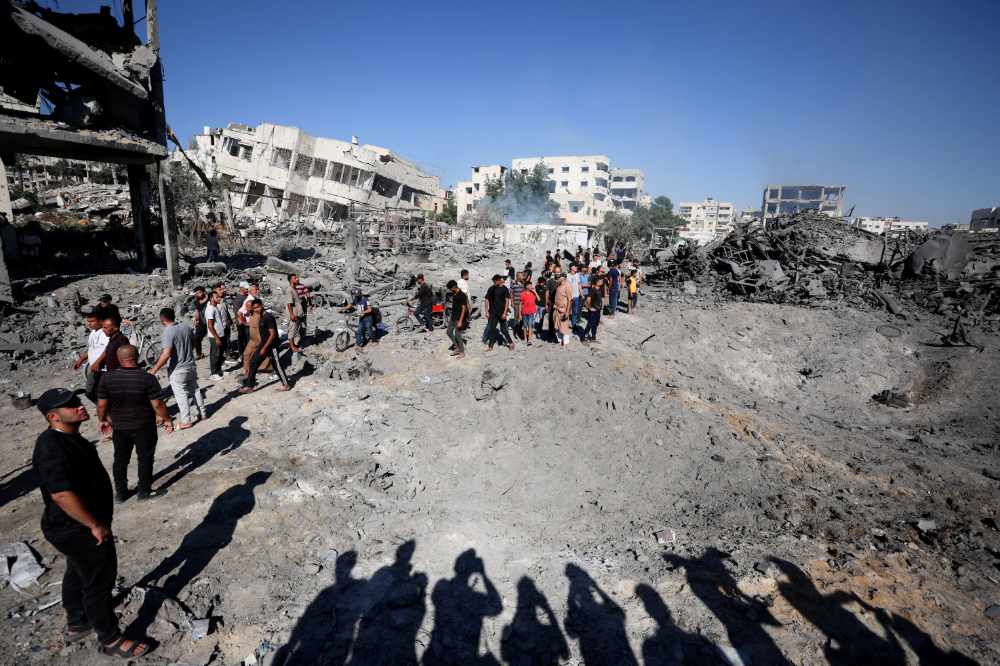
Rather than political appointees, it would reportedly be staffed by Palestinian professionals — including engineers, economists, lawyers and administrators — responsible for delivering basic services, running schools and hospitals, and overseeing reconstruction.
Hamas said routine governance would be entrusted to this technical layer, with existing civil servants remaining in place to keep the enclave functioning. Their remit would be civilian rather than political, while the more contentious questions — above all Hamas’ disarmament — would be deferred.
Hamas spokesman Hazem Qassem called the move “a positive step forward on the path to implementing the ceasefire deal,” adding that the group had taken the decision “in order to remove any pretexts for the occupation, which continues its aggression and war of extermination.”
Analysts and those directly involved remain cautious.
Israel quickly dismissed the move as a “stunt,” while pro-Israel commentators argue Hamas is effectively relinquishing government in name only.
They warn the NCAG could prove little more than an empty shell if Hamas continues to control the levers of coercion and retains the power to block decisions, particularly if any new police or security arrangements do not explicitly exclude Hamas members.
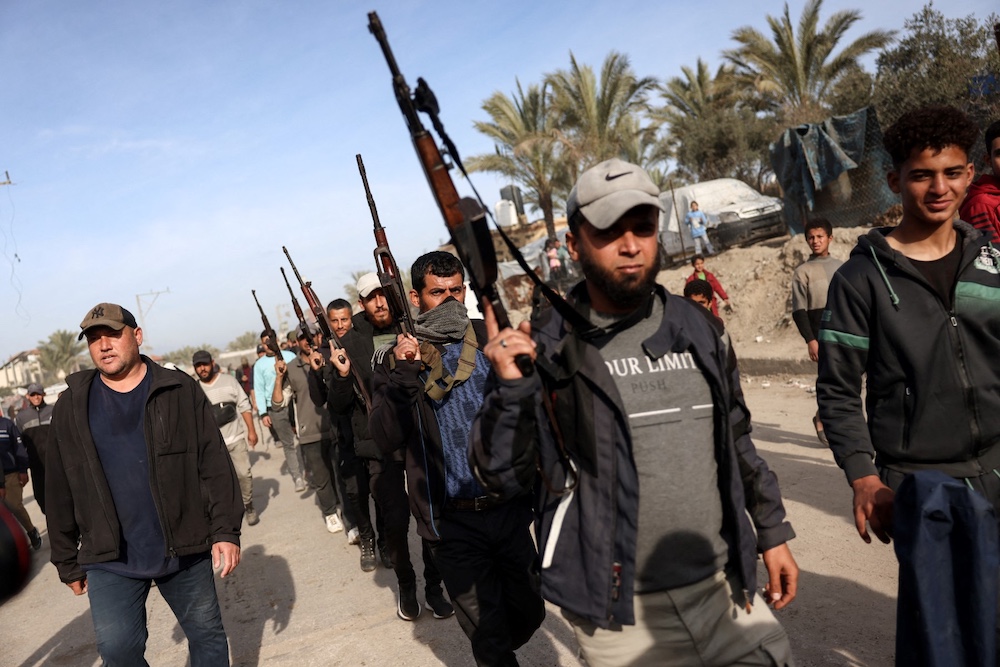
A genuine transfer of power, they argue, would require dismantling Hamas’ armed structures, restructuring the security forces and separating technocratic governance from factional control — none of which is yet in place.
“There is a recognition within Hamas that they need, at least on the rhetorical, declarative level, to make some concessions, because the situation is getting worse and worse,” said Yossi Mekelberg, senior consulting fellow in the Middle East and North Africa Program at Chatham House.
He argued that the question of Hamas’ weapons will ultimately reveal far more about the group’s intentions and the NCAG’s ability to govern.
“There is no government unless it is a monopoly on the use of legitimate violence. Their power actually derives from what the US, the international community, and Israel is allowing them. Unless they are empowered and have real teeth, they can do very, very little.”
The NCAG was established by the Board of Peace after Trump brokered the Hamas-Israel ceasefire last October. Experts say it recently reconstituted itself as an international nongovernmental organization in an apparent effort to bypass US congressional oversight.
The body, however, has remained outside Gaza for months, reportedly because of Israeli objections to its entry into the territory.
Ali Shaath, the NCAG’s general commissioner, said the body was “fully prepared to carry out its national responsibilities as soon as the necessary resources and capabilities are available.”
He added that “the existence of a single governing authority operating under one legal framework with a clear mandate, and a unified security apparatus accountable to that authority” is a “fundamental prerequisite.”
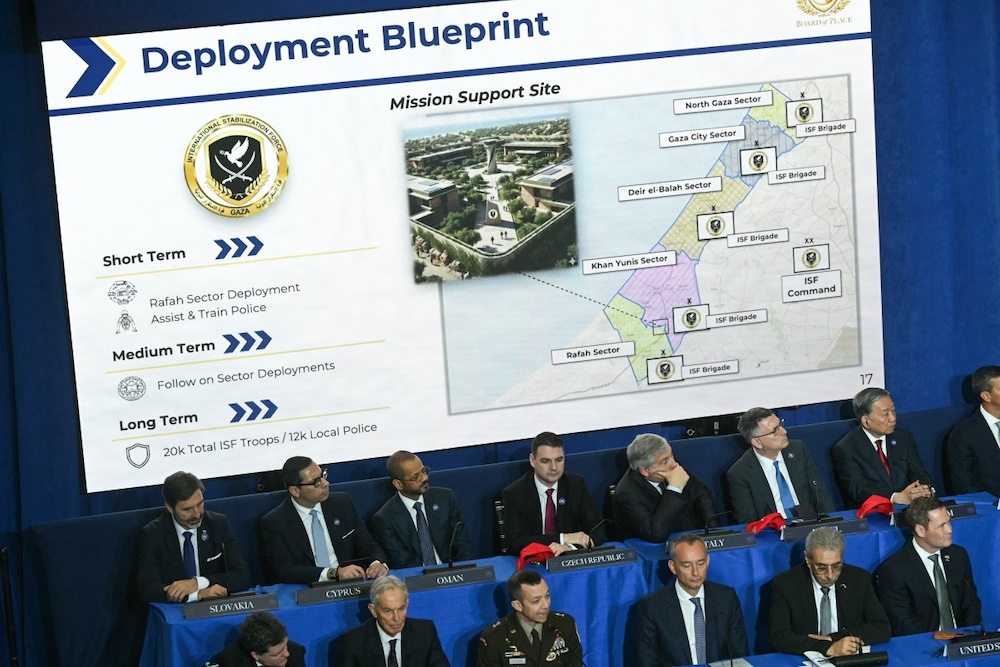
Hamas and other Palestinian factions have held several rounds of talks with mediators in Cairo over the second phase of the Gaza ceasefire. The next stage was intended to include Hamas’ disarmament and a gradual Israeli withdrawal, followed by the deployment of an international stabilization force tasked with enforcing “permanent disarmament.”
For their part, Hamas leaders have consistently maintained that they will not disarm unless it takes place within the framework of an established Palestinian state.
Analysts say Hamas’ latest move also appears designed to shift some of the political pressure onto Israel at a sensitive moment, as the country heads toward elections while continuing to face the prospect of renewed tensions with Iran and an unresolved situation on the Lebanese front.
Mekelberg said little is likely to change before the vote and warned that any concession during an election campaign would be portrayed as surrender to Hamas’ demands.
“What you need — but you’re not going to get, unfortunately — is a considerate, intelligent debate in Israel, also among the Palestinians, about how you get into this and out of it in a way that serves the interests of both,” he said.
“But neither side is in a position, or has the disposition, to do that.”
For Najar, the key test will be whether Israel is prepared to allow a genuinely independent Palestinian governing body to function — something, he argued, successive Israeli governments have opposed, whether under Hamas or Fatah.
“There is a tendency in international coverage to focus almost exclusively on Hamas’ decisions while paying far less attention to the structural constraints imposed by Israel’s continuing military operations and control over Gaza,” he said.
“Any discussion of governance has to be situated within that wider political reality.”
Najar said it remains unclear whether Hamas is genuinely stepping back or simply recalibrating its role. Either way, he believes the announcement reflects an acknowledgment that Gaza’s circumstances now require a different model of governance.
“For years, Israel has preferred managing the Palestinian question rather than resolving it. A genuinely independent Palestinian civilian authority inevitably raises broader questions about Palestinian political agency and, ultimately, Palestinian statehood. That is precisely why I remain skeptical that the obstacle is simply Hamas.”
Najar said any meaningful breakthrough would require a significant shift in Israeli domestic politics, along with sustained regional and international pressure.
A viable Palestinian civilian authority, he said, would need not only broad Palestinian political consensus but also external guarantees that it would be allowed to govern and that reconstruction efforts would not be obstructed.
“The danger is that prolonged delay gradually becomes the policy. The longer reconstruction is postponed, civilian institutions remain absent and temporary arrangements continue, the greater the risk that these ‘interim’ measures become permanent by default.”
He added: “Without genuine political progress, Gaza risks becoming trapped in a condition where humanitarian assistance substitutes for governance, reconstruction remains partial or indefinitely delayed, and Palestinians continue living under varying degrees of external control without meaningful political sovereignty.
“That may prevent immediate collapse, but it is unlikely to produce either stability or a durable peace.”