

No one doubts that the French Republic has been in trouble in recent years. Its political parties have become splintered, with the extreme right and radical left dominating its National Assembly since the election called by President Emmanuel Macron in June 2024.
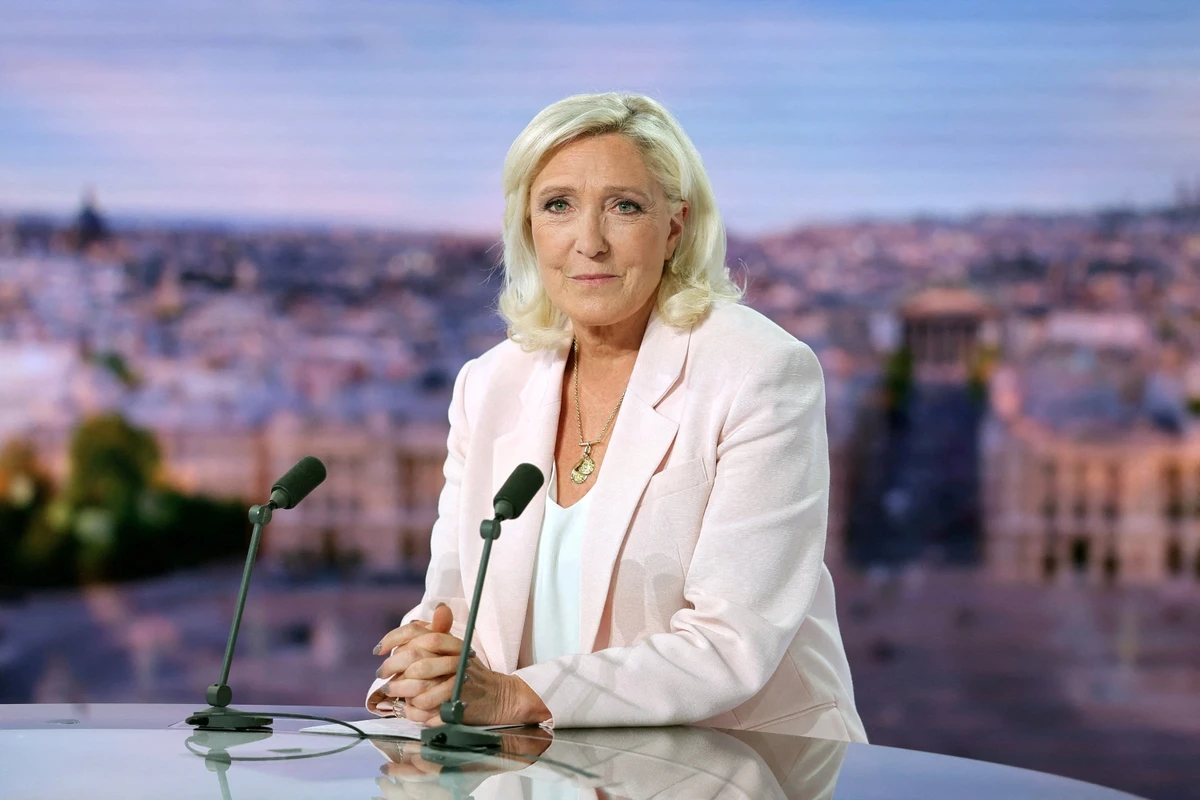
A critical presidential election will be held in 2027 and, although the far-right Marine Le Pen, leader of the National Rally party, is seen as the favorite to win the presidency, the buildup to that vote continues to veer toward the bizarre and unusual.
Le Pen’s decision to run for the presidency for a fourth time means that a person found guilty of embezzling public funds will campaign to lead the EU’s largest nation — perhaps with an electronic tag on her ankle. That became possible after a Paris appeals court this month cleared the way for her to run by shortening a ban on seeking public office that had spelled doom for her ambitions.
If anything, Le Pen, like all populists, will use this latest legal twist to fortify the narrative that she is a combative, anti-establishment politician ready to sacrifice herself by fighting the system on behalf of the French people.
By declaring that she will challenge this month’s ruling in France’s highest court, Le Pen has bought herself some time, as the order that she be electronically monitored will be suspended. The Court of Cassation will give a ruling before the election’s first round in April, with a potential runoff scheduled for May.
Le Pen, like all populists, will seek to fortify the narrative that she is fighting the system on behalf of the people.
Mohamed Chebaro
In the past, Le Pen’s embezzlement conviction could well have ended her political career by making her ethically unfit for the presidency. For any ordinary citizen, a criminal record works against you when looking for a job. But it seems the same does not apply to politicians seeking public office. It is hoped the electorate will take a different view, as polls have consistently demonstrated that French voters want higher ethical standards in public life and are highly critical of what they perceive as politicians’ dishonesty.
Last year, Nicolas Sarkozy became the first former French president in modern history to go to prison after he was found guilty of criminal conspiracy. He was made to wear an electronic ankle monitor for three months.
But we do not live in the age of the normal anymore.
Despite being sanctioned for criminal acts, populist politicians everywhere are skirting the law and accountability by going to the polls regardless — and electorates often indulge them.
We know from Donald Trump how accountability can be presented as persecution. Legitimate questions become part of a conspiracy. Far-right politicians across the Western democratic world have been using the same tactics.
Experts have drawn links between the populists of today and the fascists of yesteryear through the kind of political martyrdom employed to win power. The tricks pulled by the Italian dictator Benito Mussolini, for example, exploited political anger and channeled feelings of victimhood to justify all the crimes and revenge politics he unleashed.
The parallels are the same across history. The populist leader and their nation are victims of a rotten political class, so they are pushed to fight back. This contemporary political martyrdom was evoked by Le Pen this week. All far-right and populist politicians use that playbook and their approach is being normalized by the biased algorithms of social media platforms. They are recycling the same narrative and style and the voters have been lapping it up.
Nigel Farage, a prominent MP and Reform UK leader, under investigation by Parliament after being accused of receiving undeclared political donations, has decided to resign. However, he will again run for office in the same constituency, as if he is saying that he will succeed despite the investigation into his financial affairs, which he claims is politically motivated.
Farage, who rose meteorically in the polls on an anti-migrant and anti-Islam agenda, appears to have run out of convincing answers. So, he decided to resign instead of facing the investigation, forcing a by-election that he will fight solo (none of the country’s main political parties will nominate a candidate) on a martyrdom ticket.
In the past, any legal issues related to money or integrity were an impediment to serving in public office. Today, they seem to be a vehicle.
Le Pen was last year found to have been at the heart of an elaborate fake jobs scam and was sentenced to prison. In clearing her to run, the Paris court has also protected the right of voters to elect a convicted felon to the French presidency.
She has been found guilty in a court of law, now it is up to the voters to decide if she is innocent in the court of public opinion.
Others have done it before. This pattern has become visible across European politics and the carousel keeps turning. Matteo Salvini, the leader of Italy’s League party and deputy prime minister, used his prosecution over a blocked migrant ship rescue as proof that he was being unjustly targeted for defending Italy’s borders.
The leader of the Netherlands’ Party for Freedom, Geert Wilders, employed similar tactics, claiming that a hate speech case against him was an attack on free speech and political dissent.
In all these cases, the substance of the allegations gets pushed aside and is replaced by a misleading story. The subject becomes the victim and, rather than being held accountable, they claim to be under attack. And the story is spun in the court of public opinion.
Farage is likely to get reelected as no other party wants to play his game. Le Pen’s fate will be decided in the long months ahead. An anti-establishment stance still sells, with legal troubles and victimization a vehicle to office.
Is the age of the surreal dawning on what is left of democratic rules and institutions?
- Mohamed Chebaro is a British-Lebanese journalist with more than 25 years of experience covering war, terrorism, defense, current affairs and diplomacy.


