- Oil prices hit $100 a barrel for the first time since May following 13 days of strikes by the US and Iran
- The Houthi’s blockade is being imposed in response to a direct request from Iran
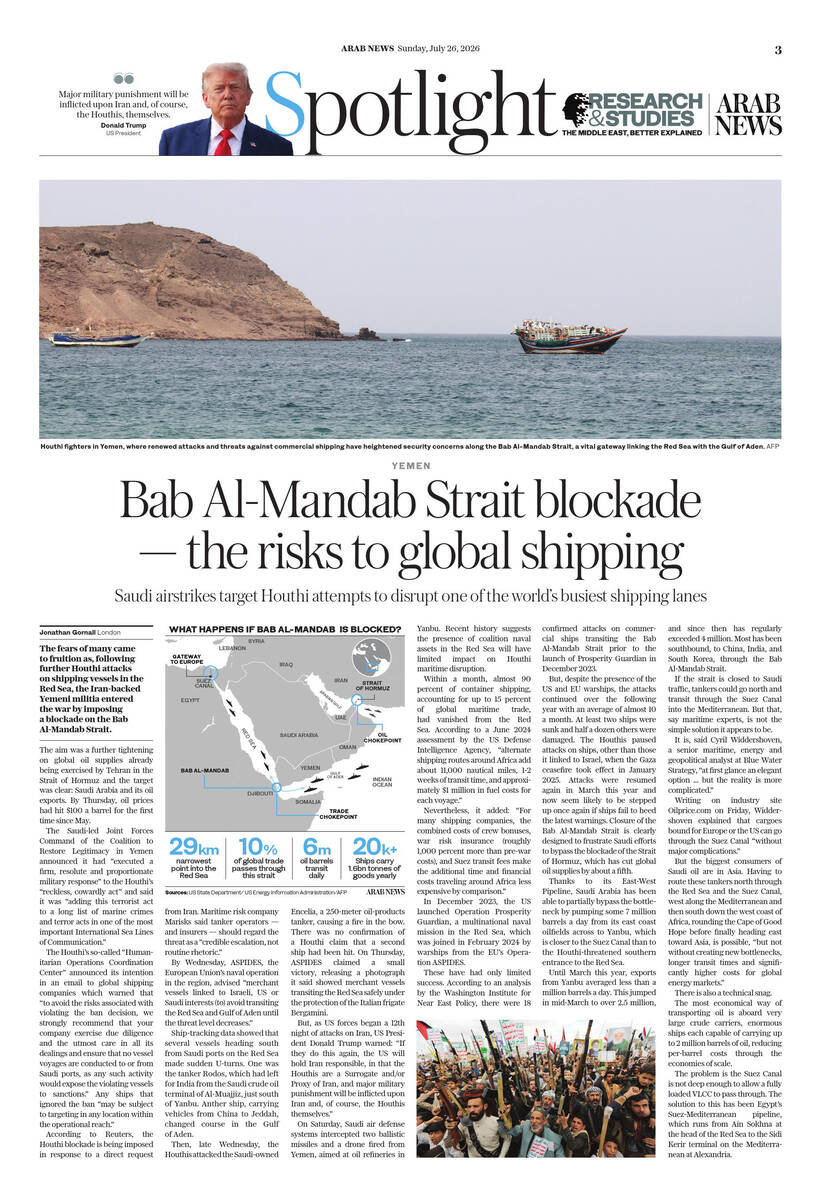
LONDON: The fears of many came to fruition as, following further Houthi attacks on shipping vessels in the Red Sea, the Iran-backed Yemeni militia entered the war by imposing a blockade on the Bab Al-Mandab Strait.
The aim was a further tightening on global oil supplies already being exercised by Tehran in the Strait of Hormuz and the target was clear: Saudi Arabia and its oil exports. By Thursday, oil prices had hit $100 a barrel for the first time since May.
The Saudi-led Joint Forces Command of the Coalition to Restore Legitimacy in Yemen announced it had “executed a firm, resolute and proportionate military response” to the Houthi’s “reckless, cowardly act” and said it was “adding this terrorist act to a long list of marine crimes and terror acts in one of the most important International Sea Lines of Communication.”

The Houthi’s so-called “Humanitarian Operations Coordination Center” announced its intention in an email to global shipping companies which warned that “to avoid the risks associated with violating the ban decision, we strongly recommend that your company exercise due diligence and the utmost care in all its dealings and ensure that no vessel voyages are conducted to or from Saudi ports, as any such activity would expose the violating vessels to sanctions.” Any ships that ignored the ban “may be subject to targeting in any location within the operational reach.”
According to Reuters, the Houthi blockade is being imposed in response to a direct request from Iran. Maritime risk company Marisks said tanker operators — and insurers — should regard the threat as a “credible escalation, not routine rhetoric.”
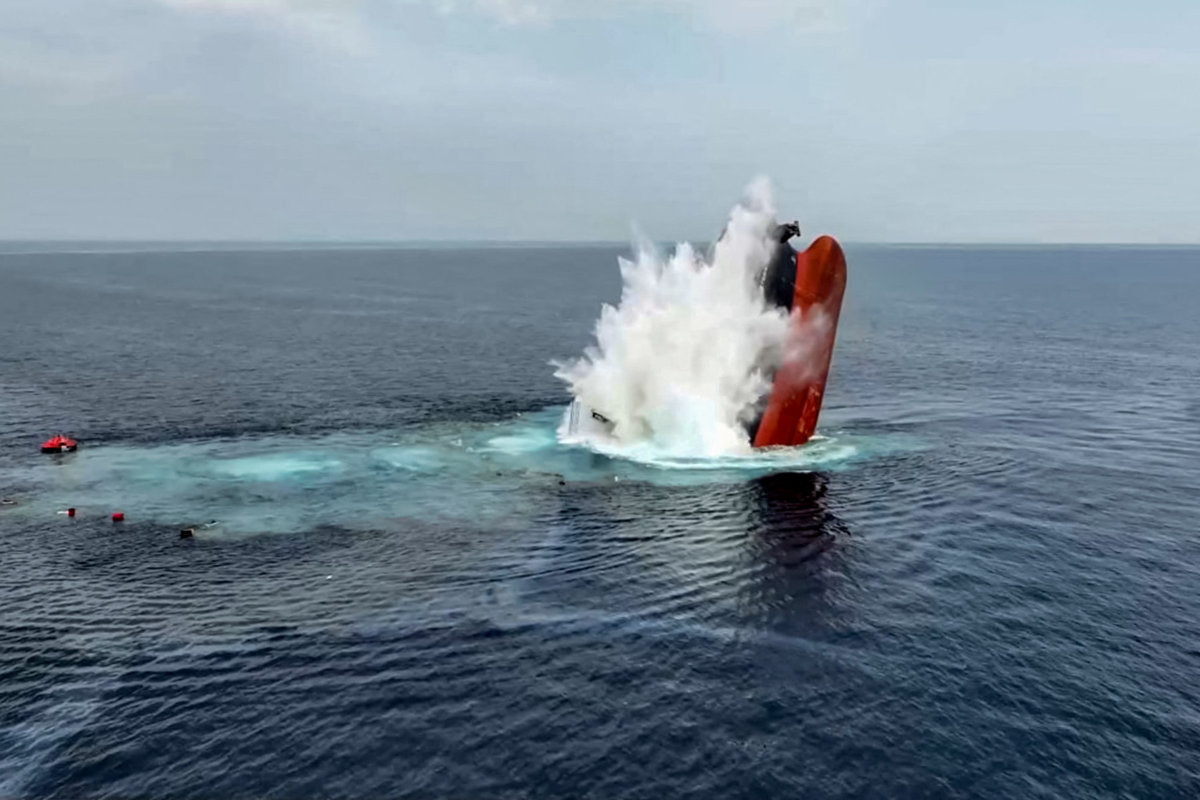
By Wednesday, ASPIDES, the European Union’s naval operation in the region, advised “merchant vessels linked to Israeli, US or Saudi interests (to) avoid transiting the Red Sea and Gulf of Aden until the threat level decreases.”
Ship-tracking data showed that several vessels heading south from Saudi ports on the Red Sea made sudden U-turns. One was the tanker Rodos, which had left for India from the Saudi crude oil terminal of Al-Muajjiz, just south of Yanbu. Anther ship, carrying vehicles from China to Jeddah, changed course in the Gulf of Aden.
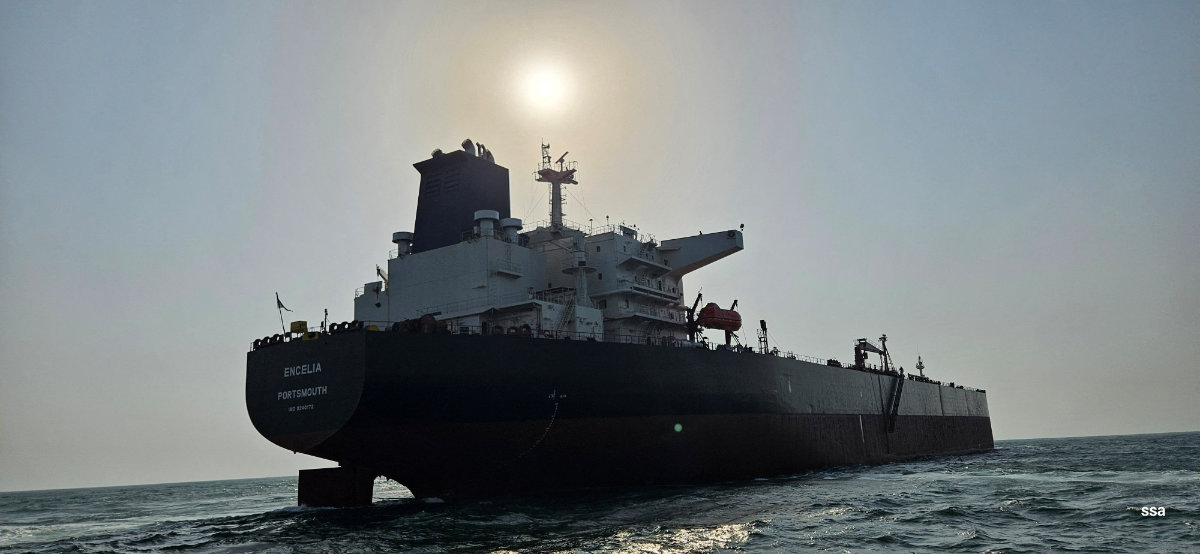
Then, late Wednesday, the Houthis attacked the Saudi-owned Encelia, a 250-meter oil-products tanker, causing a fire in the bow. There was no confirmation of a Houthi claim that a second ship had been hit. On Thursday, ASPIDES claimed a small victory, releasing a photograph it said showed merchant vessels transiting the Red Sea safely under the protection of the Italian frigate Bergamini.
But, as US forces began a 12th night of attacks on Iran, US President Donald Trump warned: “If they do this again, the US will hold Iran responsible, in that the Houthis are a Surrogate and/or Proxy of Iran, and major military punishment will be inflicted upon Iran and, of course, the Houthis themselves.”
On Saturday, Saudi air defense systems intercepted two ballistic missiles and a drone fired from Yemen, aimed at oil refineries in Yanbu. Recent history suggests the presence of coalition naval assets in the Red Sea will have limited impact on Houthi maritime disruption.
The Houthis have, on and off, attacked shipping in the Red Sea since November 2023 when they seized the Galaxy Leader, a tanker linked to Israeli ownership. The following month, missile and drones attacks began, and many major energy and shipping companies began rerouting ships to avoid the possibility of attacks.
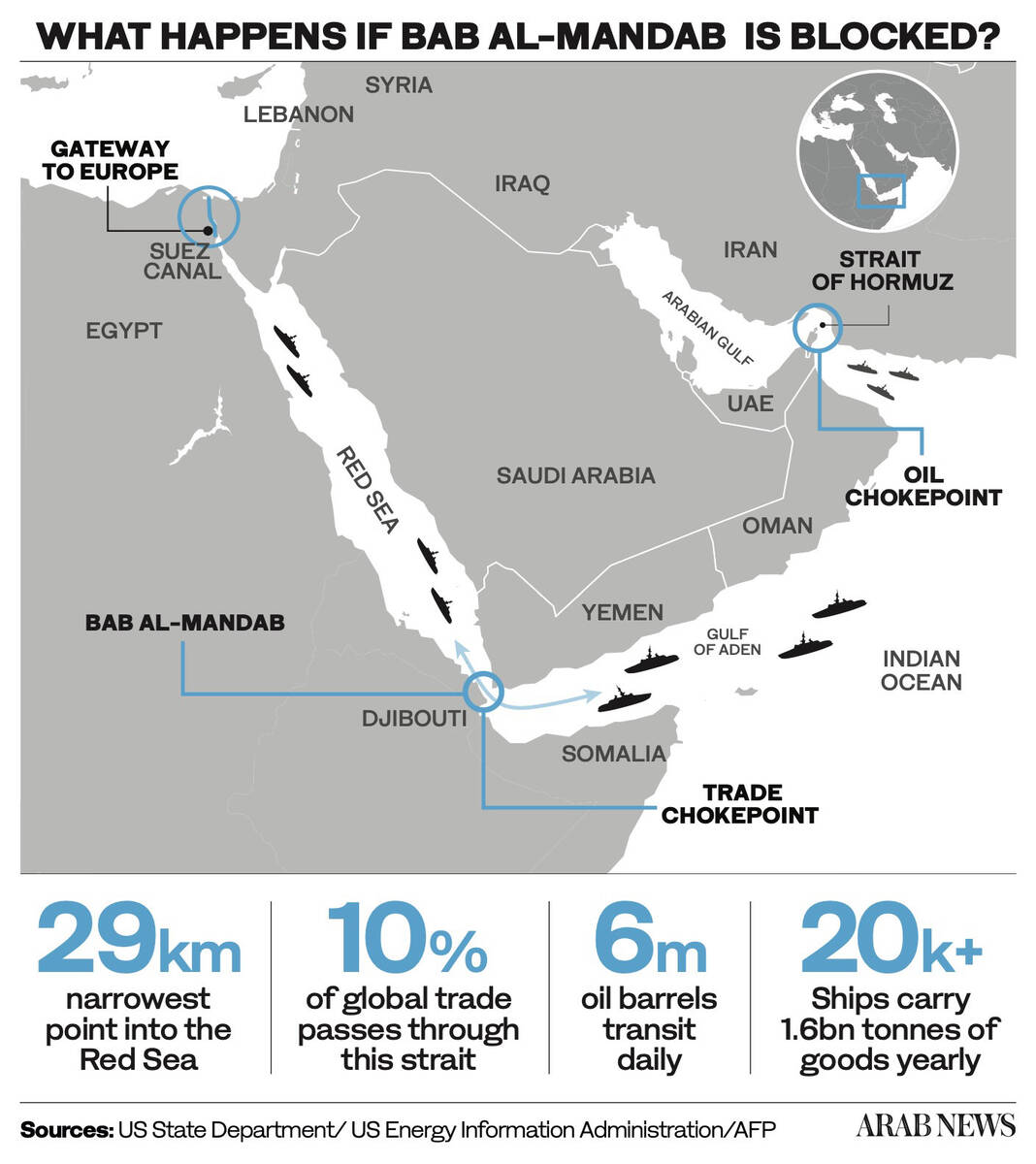
Within a month, almost 90 percent of container shipping, accounting for up to 15 percent of global maritime trade, had vanished from the Red Sea. According to a June 2024 assessment by the US Defense Intelligence Agency, “alternate shipping routes around Africa add about 11,000 nautical miles, 1-2 weeks of transit time, and approximately $1 million in fuel costs for each voyage.”
Nevertheless, it added: “For many shipping companies, the combined costs of crew bonuses, war risk insurance (roughly 1,000 percent more than pre-war costs), and Suez transit fees make the additional time and financial costs traveling around Africa less expensive by comparison.”
In December 2023, the US launched Operation Prosperity Guardian, a multinational naval mission in the Red Sea, which was joined in February 2024 by warships from the EU’s Operation ASPIDES.
These have had only limited success. According to an analysis by the Washington Institute for Near East Policy, there were 18 confirmed attacks on commercial ships transiting the Bab Al-Mandab Strait prior to the launch of Prosperity Guardian in December 2023.
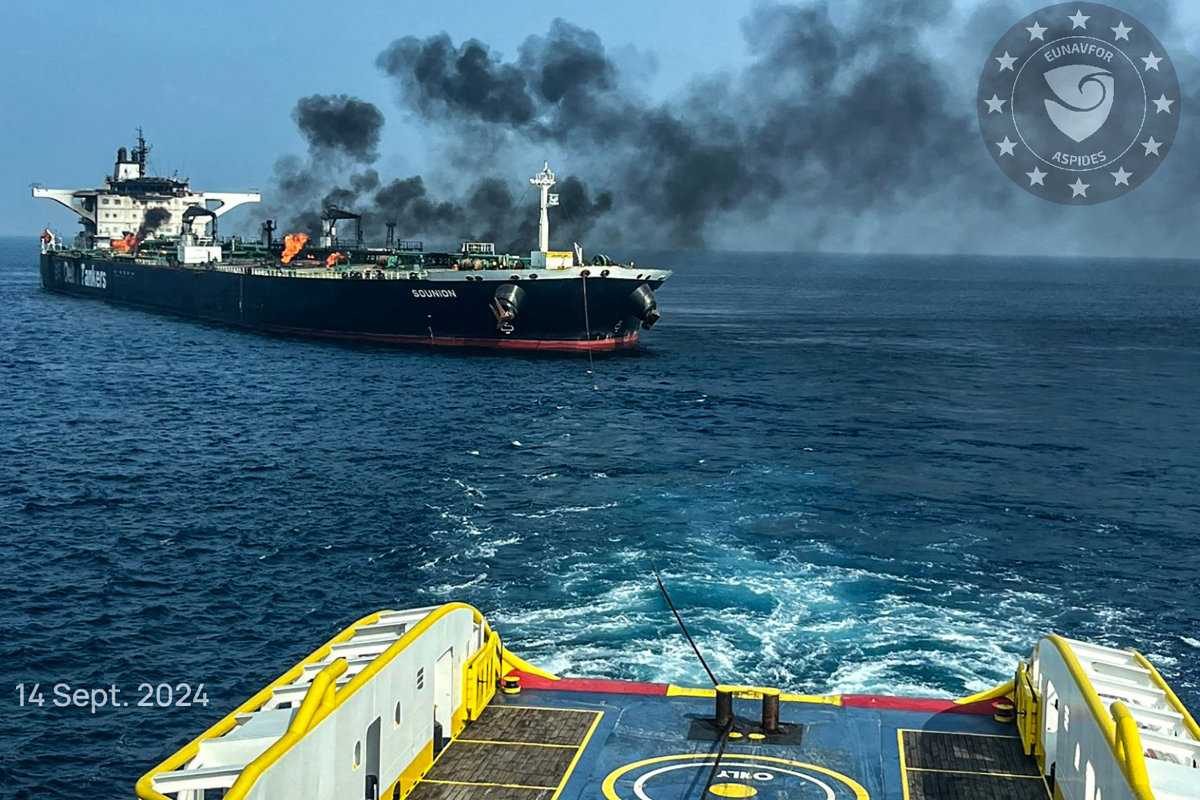
But, despite the presence of the US and EU warships, the attacks continued over the following year with an average of almost 10 a month. At least two ships were sunk and half a dozen others were damaged. The Houthis paused attacks on ships, other than those it linked to Israel, when the Gaza ceasefire took effect in January 2025. Attacks were resumed again in March this year and now seem likely to be stepped up once again if ships fail to heed the latest warnings. Closure of the Bab Al-Mandab Strait is clearly designed to frustrate Saudi efforts to bypass the blockade of the Strait of Hormuz, which has cut global oil supplies by about a fifth.
Thanks to its East-West Pipeline, Saudi Arabia has been able to partially bypass the bottleneck by pumping some 7 million barrels a day from its east coast oilfields across to Yanbu, which is closer to the Suez Canal than to the Houthi-threatened southern entrance to the Red Sea.
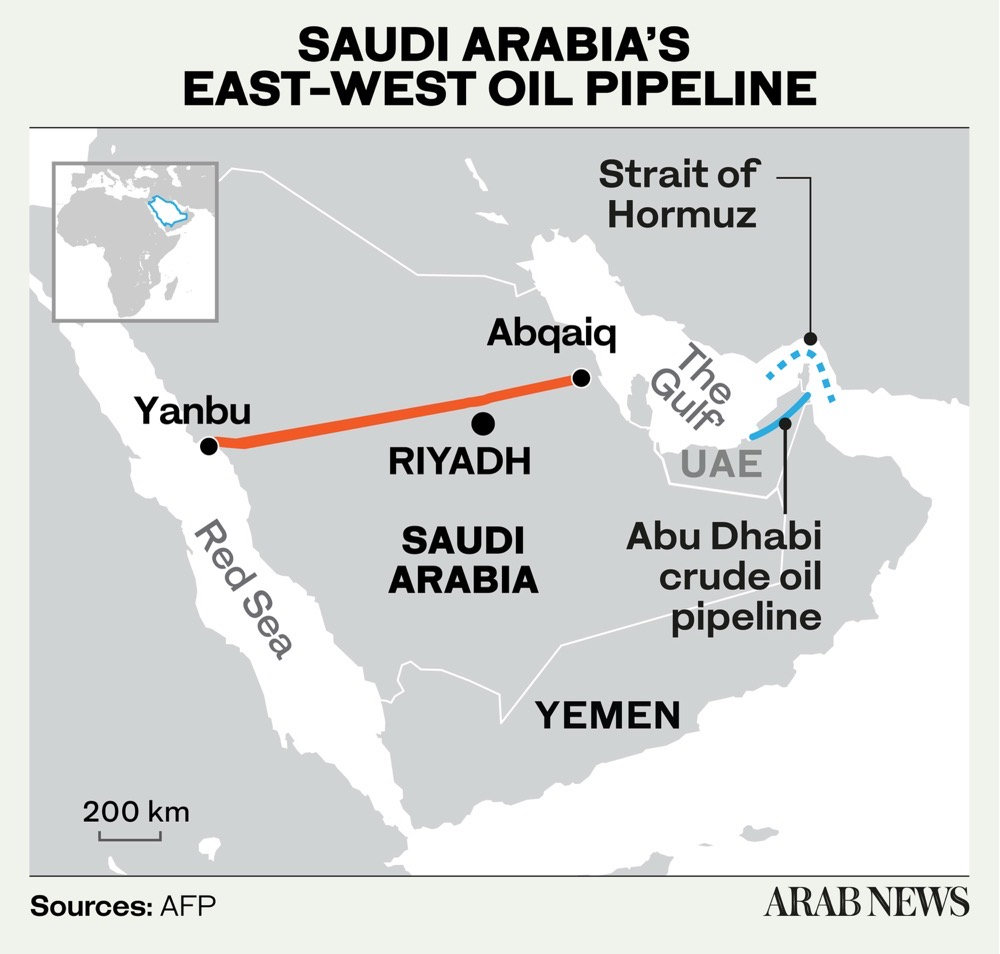
Until March this year, exports from Yanbu averaged less than a million barrels a day. This jumped in mid-March to over 2.5 million, and since then has regularly exceeded 4 million. Most has been southbound, to China, India, and South Korea, through the Bab Al-Mandab Strait.
If the strait is closed to Saudi traffic, tankers could go north and transit through the Suez Canal into the Mediterranean. But that, say maritime experts, is not the simple solution it appears to be.
It is, said Cyril Widdershoven, a senior maritime, energy and geopolitical analyst at Blue Water Strategy, “at first glance an elegant option ... but the reality is more complicated.”
Writing on industry site Oilprice.com on Friday, Widdershoven explained that cargoes bound for Europe or the US can go through the Suez Canal “without major complications.”
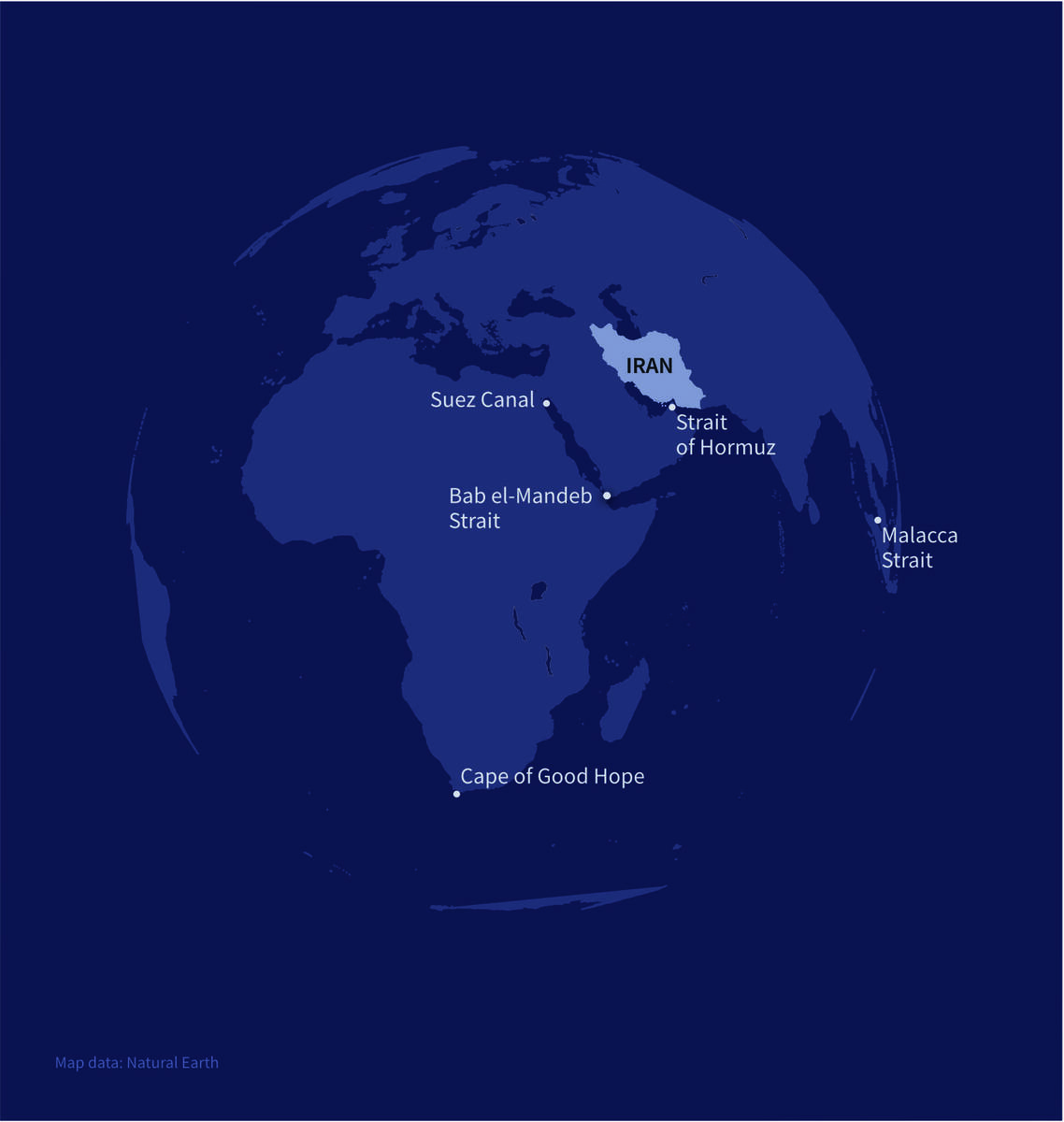
But the biggest consumers of Saudi oil are in Asia. Having to route these tankers north through the Red Sea and the Suez Canal, west along the Mediterranean and then south down the west coast of Africa, rounding the Cape of Good Hope before finally heading east toward Asia, is possible, “but not without creating new bottlenecks, longer transit times and significantly higher costs for global energy markets.”
There is also a technical snag.
The most economical way of transporting oil is aboard very large crude carriers, enormous ships each capable of carrying up to 2 million barrels of oil, reducing per-barrel costs through the economies of scale.
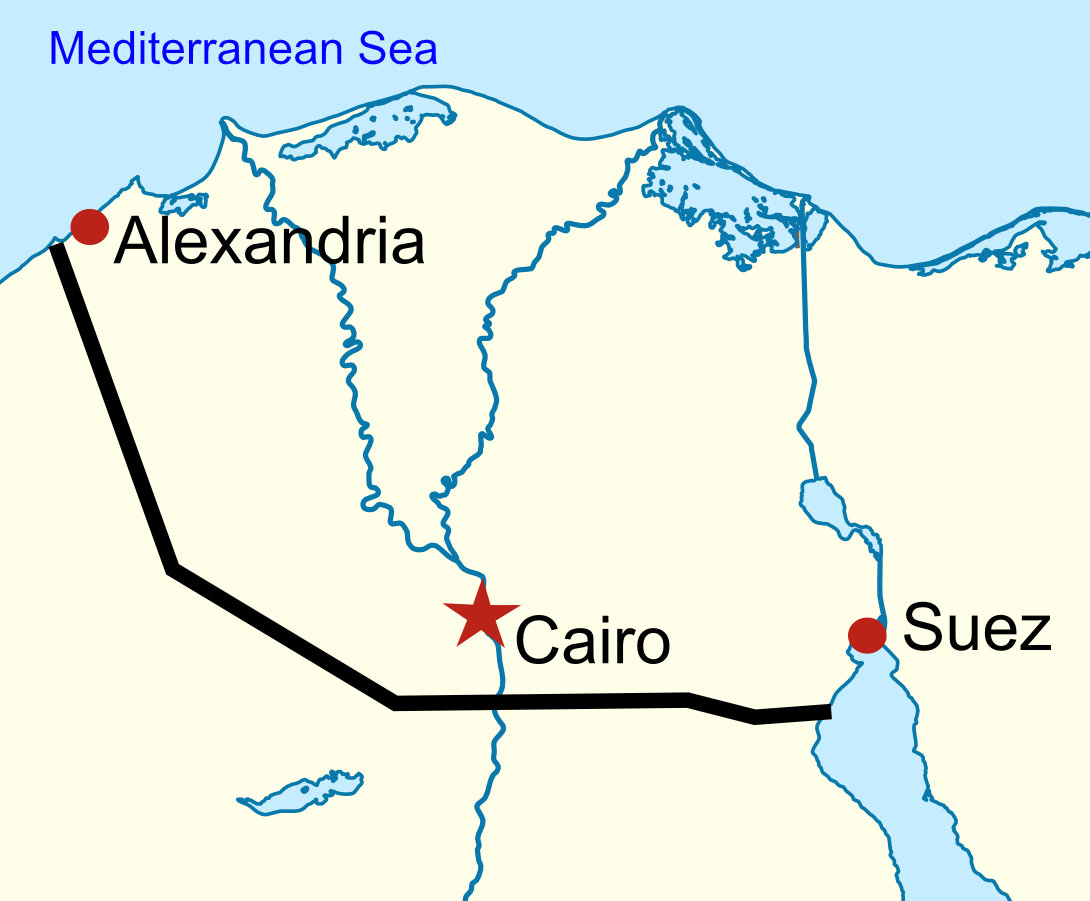
The problem is the Suez Canal is not deep enough to allow a fully loaded VLCC to pass through. The solution to this has been Egypt’s Suez-Mediterranean pipeline, which runs from Ain Sokhna at the head of the Red Sea to the Sidi Kerir terminal on the Mediterranean at Alexandria.
Crude oil is unloaded from VLCCs at Ain Sokhna, allowing the ships to pass through the canal, and reloaded at Alexandria. But SUMED’s maximum capacity of about 2.5 million barrels a day is not enough to make up for a sudden substantial increase in oil flow from Yanbu.