- From wedding dresses and power tools to parking spaces and professional services, Saudi startup Rush Rooms is betting that almost anything can become a source of income
RIYADH: In Saudi Arabia, where digital transformation is reshaping industries from banking to transportation, one entrepreneur believes the next frontier is not what people buy, but what they already own.
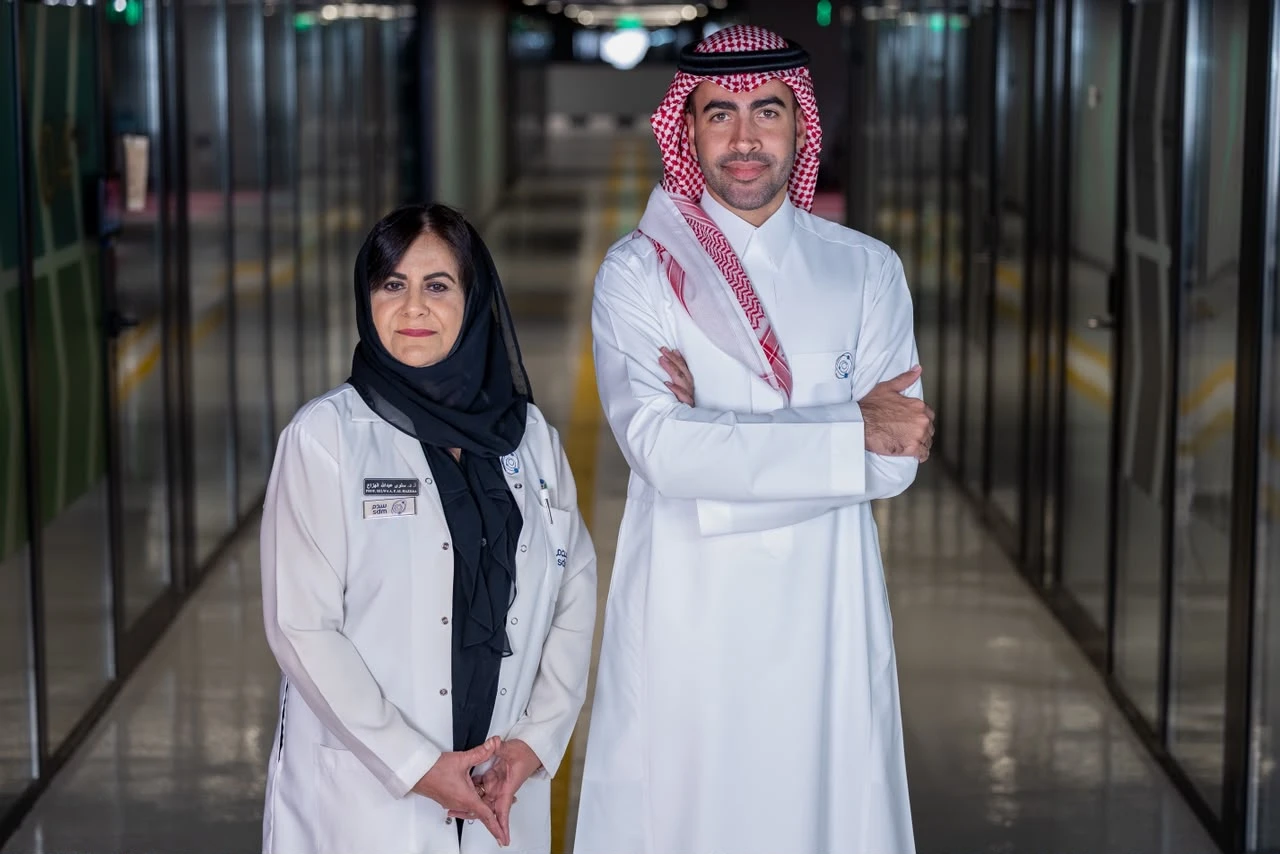
From wedding dresses and power tools to parking spaces and professional services, Saudi startup Rush Rooms is betting that almost anything can become a source of income if it can be rented safely. The company was founded by CEO Abdulelah Fadhel and co-founder Wesam Sameer Tayeb. Fadhel said the platform aimed to tackle one of the biggest barriers to the sharing economy — trust.
By linking users to Saudi Arabia’s National Unified Access (Nafath) system, Rush Rooms verifies identities before transactions take place, an approach Fadhel believes could encourage more people to participate in peer-to-peer commerce.
The startup’s ambitions extend beyond creating another online marketplace. Fadhel envisions Rush Rooms becoming part of the infrastructure supporting Saudi Arabia’s growing digital economy, aligning with Vision 2030’s goals of encouraging entrepreneurship, sustainability and more efficient use of resources.
“Our mission has always been to solve one of the biggest challenges in online marketplaces; fraud, scams and the difficulty of verifying the identity of the parties involved,” Fadhel told Arab News.
The idea emerged from a personal setback that forced him to rethink his career.
While studying under a scholarship program that promised employment after graduation, Fadhel said that he lost his place after a dispute with one of the program’s supervisors. Although the experience was painful, he describes it as the turning point that pushed him toward entrepreneurship.
“I realized that my future should not depend on a job, but on what I could build myself,” he said.
With a background in international hospitality management, Fadhel launched his first business while still in university by converting small rooms into hotel-style accommodation. The venture generated his first business income and sparked an interest in identifying underserved markets.
His next venture focused on hourly rentals of residential units, a concept that he says was among the first of its kind in Saudi Arabia. Over time, he realized the underlying opportunity extended far beyond real estate.
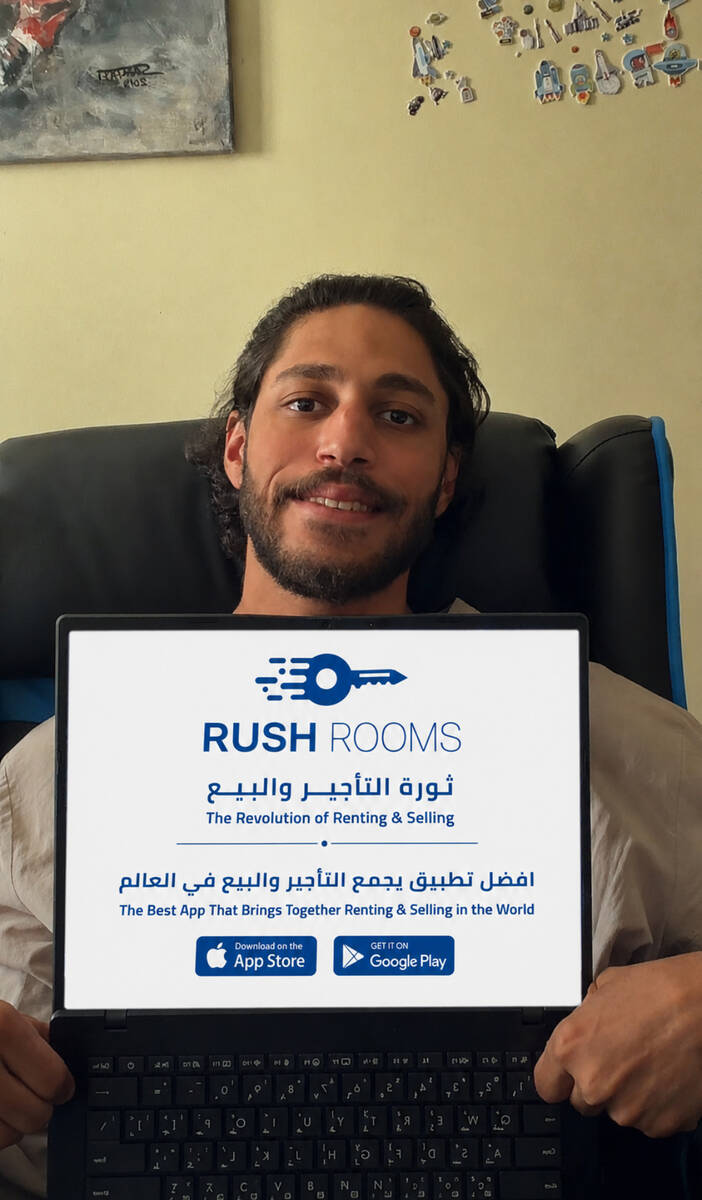
“That is how Rush Rooms evolved into a comprehensive marketplace where users can rent, lease, buy and sell anything and everything,” he said.
The platform is built around what Fadhel calls the “Rental Revolution” — the belief that any asset or service with a defined beginning and end can be rented.
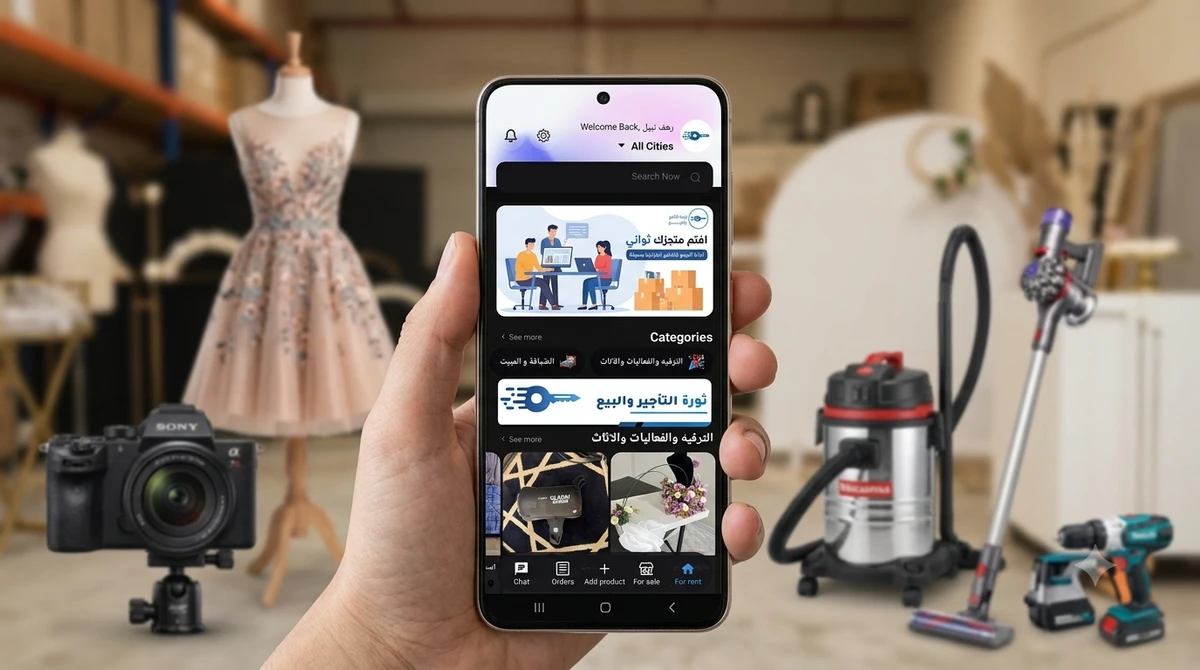
That philosophy significantly broadens the traditional definition of rentals. In addition to homes and vehicles, the platform accommodates equipment, event tickets, reservations, wedding dresses, parking spaces and professional services. Users can also monetize skills and expertise rather than physical possessions alone.
“I believe people do not only own physical items,” Fadhel said. “They also possess valuable skills, expertise and services that others are willing to pay for.”
The idea reflects a broader shift toward asset-sharing that has gained momentum globally through platforms that allow consumers to generate income from underused resources. In Saudi Arabia, where digital adoption has accelerated rapidly in recent years, entrepreneurs are increasingly exploring business models based on the sharing economy.
For Rush Rooms, trust is central to convincing users to embrace the concept.
Beyond identity verification through Nafath, payments are handled using an escrow system that releases funds only after buyers or renters confirm satisfaction with the transaction. Digital contracts and promissory notes are also integrated into the platform to protect both parties.
“Our goal is to provide the highest level of security while maintaining a simple, fast and seamless user experience,” Fadhel said.
Building that system, however, proved far more challenging than developing the concept itself.
Fadhel said that he worked with more than 10 technology companies and developers before finding the right partner, losing valuable time and money along the way.
“I experienced several unprofessional engagements and encountered promises that were never fulfilled,” he said.
Funding also remained a constant challenge during the company’s early years. He credits his family’s support and encouragement from close friends with helping to keep the project alive until it found its footing.
Eventually, a chance meeting with software entrepreneur George Farid Awad led to a long-term partnership that evolved into a co-founder relationship after years of collaboration.
Despite the technical hurdles involved in integrating payment systems, logistics providers and digital verification services, Fadhel believes perseverance became one of the company’s greatest competitive advantages.
“Great companies are not built under easy circumstances,” he said. “They are built through resilience, determination and belief in the vision.”
Unlike many startups that prioritize rapid expansion, Rush Rooms has focused heavily on user feedback.
Fadhel said that many of the platform’s features were developed after listening directly to customers and observing how they used the service.
“Our users shape the platform, and our job is to turn their needs into practical solutions,” he said.
That feedback also reinforced one of the company’s early assumptions: Saudis were more willing to embrace renting than many expected.
Although initial user growth was modest due to limited marketing resources, Fadhel said that adoption increased steadily as more people discovered opportunities to earn income not only from personal belongings but also from their professional expertise and services.
The business model is relatively straightforward. Rush Rooms earns commissions from completed transactions while gradually introducing premium subscriptions and promoted listings for businesses seeking greater visibility.
Looking ahead, Fadhel has ambitions that extend well beyond Saudi Arabia.
He hopes that the company will eventually become a billion-dollar Saudi technology business serving international markets and, one day, be listed on the Saudi Stock Exchange.
Yet he says that the company’s long-term success will be measured less by its valuation than by its contribution to changing consumer behavior.
“We are not just building a platform,” he said. “We are building the future of the rental and commerce economy.”
That vision aligns with broader economic priorities under Vision 2030, which seeks to diversify the Kingdom’s economy by encouraging digital innovation and more sustainable consumption.
By helping individuals and businesses generate additional income from existing assets while reducing waste through reuse, platforms such as Rush Rooms could contribute to the growth of Saudi Arabia’s circular economy.
“We want to create economic opportunities for everyone,” Fadhel said. “Whether they are individuals, small businesses or large enterprises, technology should empower people rather than simply digitize processes.”
One of the app’s users, Aseel Raslan, talked about how simple and positive her experience was with the app: “At first, I listed some products for rent, and they were successfully rented out. What I really liked is that managing everything is completely free — the platform and app only take a commission when a transaction is made.
“They also provide all the payment methods and a dedicated page to showcase my products. After they introduced the selling feature, I started selling through the platform as well, and it works the same way. My customers are very happy with how easy the experience is, whether they’re renting or buying, and I’m happy to have a fast, user-friendly app that combines both renting and selling in one organized platform,” Raslan said.
For Saudi Arabia’s growing startup ecosystem, that philosophy reflects a larger transformation taking place across the Kingdom; one where innovation is increasingly driven by solving practical problems, building trust in digital services and finding new ways to unlock value from resources that already exist.