
Paris is preparing to host a Franco-Saudi business forum. A high-level delegation will attend the Esports World Cup at Porte de Versailles in Paris this Sunday. The Saudi minister of investment has announced the acquisition of an amusement park in France, while the value of trade between France and Saudi Arabia reached more than €7 billion ($8.2 billion) in 2024, excluding arms.
This is a moment to recall a few truths. The business environment in Saudi Arabia is particularly interesting. Less noisy and less exposed to organized crime than its neighbor, Dubai, Saudi Arabia enjoys a favorable assessment from international organizations that are fighting money laundering and terrorist financing. It is the first Arab country to obtain full membership of the intergovernmental Financial Action Task Force.
Recently, the nation has displayed particular vigilance regarding transfer operations and international cooperation in the fight against money laundering. Against the backdrop of an exponential global rise in financial crime costing between 2 and 5 percent of gross domestic product, or between $2 trillion and $5 trillion a year, this point matters.
But let us not fool ourselves. Aside from major companies in the oil, defense and luxury sectors that were investing in Saudi Arabia, others, others were more reluctant to do so, viewing it as a somewhat medieval country in which women could not drive; a closed society, frozen by the weight of religion and its strict observance.
Those preconceptions no longer hold and there is an urgent need to sweep them aside. To understand and appreciate the Kingdom today, one must understand the extraordinary transformation of Saudi society.
Having been a visitor to Saudi Arabia for nearly 20 years, I can say that what we are witnessing now is not an evolution but a revolution in Saudi society; undoubtedly the most significant seen anywhere in the world since Mao’s Cultural Revolution in China.
Not so long ago, a woman arriving in Riyadh would go through a rather exotic ritual — quite frankly, one that was marked by respect and curiosity — as she put on a long black robe, an abaya, to comply with the requirements of Saudi law. I have a very clear memory of young women who tried to reject this requirement being turned back by immigration officials at Riyadh airport.
Now, the abaya is no longer compulsory. This might not be a revolution, as such, but it nonetheless represents a powerful signal simply because it is so visible.
Let us also remember the ban on women driving; the prohibition of music in public places; the restrictions on the mixing of men and women in restaurants. All of this seems so distant that no one even bothers anymore to look back on those days, even if it might be salutary to do so.
For the young people, above all, who are benefiting from these relatively new freedoms, the streets of Riyadh and Jeddah and their malls have no reason now to envy Dubai.
Saudi Arabia is a leading regional power that, by sheer force of political will, has swept aside the stereotypes once attached to it.
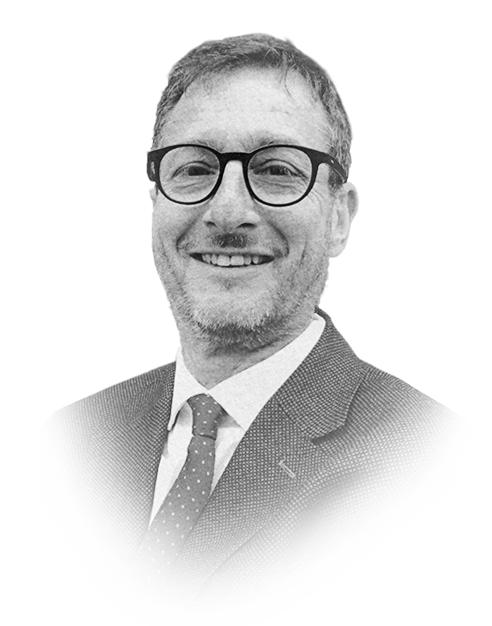
Nathalie Goulet
Tourism in Saudi Arabia is booming, with AlUla as its flagship and representing a superb example of Franco-Saudi cooperation. Concerts and festivals compete to attract prestigious headliners. The Red Sea International Film Festival attracts increasingly large crowds. Fashion shows have found exceptional venues in which to showcase collections.
Who would have thought that one day, in the middle of the Saudi desert, we would be able to watch young women walking the catwalk in fashion shows modeling swimsuits?
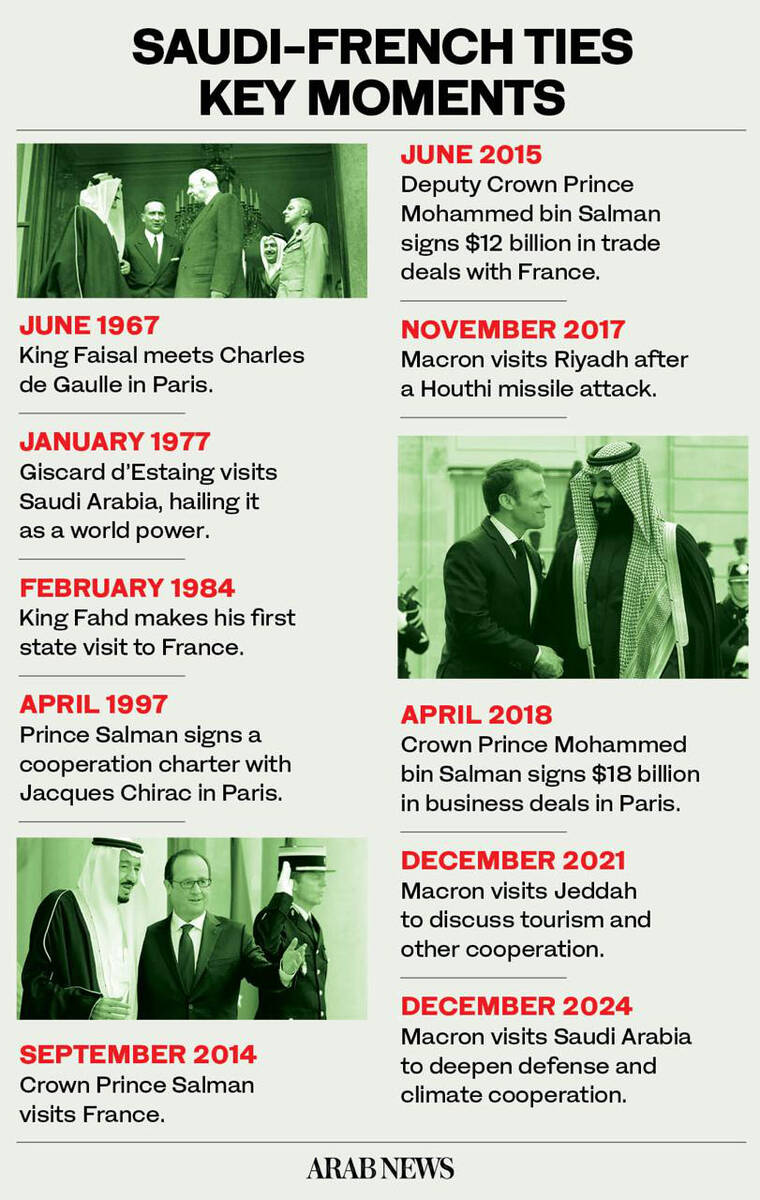
We have come to think the unthinkable. I once had the opportunity to have a one-on-one meeting with Crown Prince Mohammed bin Salman when he visited Paris, and he laid out for me his road map for the future of his country, “Saudi Vision 2030,” which launched in 2016 and was aimed in particular at the younger generation.
With less than four years to go until that momentous deadline, what progress has been made. The advances are the result of the Kingdom’s determination to modernize, like an awakening after a very long sleep.
The success of this undertaking cannot be overemphasized, and it has happened because the crown prince took the risk to reform. In a country whose king holds the official title of “Custodian of the Two Holy Mosques,” reflecting his role as guardian of Islam’s holiest sites, the transformation over the past decade had to be achieved without alienating the traditionalists among the population or the highest religious authorities.
The gamble paid off. Have we not seen the secretary-general of the Muslim World League, Mohammed Al-Issa, once regarded as a hard-line standard-bearer for Wahhabism, take part in numerous interfaith forums, visit the Grand Synagogue of Paris, and even pray at Auschwitz in remembrance of the millions of Jews and other victims murdered by Nazi barbarism?
Everything that might once have appeared to be merely cosmetic measures of communication can, with a decade of hindsight, now be understood as the fulfillment of a firm and enlightened determination to make Saudi Arabia a country that combines modernity with tradition.
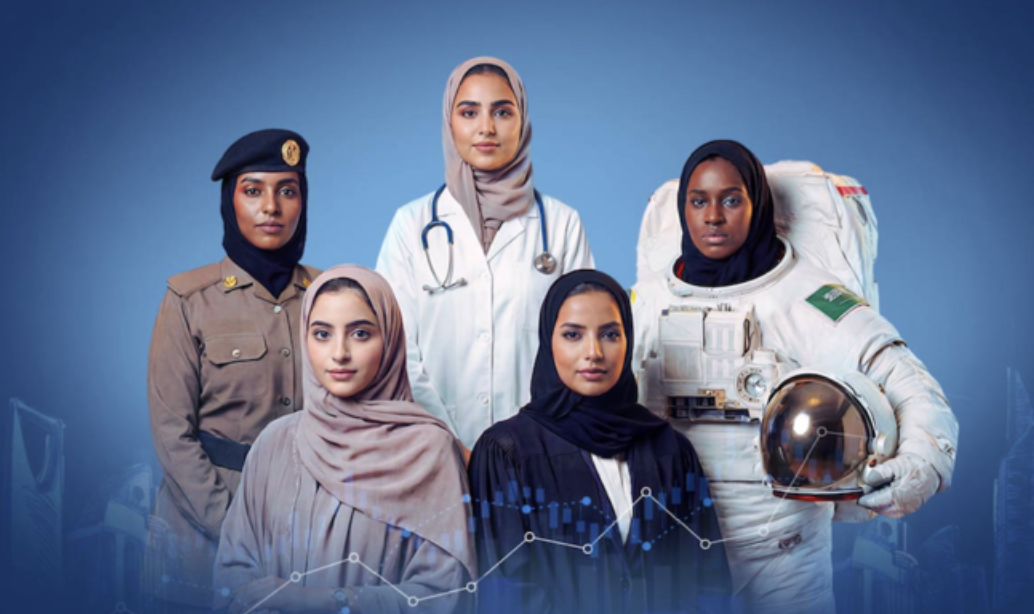
Women are now present in the Shoura Council, as are they in business and diplomacy. The key Saudi ambassadorial post in Washington is held by a highly talented female diplomat, Princess Reema bint Bandar, whom I had the honor of receiving at the French Senate two years ago.
So perhaps it is time to put an end to preconceptions that make us intellectually lazy, and to appreciate the advances in Saudi society for what they are worth.
Saudi Arabia is a leading regional power that, by sheer force of political will, has swept aside the stereotypes once attached to it. It has become a major economic partner where our companies are welcome.
• Nathalie Goulet is a French senator for the Orne department in Normandy and the author of “An ABC of Terrorist Financing,” published by Cherche-Midi. X: @senateur61