


He came, he saw, he wielded the axe. Events moved quickly after Boris Johnson was elected leader of Britain’s governing Conservative party. He declared that his three priorities were to deliver Brexit, unite the country and defeat the Labour party leader Jeremy Corbyn. The next day he visited the Queen, who appointed him prime minister. She is said to have wondered why anyone wanted the job — an understandable sentiment given that the government has a parliamentary majority of just two, and even that relies on an agreement with the Democratic Unionist Party (DUP) of Northern Ireland.
Back in Downing Street, Boris wasted no time. He gave a rousing speech promising that the UK would leave the EU on Oct. 31 come what may — no ifs, no buts. He also vowed to put 20,000 more police officers on the streets and to repair the broken social-care system, which is important in light of the country’s ageing population. Boris showed once more that he is a brilliant orator. He sounded more like the columnist he was than the prime minister he has become. The speech was painted with broad brush strokes, but lacked practical detail. He oozed optimism and positivity, which is what the UK needs after three years of soul-destroying Brexit debate.
He got to work immediately, replacing three-quarters of the cabinet in a matter of hours. The carnage surpassed even the infamous “Night of the Long Knives” reshuffle by his Conservative predecessor Harold Macmillan in 1962. Boris consigned the Theresa May establishment to the parliamentary backbenches, which may prove to be his Achilles’ heel when the going gets tough. Even under May there was a majority of MPs opposed to a no-deal Brexit; indeed, in the tumultuous months leading up to her resignation, it appeared to be the only issue they could agree on.
Hardline leavers dominate the new government; former Brexit Secretary Dominic Raab has become foreign secretary and effectively deputy prime minister, Priti Patel is home secretary and the erudite head of the uber-Brexiteer European Research Group, Jacob Rees-Mogg, is leader of the House of Commons. The highly effective former environment secretary Michael Gove has been given a cabinet seat and a wide-ranging role in charge of preparations for Brexit. Boris asked all his ministers to pledge that they had bought into delivering Brexit on Oct. 31, with or without a deal. Loyalty seems to be a key currency. There are jobs for those who showed they were willing to toe the government line under Theresa May, even if they disagreed with it, such as Gove, work and pensions secretary Amber Rudd and culture secretary Nicky Morgan.
The appointment of Dominic Cummings as the prime minister’s main adviser is highly significant. Cummings is a divisive figure but a brilliant strategist who drove change in the education department under Michael Gove and orchestrated the win for the Vote Leave campaign in 2016. A reading of the tea leaves suggests a general election sooner rather than later.
The only foreign leader who appeared delighted was the US president, who called Boris a British Trump and promised a great new trade deal. Like Boris, however, he was long on sentiment and short on detail.
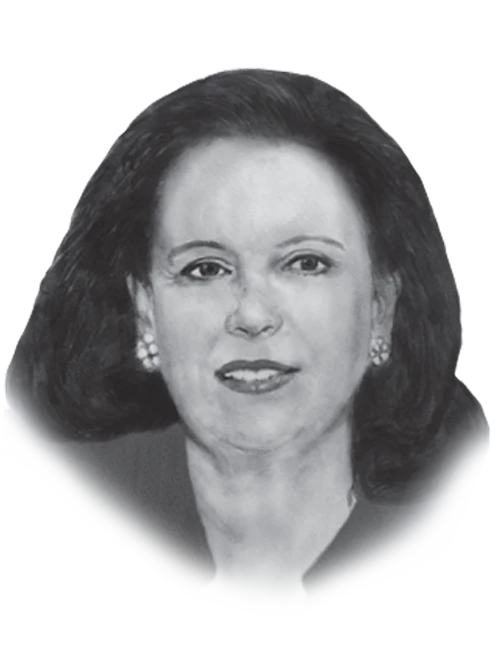
Cornelia Meyer
What did foreign leaders make of all this? The Taoiseach, Leo Varadkar, warned Boris that he was hurtling toward a no-deal Brexit, because the Irish backstop was non-negotiable. When Britain leaves the EU, the border between Northern Ireland and the Irish Republic will become the only land border between the UK and the EU; the backstop is designed to keep that border open while the two negotiate a trade and customs agreement. Brexiteers, and the DUP in particular, reject it because in effect it would keep Northern Ireland in the EU indefinitely. “Never mind the backstop,” Boris declared, “the buck stops with me.”
The EU’s elite has said time and again that the withdrawal agreement between the EU and the UK was not up for renegotiation. If anything, Boris’s tough talk has steeled their resolve. He aggravated matters further by threatening to withhold the £39 billion divorce settlement to which Theresa May had agreed. EU commission president Jean-Claude Juncker is said to have quipped that Johnson need not call him unless he changes his approach. Boris told German chancellor Angela Merkel that the backstop was unacceptable, and French president Emmanuel Macron that the EU had to compromise to avoid a hard Brexit.
The only foreign leader who appeared delighted was the US president, who called Boris a British Trump and promised a great new trade deal. Like Boris, however, he was long on sentiment and short on detail. Many in Britain are worried that a deal with the US would lead to a sell-out of the treasured national health service to American interests.
Boris is playing high-stakes poker with the country, the economy and his career. What if he cannot deliver a new deal with the EU and the UK faces a hard Brexit? Neither government nor business is ready for that, and it is highly questionable that the short period until Oct. 31 will suffice to prepare. Currency markets are always a useful barometer of business sentiment; sterling has reached a 15-year low against the euro.
What if the UK does not leave on Oct. 31, whether because of parliamentary opposition or because the government realises more time is needed? Will Boris opt for a general election? The shadow Brexit secretary Sir Keir Starmer encapsulated the situation well when he said that sooner or later the Brexit aspirations of Boris Johnson would collide with reality.
In the meantime, it is important for the new prime minister to meet European leaders as soon as possible to understand where they are coming from. They are certainly interested to hear his reasoning, and to understand the details behind his bold statements.
- Cornelia Meyer is a business consultant, macro-economist and energy expert. Twitter: @MeyerResources


