


Aug. 19, 1989, is a memorable date for migration in Europe. It was the day of the famous Pan-European Picnic in Sopron, when Hungary decided to temporarily open its borders to Austria. Between 500 and 600 East Germans made it across and eventually to the Federal Republic of Germany. This was a monumental event. Without it, the Berlin Wall would not have come down; or at least not as soon as Nov. 9 that year.
Hungary did not act out of pure selflessness. A favorite holiday destination for many from the German Democratic Republic, the country increasingly saw itself as one of the key border enforcers for the erstwhile Warsaw Pact. The economy was teetering and the Hungarian government saw itself unwilling and incapable of protecting the indefensible.
Fast forward 30 years and we are in the midst of a new refugee crisis. Greece, Hungary and Italy are pretty much in the eye of the storm. The Dublin Regulation of 2013 (also known as Dublin III) is at the core of a complex system that regulates legal and illegal immigration and refugees into the EU. It prescribes that the country that first logs the fingerprints of an asylum seeker or refugee bears responsibility for them. It all went relatively well until the war in Syria brought many more to Europe’s borders.
German Chancellor Angela Merkel pierced the veil of Dublin III when she opened the borders for Syrian refugees in the summer of 2015. Ever since then, the debate about what to do with Dublin III has intensified. Hungary left the agreement and again opened its borders to Austria because it felt incapable and unwilling to deal with the extra refugees. Indeed, Hungary is known for its at times brutal treatment of asylum seekers, such as internment or refusing them food.
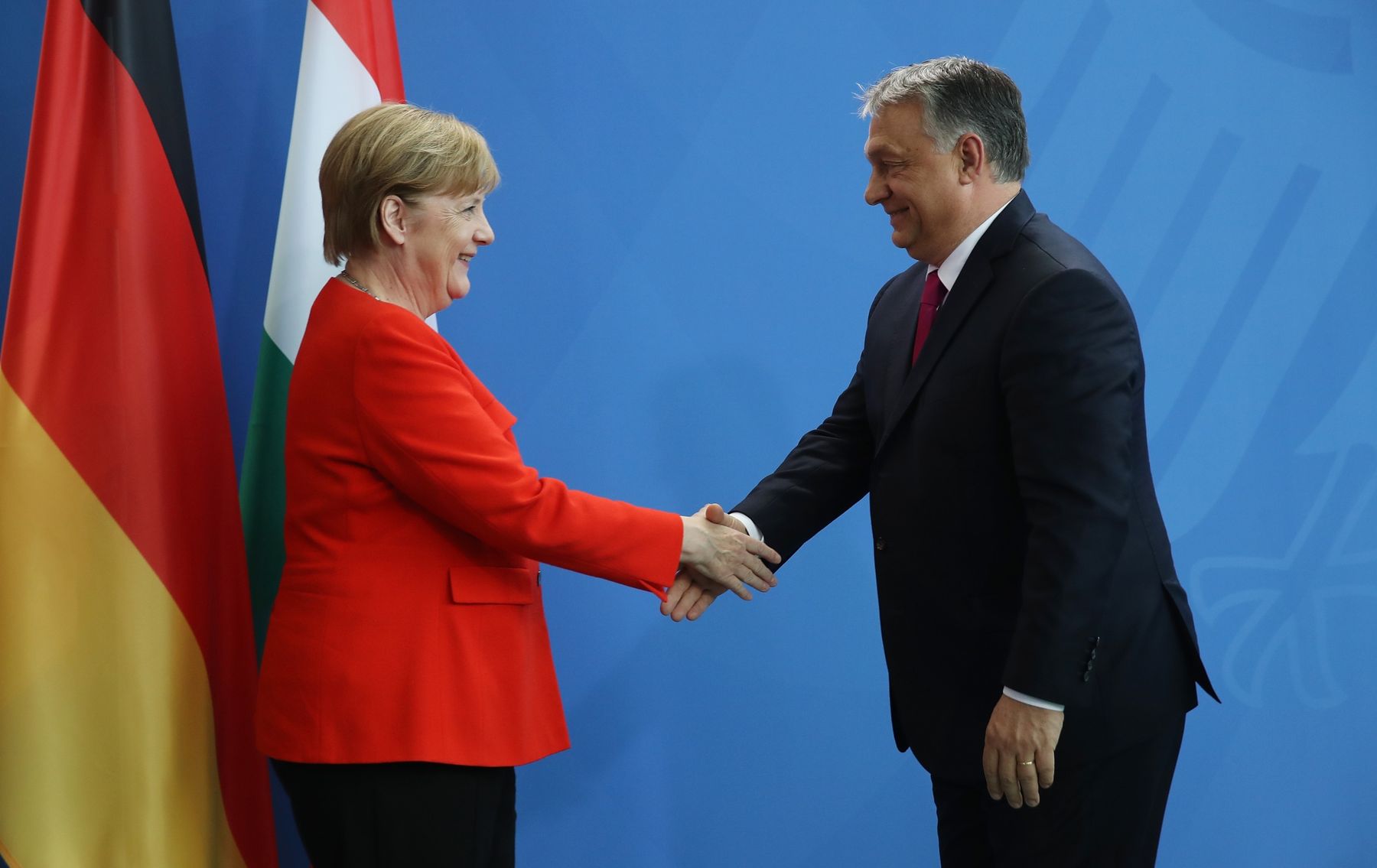
While both Merkel and Hungarian President Viktor Orban praised the Pan-European Picnic at a commemorative ecumenical service in Sopron on Tuesday, their messages were very different. Merkel stressed that Europe should be beholden to humanitarian and Christian values when it came to refugees, while Orban reiterated the need for strong external borders of the EU and the importance of finding a fair distribution system among the signatories of Dublin III.
Nothing justifies treating human beings with anything other than dignity — be they citizens, foreigners, refugees or illegal immigrants.
Cornelia Meyer
Orban sings from the same hymn sheet as Matteo Salvini, the head of the League party, outgoing interior minister and architect of Italy’s latest government crisis. Salvini hammers on about external borders and a fair distribution system for asylum seekers. Every summer, the stream of refugees traveling across the Mediterranean intensifies. This year, Salvini forbade several refugee ships from docking at Italian ports, creating a humanitarian crisis at sea. He also passed a stringent law that could see the captains of ships that illegally dock in Italian ports jailed for years. Salvini cleverly capitalizes on the sentiment among many Italians across the country, who feel overrun by immigrants from the Middle East, but increasingly and predominantly also from Africa.
Nothing justifies treating human beings with anything other than dignity — be they citizens, foreigners, refugees or illegal immigrants. Europe will need to find a way of dealing with immigration. Protecting the EU’s external border has to be part of the equation. Many mainstream conservative politicians like former Austrian Foreign Minister Karin Kneissl and Bavaria’s Prime Minister Markus Soeder never tire of reiterating that fact. It is also important that EU and European Free Trade Association (EFTA) member states, including even the UK, face their responsibilities and take their fair share of immigrants. It will have political consequences if they fail to do so and leave the onus on Italy, Greece and other Mediterranean or Balkan countries, all of whom are economically comparatively weak.
The EU bought itself some time in 2016, when it made an agreement to pay €6 billion ($6.6 billion) in exchange for Turkey sealing its borders. Ankara was ultimately only paid part of the money due to how the EU views the democratic and human rights situation there. Turkey held up its part of the bargain, but its flagging economy makes this increasingly difficult.
The issue of migration will not go away as long as Europe is a land of plenty that is flanked by wars, conflict and poverty. Every country, first and foremost, needs to look after its own people, which gives the advocates of strong external borders some credence. However, Europe also espouses lofty ideals of democracy and human rights. The EU is rightfully always quick to criticize anybody who is at odds with these principles. This puts the obligation on EU and EFTA member states to lead by example, including when it comes to immigration. When it comes to accepting immigrants, solidarity among these member states is pivotal if the system is to work. Dublin III is in dire need of a rewrite to share the burden more equitably.
- Cornelia Meyer is a business consultant, macro-economist and energy expert. Twitter: @MeyerResources


