
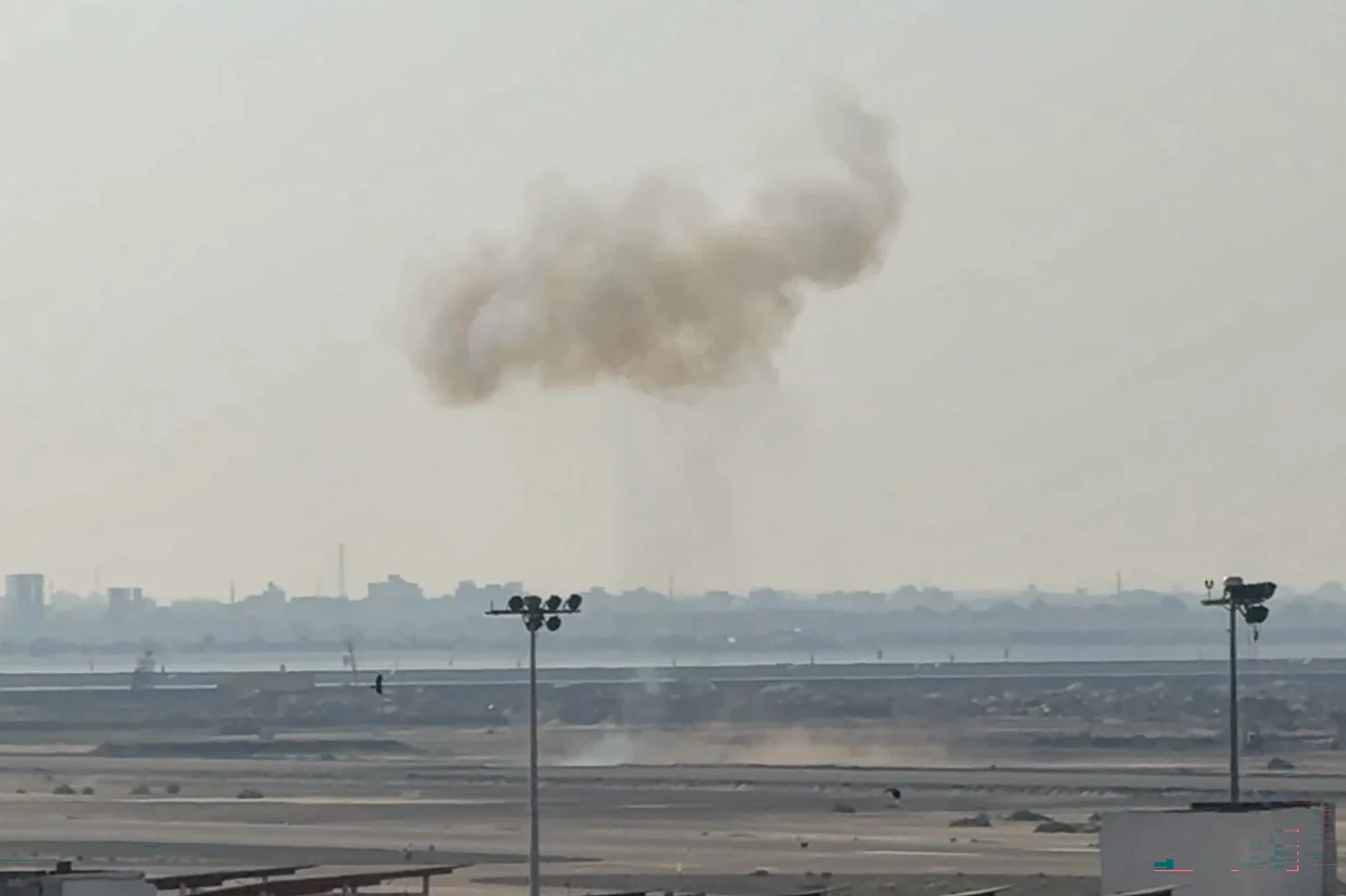

December 2026 marks a critical juncture, driven by the convergence of annual financial closings and peak winter energy demand. Such economic vulnerability aligns with a dangerous geopolitical escalation that has decisively shifted the theater of regional operations from traditional kinetic battlefields to the arena of cognitive warfare. State and nonstate actors are increasingly deploying generative artificial intelligence models to produce hyperrealistic synthetic media, fabricating catastrophic explosions at critical infrastructure sites.
While the 1938 radio broadcast of “The War of the Worlds” famously sparked social panic through an imagined narrative, historical precedent is now repeating itself with infinitely more convincing tools. In May 2023, an AI-generated image of a fictitious explosion near the US Pentagon caused immediate public confusion and triggered security alerts. Beyond momentary panic, such digital illusions strike directly at the core of the global economy.
When an Associated Press social media account was compromised in 2013, a fabricated alert erased $136 billion in US stock value within three minutes. Today, international markets lose about $78 billion annually to engineered misinformation, a crisis exacerbated by the findings of a 2018 Massachusetts Institute of Technology study: that fake news propagates on social media platforms six times faster than factual data, making the technology an ideal, low-cost mechanism for strategic infiltration.
Modern conflict geometries have decisively evolved. “Cyber armies” orchestrate psychological warfare in parallel with military operations, deploying specialized technical teams to render fabricated footage of attacks on sovereign infrastructure, such as oil fields and strategic maritime ports. Their objective transcends physical disruption; adversaries aim to engineer psychological defeat before actual front lines are ever breached.
A hyperrealistic video depicting an attack on an international airport not only disrupts global supply chains and inflicts billions in economic losses, but it fundamentally shatters the public’s sense of security. Forced shutdowns of facilities in response to fictitious threats project an illusion of state impotence, breeding collective surrender. Research from the RAND Corporation’s 2016 “Firehose of Falsehood” report demonstrated how an overwhelming volume of fabricated media paralyzes logical analysis, transforming digital clips into psychological weapons capable of redrawing the balance of power from within.
Fabrication has proven to be the most cost-effective and lethal weapon in modern geopolitics.
Dr. Bader bin Saud
Cyber militias actively exploit collective emotion to infiltrate the social fabric of target nations. Using advanced deepfake algorithms to fabricate fictitious atrocities — such as attacks on civilian gatherings or summary executions — operatives seek to demonize opponents and inflame public polarization. These tactics weaponize confirmation bias, encouraging populations to share inflammatory content that aligns with preexisting fears without analytical scrutiny.
Recognizing the severity of the phenomenon, the World Economic Forum’s 2024 “Global Risks Report” classified AI-generated disinformation as the greatest short-term threat to societal stability, noting it exhausts security agencies in containing unrest sparked by nonexistent crimes. The barrier to entry for such devastation requires no more than $10,000 in subscriptions to advanced generative platforms, leaving socioeconomic scars that take years to heal.
Digital warfare provides state sponsors and paramilitary groups with an optimal framework for plausible deniability. Operatives can cripple a domestic front and catalyze the paralysis of vital economic sectors without leaving a physical footprint or facing international legal consequences.
While a ballistic missile or a swarm of attack drones demands expenditure of well over $1 million, a cyber cell enhanced by AI can wreak equivalent havoc on a near-zero budget. Here lies the ultimate manifestation of hybrid warfare — a concept coined by Frank Hoffman in 2007 — merging conventional force with disinformation campaigns. From AI-generated clips fabricating massacres in the Middle East in October 2023 to the weaponization of footage from the Arma 3 video game to simulate explosions in Eastern Europe in early 2022, fabrication has proven to be the most cost-effective and lethal weapon in modern geopolitics.
For the Middle East, and Saudi Arabia in particular, the stakes of this cognitive battlefield are exceptionally high. The true danger of synthetic media lies not only in fabricating events entirely but in hyperinflating the severity of real-world kinetic attacks to induce disproportionate terror.
Following the Houthi missile strikes on King Khalid International Airport in Riyadh in mid-October — a kinetic attack that resulted in 13 tragic civilian deaths and more than 300 injuries — adversaries swiftly deployed cognitive warfare tactics. A viral, AI-generated video showing a massive passenger aircraft exploding on the tarmac — manipulated from archival 2016 footage — was heavily circulated to exploit the immediate trauma and disrupt international aviation confidence.
As the anchor of global energy security, the Kingdom remains a prime target for synthetic market manipulation. A hyperrealistic deepfake depicting a fabricated attack on a major Saudi Aramco facility could trigger algorithmic high-frequency trading bots to cause a massive, unwarranted spike in global oil prices before human verification protocols are even activated.
In response to this asymmetric threat, Saudi Arabia has systematically fortified its digital resilience. Designating 2026 as the Year of Artificial Intelligence, the state has integrated awareness and defense mechanisms into its national strategy. The Saudi Data and Artificial Intelligence Authority and the Communications, Space and Technology Commission this month launched an “It’s AI” campaign. The initiative serves not as mere public relations but as a critical infrastructure defense mechanism — designed to cultivate media literacy and critical verification skills across the population to intercept deepfake volatility before it destabilizes the economic momentum of Vision 2030.
Underlying this global threat is algorithmic engagement, a concept rooted in Ian Goodfellow’s 2014 invention of generative adversarial networks. Its architecture pits a “generator” algorithm, which creates synthetic scenes, against a “discriminator” algorithm attempting to detect the forgery. Automated conflict iterates millions of times until the resulting media is saturated with ultraprecise “physics of destruction,” flawlessly capturing flame reflections, flying shrapnel and smoke dynamics.
When seamlessly integrated with AI voice cloning, the software allows threat actors to impersonate military commanders or civilian officials on live broadcasts, issuing catastrophic orders with perfectly matched facial features and lip movements, thereby destroying logical thinking and crisis management protocols when they are needed most.
Mitigating asymmetric threats demands a departure from reactive measures and the immediate implementation of robust, actionable policies. Such danger is not theoretical. In February 2024, a British multinational in Hong Kong lost $25 million in minutes when an employee transferred funds on the orders of a digitally cloned chief financial officer during a deepfake video conference. It is a technological nightmare that perfectly epitomizes the famous observation: “A lie travels halfway around the world before the truth has a chance to put on its shoes.”
In the era of algorithmic trading, that lie travels in milliseconds, erasing sovereign wealth and weaponizing public grief before human analysts can even react. Building resilience requires immediate state action. Sovereign legislation must mandate that technology companies embed indelible, cryptographic digital watermarks on all AI-generated content. Financial and security institutions must simultaneously adopt a default posture of zero trust regarding digital media, treating unverified crisis footage with immediate skepticism. Furthermore, governments must establish AI-driven national intelligence platforms operating in real-time to monitor, intercept and debunk fabricated content before it can trigger market panic, coupled with intensive media literacy campaigns for the public.
Ultimately, tomorrow’s sovereignty will not be measured solely by physical military arsenals but also by a state’s cognitive resilience and its capacity to thwart the generative algorithms engineered to turn digital illusions into catastrophic realities.
Dr. Bader bin Saud is a columnist for Al-Riyadh newspaper, a researcher in media and knowledge management, a university professor, an expert in crowd management and strategic planning, and the former deputy commander of the Special Forces for Hajj and Umrah in Saudi Arabia.
X: @BaderbinSaud


