
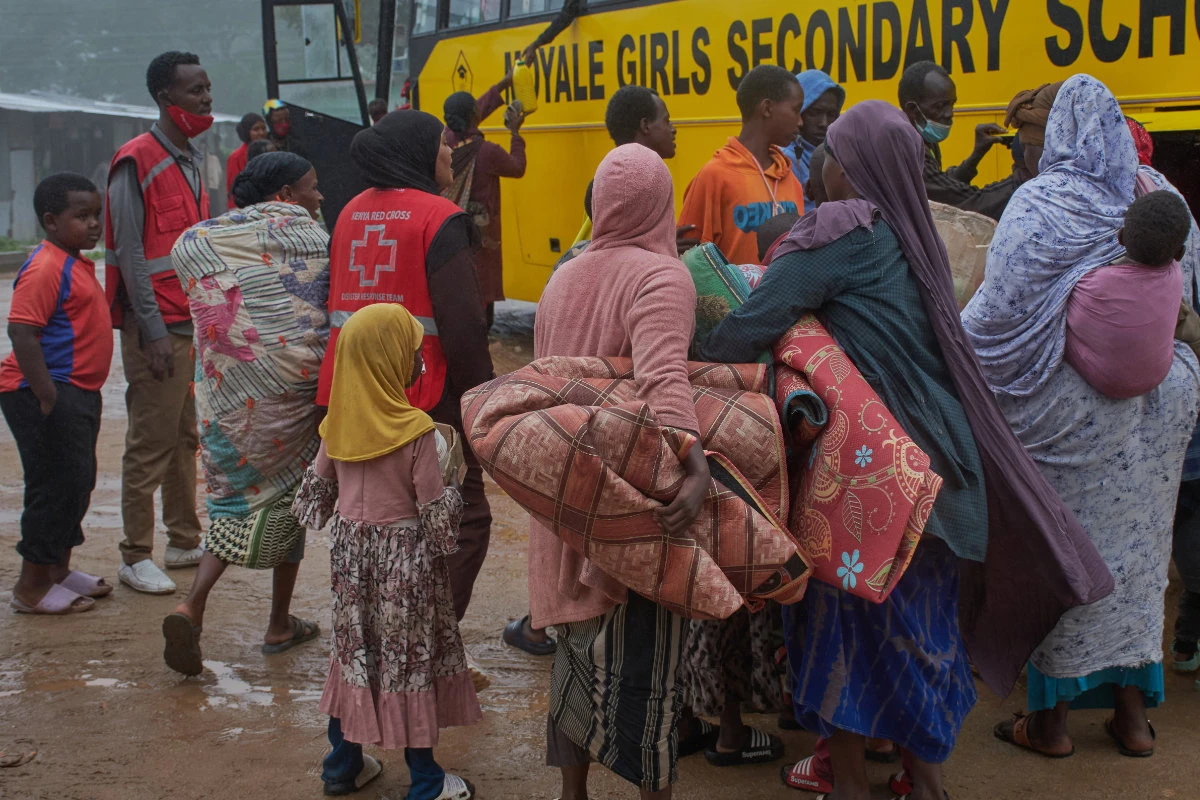

When people flee war crimes, they do not leave the evidence behind. They carry memories of burned villages, destroyed homes, disappeared relatives, and military units responsible for abuses. Some carry photographs, documents or digital records. Others know the names of commanders, locations of detention centers or identities of fellow witnesses. We normally think about refugees primarily as victims requiring protection, but displacement is also beginning to change the geography of international justice.
A case filed in Denmark this week demonstrates why. Ngun Siang Dim, a 39-year-old woman from Myanmar’s Chin minority now living in Denmark, has submitted a criminal complaint concerning alleged crimes committed by Myanmar’s military. She says she witnessed homes being burned in her village and that relatives and friends were killed or permanently injured. Whether Danish prosecutors ultimately pursue the case remains to be seen, and filing a complaint is clearly not the same as establishing criminal responsibility. But the significance of the case extends far beyond one survivor or even Myanmar itself.
The complaint relies on the growing use of universal jurisdiction, the principle that certain crimes are so serious that national courts may investigate them even when the alleged offenses occurred abroad and involved foreign victims and perpetrators. The precise rules differ between countries, but the underlying idea is increasingly important because international justice remains difficult to deliver through traditional institutions. The International Criminal Court has limited jurisdiction. The International Court of Justice deals with disputes between states rather than prosecuting individuals. UN Security Council referrals can be blocked by geopolitical interests. Domestic courts in countries experiencing atrocities may be controlled by the authorities implicated in those crimes or may simply have ceased to function independently.
This creates enormous accountability gaps. Refugee movements can, unexpectedly, help narrow them. When survivors move from countries where independent investigation is impossible to states with functioning courts, evidence moves with them. People who could never safely approach the police at home may suddenly find themselves living in countries where investigators can hear their testimony, preserve evidence, and and potentially open cases. Displacement, therefore, changes more than where victims live. It can also change where justice becomes possible.
Syria demonstrated the potential of this model. After millions of Syrians fled the country, European investigators gained access to survivors, former detainees, witnesses, and defectors. Germany and other European states became centers for cases concerning torture and crimes against humanity committed thousands of kilometers away. German courts eventually convicted former Syrian intelligence officials in landmark proceedings. These cases did not end impunity in Syria, but they established an important principle: Perpetrators may control courts at home without controlling every court their victims can eventually reach.
When people flee war crimes, they carry memories of burned villages, destroyed homes.
Dr. Azeem Ibrahim
Myanmar could now test the same proposition. For people from Chin State, Rakhine State, Sagaing, and other areas, meaningful domestic accountability remains extremely difficult. The country is divided by conflict and the military retains considerable influence over the central institutions of the state. Yet Myanmar’s displaced population is increasingly global. Refugees and exiles now live throughout Europe, North America, Australia, and across Asia. This diaspora is usually discussed in terms of humanitarian protection, remittances or political activism. Its potential role as an accountability network deserves far greater attention.
Survivors can preserve testimony. Diaspora organizations can help identify witnesses. Lawyers can assemble cases. Civil society groups can connect victims with prosecutors. Digital evidence collected inside Myanmar can be stored abroad until courts are capable of examining it. This does not mean every refugee should be treated as a potential witness, nor should asylum systems become extensions of criminal investigations. Participation must be voluntary, confidential, and sensitive to trauma. But where survivors actively seek justice, governments should ensure that specialist prosecutors and war crimes units have the resources and expertise necessary to respond.
Universal jurisdiction also has important limitations. National prosecutors have finite resources and must meet high evidentiary standards. Testimony requires corroboration. Defendants retain the right to challenge allegations and receive a fair trial. There is also the practical difficulty of arrest. Investigating a commander who remains inside Myanmar is very different from prosecuting one who enters a country willing and able to detain him. Universal jurisdiction, therefore, cannot substitute for functioning international institutions or credible domestic courts in countries where atrocities occur.
Its importance lies instead in removing certainty from impunity. A commander who believes domestic political power provides permanent protection must consider the possibility that international travel could one day create legal exposure. Evidence gathered today may remain useful years later. Political circumstances can change. Governments fall. Suspects travel. New laws are introduced. Cases that appear impossible today may become viable in the future. Preserving evidence and testimony therefore becomes an investment in justice even when immediate prosecution is unlikely.
This also requires us to rethink how refugees themselves are portrayed. People displaced by atrocities are too often discussed only through the language of vulnerability. They are people to be protected, housed, fed, and eventually returned. All of those needs are real, but survivors can also be witnesses, plaintiffs, historians, and agents of accountability. They can preserve memories that perpetrators would prefer erased and carry legal claims across borders that those responsible for atrocities cannot completely control.
Myanmar’s military may be able to influence what happens inside many of the country’s courts. It cannot necessarily determine what happens in Copenhagen, Berlin, or another jurisdiction willing to investigate international crimes. That is the deeper significance of the complaint filed in Denmark. Global displacement is usually understood as one of the consequences of impunity. People flee because those responsible for violence believe they will face no consequences for their actions.
Yet displacement can produce an unexpected reversal. The same refugee who crosses a border because justice is impossible at home may eventually bring evidence before a court beyond the reach of those who forced them to flee.
International justice has traditionally struggled to reach victims. Increasingly, victims themselves are carrying the possibility of justice across borders.
Dr. Azeem Ibrahim is the director of special initiatives at the New Lines Institute for Strategy and Policy in Washington.
X: @AzeemIbrahim


